Not for publication in the U.S.
- Latest innovation in interventional radiology
- Automated motion reduction for detailed 3D visualization of vessels and devices like catheters
- AI-guided planning for precise treatment of liver cancer patients
At this year’s European Congress of Radiology, Siemens Healthineers is highlighting its latest innovation in the field of interventional radiology. The new angiography platforms Artis genio, Artis icono.explore1 and Artis icono.vision use artificial intelligence to support the precise embolization treatment of liver cancer2. Features include automated motion correction in three-dimensional cone beam computed tomography (CBCT) datasets, software for accurate planning and device navigation, and the new Optiq AI imaging chain for higher image quality at the same dose.
Tumor embolization is an essential form of cancer treatment as it reduces the tumor burden, relieves symptoms and is highly targeted. The procedure, where interventional radiologists block the blood supply to a tumor or deliver drugs only to the tumor’s feeding vessels, is performed in a minimally invasive way. Image guidance ensures precise catheter navigation and real time visualization. Eligible patients benefit from fewer side effects than with systemic treatments like chemotherapy. But embolizations are also complex and require highly personalized planning and treatment precision – both of which are a challenge in times of a growing patient population and a decreasing number of medical staff. With that in mind, Siemens Healthineers has equipped its latest angiography systems Artis genio, Artis icono.explore and vision with AI-powered applications.
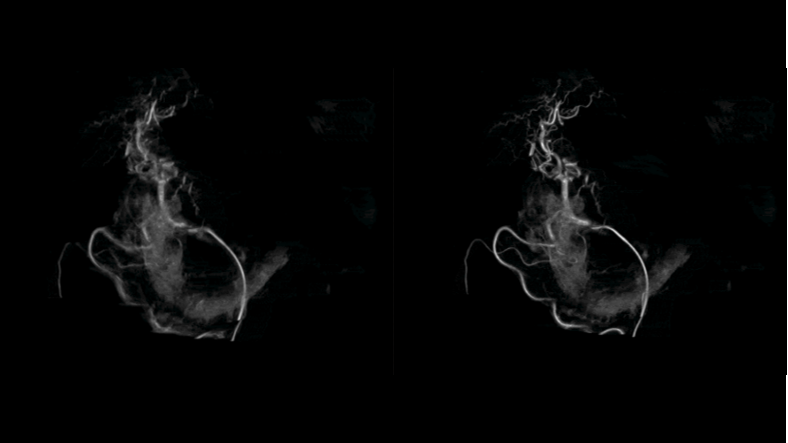
Because embolizations require highly detailed imaging on which to base decisions, Siemens Healthineers offers its fully automated software Syngo DynaCT MORE for motion reduction. The use of 3D imaging techniques such as DynaCT alongside 2D imaging enhances the manual assessment of anatomical information and provides a reliable basis for advanced 3D planning and navigation tools. But 3D imaging of the thorax and abdomen can be compromised by motion artifacts caused by pulsating vessels, heartbeat, or patient breathing, resulting in blurring and reduced detail visibility. Through iterative image reconstruction, Syngo DynaCT MORE provides a realignment of high-contrast structures like vessels and devices, without losing anatomical information. DynaCT datasets that were previously not usable due to patient movement can be restored, potentially reducing the need for repeated scans.
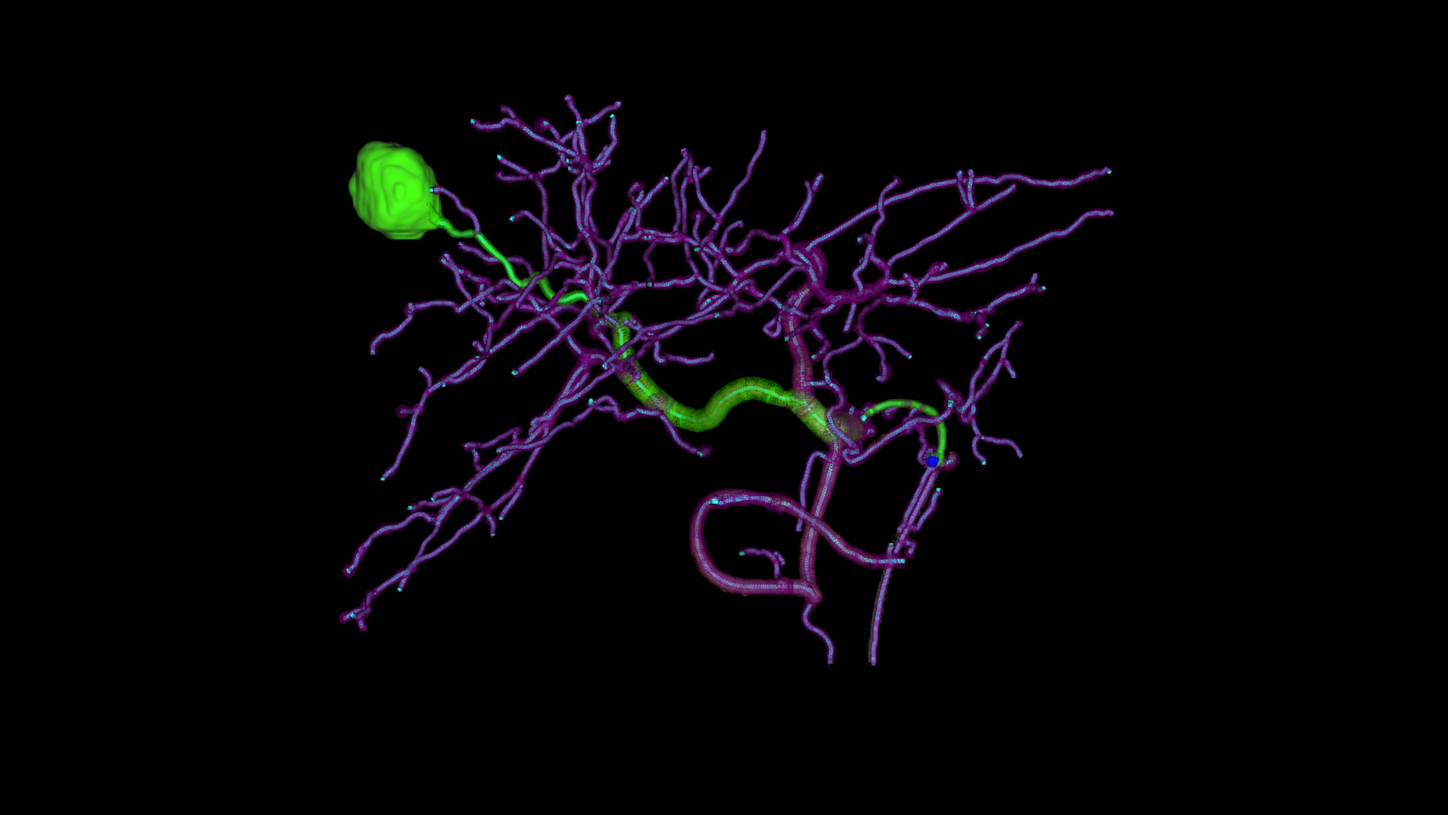
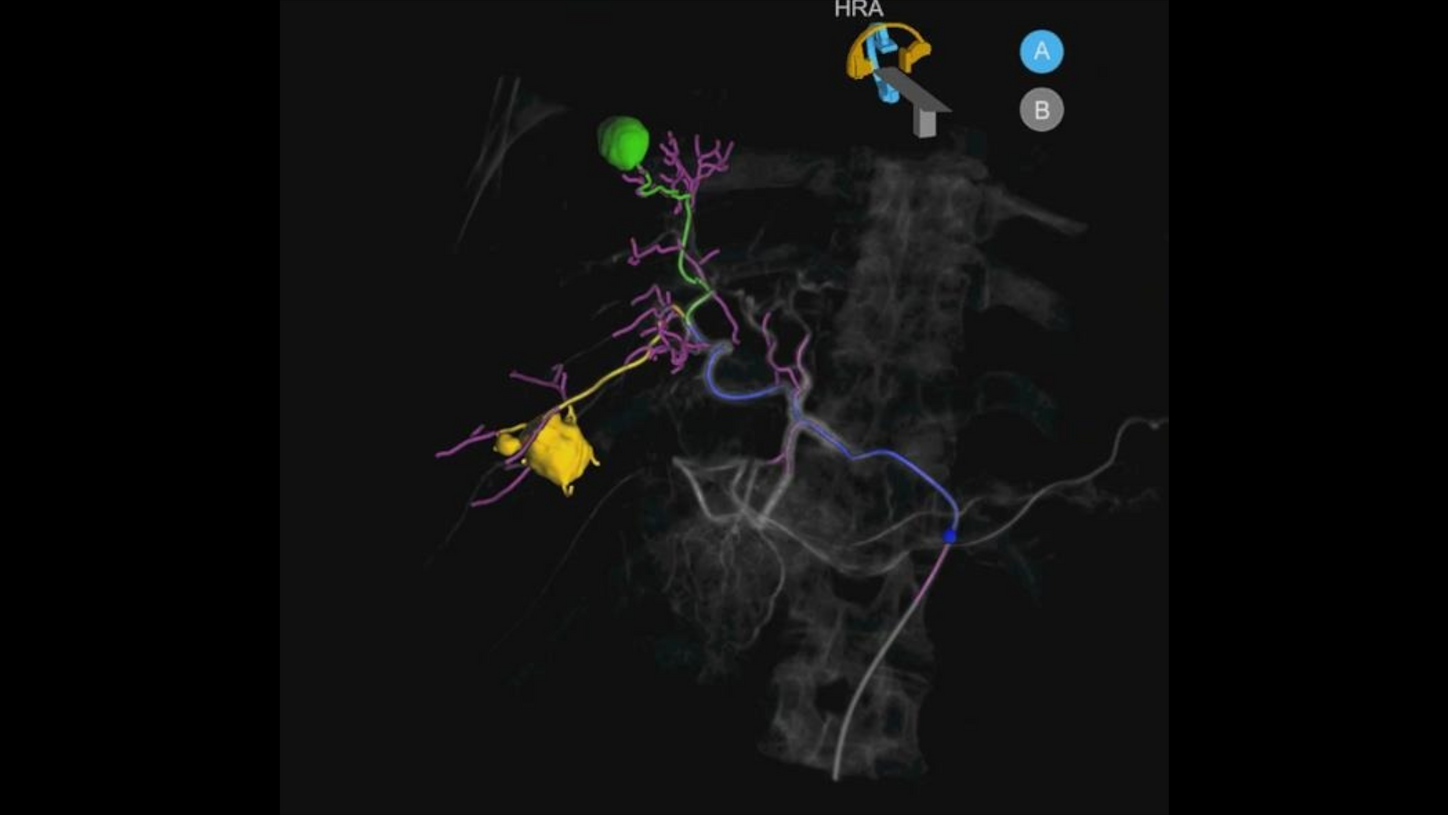
To boost workflow efficiency, Siemens Healthineers has developed the AI-based myEmbolization Guide for its new systems, which automates manual tasks and supports decision-making. The algorithm behind myEmbolization Guide has been trained organ-specifically, so that interventional radiologists can choose a liver, prostate or a flexible general workflow when starting the planning and guidance software. The liver workflow offers precise three-dimensional tumor contouring with a clear target depiction of the tumor and the flexibility to select an extended, consistent treatment zone around it in 3D. The comprehensive vascular map for liver and prostate embolization clearly differentiates feeder from non-feeder vessels, which allows for confident planning and precise navigation in the interventional room. This also applies when treating benign prostate hyperplasia, a non cancerous enlargement of the prostate gland, with prostatic artery embolization.
The new Artis portfolio is also equipped with the imaging chain Optiq AI. During the image-processing step, an AI-based algorithm reduces the noise introduced by X-ray scatter effects and the imaging system during image formation (such as noise from electronics) in real time. This denoising benefits various two-dimensional imaging modes for better image quality at the same dose.
An intuitive user interface helps workflow efficiency, guiding users through all steps and supporting the interaction between control and exam room.
“Interventional radiology demands precision, and our new Artis portfolio represents a leap towards truly personalized therapy for cancer patients,” said Carsten Bertram, head of Advanced Therapies at Siemens Healthineers. “With artificial intelligence as a key enabler, we aim to empower healthcare professionals to treat more patients more effectively.”
Prof. Dr. med. Frank K. Wacker, president of DeGIR (Deutsche Gesellschaft für Interventionelle Radiologie und minimal-invasive Therapie; German society for interventional radiology and minimally invasive therapy), added: “Any guidance on the workflow greatly improves the learning experience we can provide to our residents, and it also reduces errors and I think standardization helps a lot in delivering reliable patient care.”