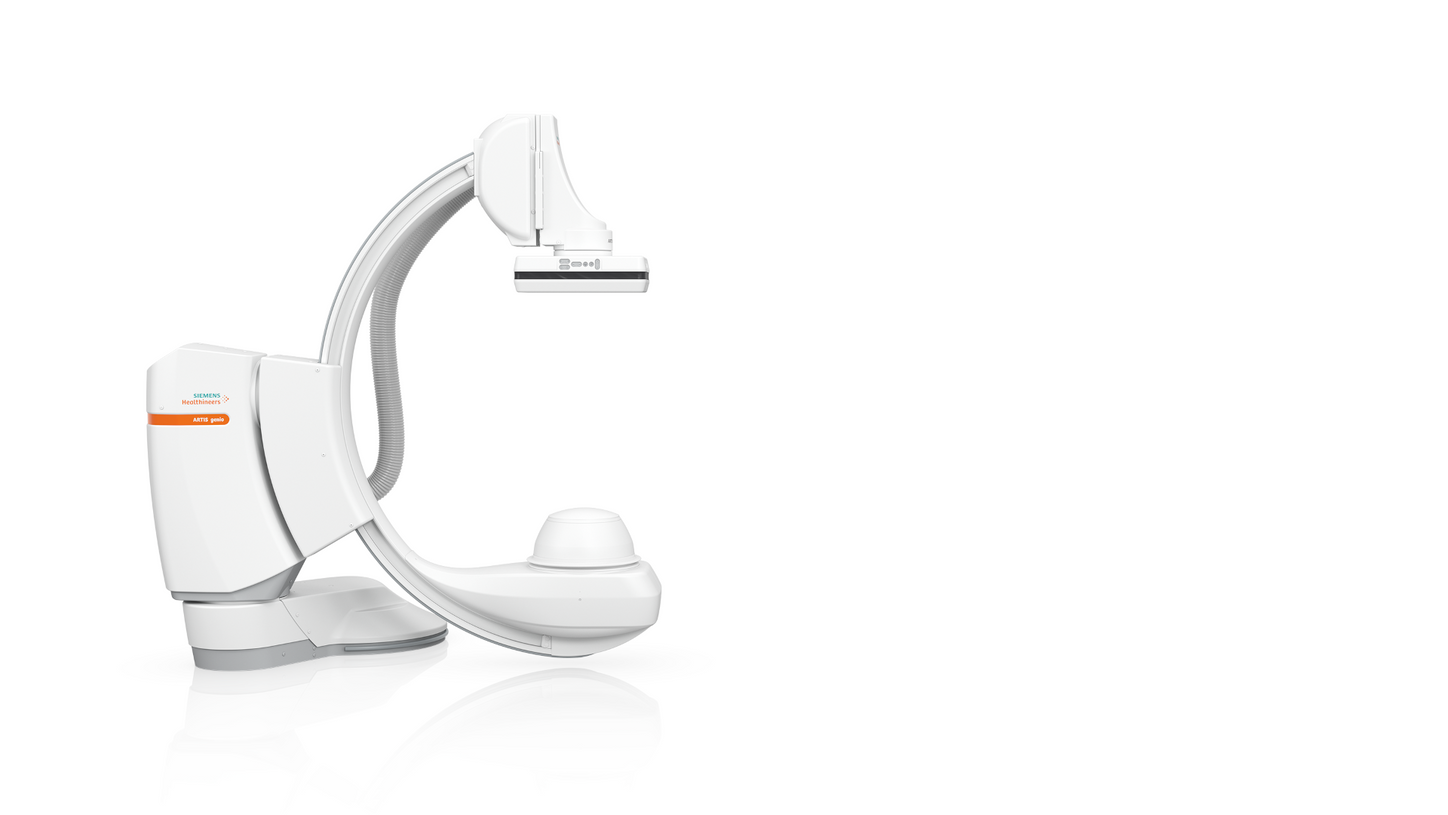






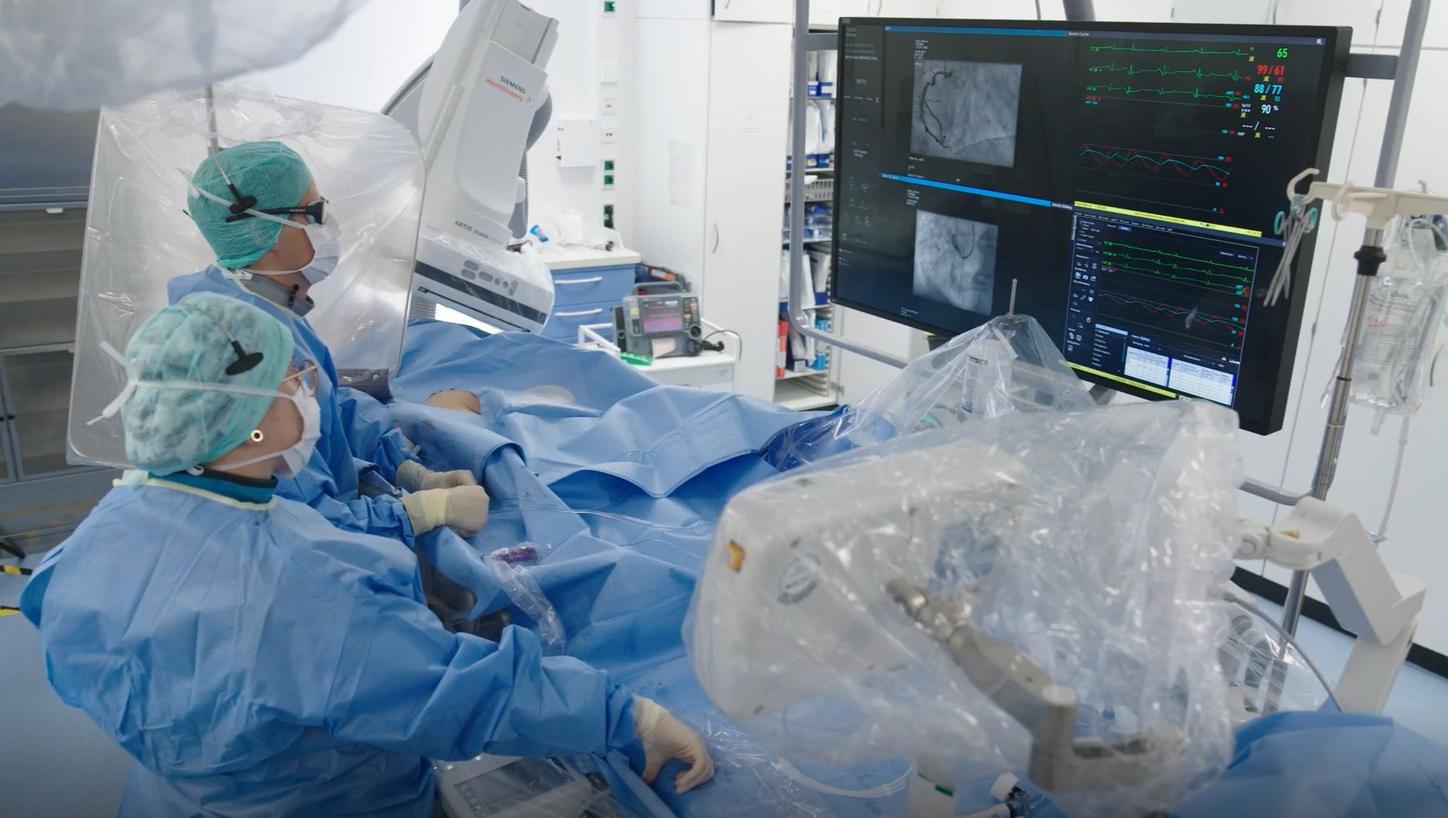
Professor Samuel Tobias Sossalla, MD, director of cardiology at Kerckhoff Clinic Bad Nauheim and University Clinic Gießen, Germany, is working with the new Artis icono.explore floor with Optiq AI.
Press release

Siemens Healthineers Presents New AI-powered Imaging Chain Optiq AI for its Latest Interventional Systems Portfolio

Congress of the Radiological Society of North America (RSNA) 2025, Booth #2529, South Hall
Published on November 30, 2025
  • Growing need for precision and high image quality in image-guided therapy 
  • AI-based live image denoising reduces noise for better image quality at the same dose 
  • Optiq AI will be available on three new imaging platforms

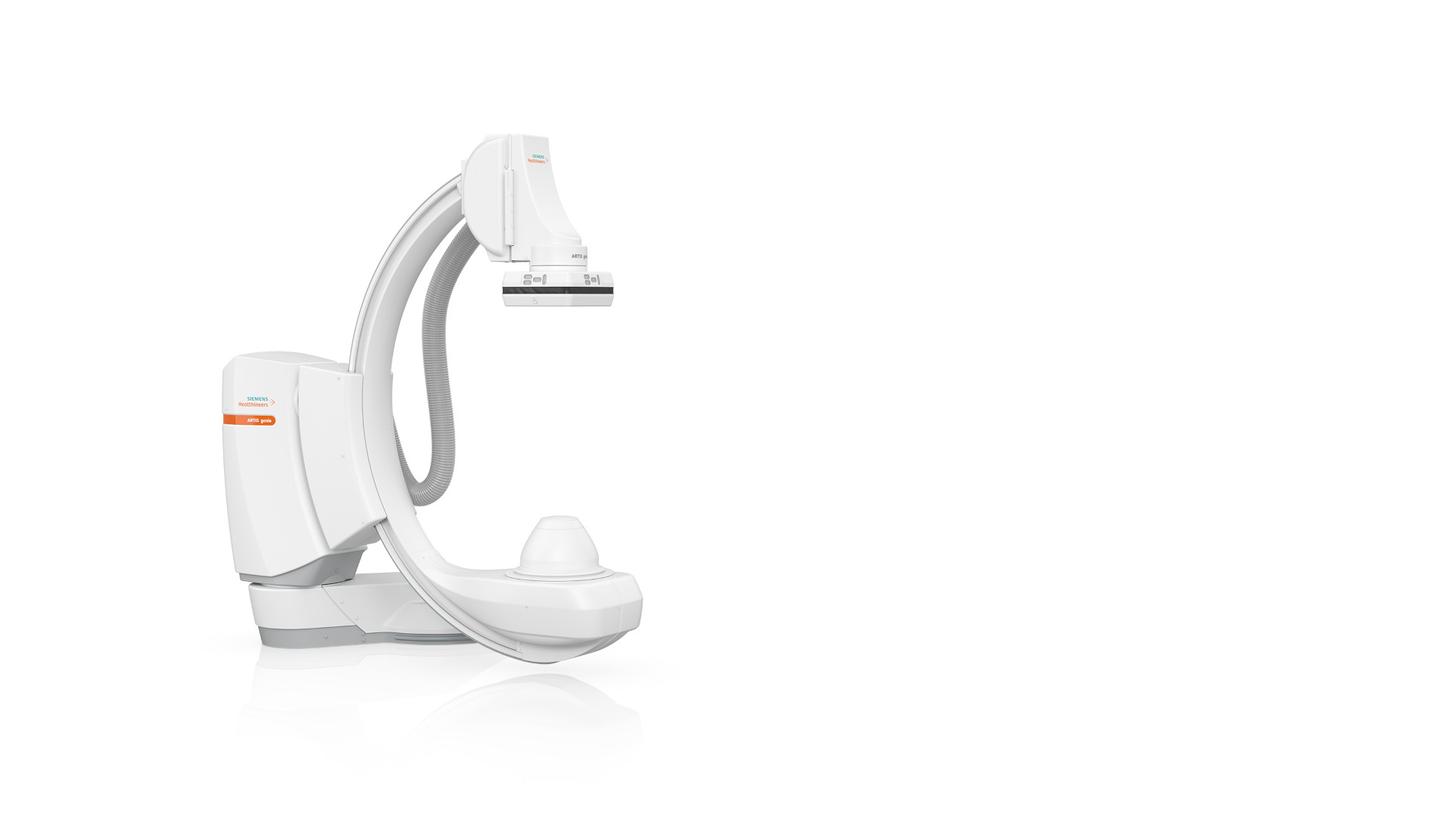
At this year’s Annual Meeting of the Radiological Society of North America (RSNA), Siemens Healthineers is presenting its new imaging chain Optiq AI1, which is powered by artificial intelligence and designed to deliver higher quality low-dose images for precise image-guided procedures. Optiq AI will be available across the three new imaging platforms Artis genio1, Artis icono.explore1, and Artis icono.vision2/Artis pheno.vision2

Image-guided therapy today is facing a growing number of increasingly complex procedures. The need for precision in early-stage treatments of small anatomies is on the rise. Minimally invasive therapies such as transarterial embolizations require a clear view of anatomies and devices. And complex imaging tasks such as steep angulations in cardiac interventions or treating obese patients, where a higher radiation dose is needed, often have a significant impact on image quality. All this can lead to a trade-off between image quality and the safety of both patients and clinical staff. One way to improve this is to rethink the image processing pipeline, introducing innovations at the point before the actual image appears. 

This is why Siemens Healthineers has developed Optiq AI. As part of the image processing step, an AI-based algorithm reduces the noise introduced by the imaging system during image formation (such as noise from electronics) in real time. This denoising benefits different two-dimensional imaging modes, including fluoroscopy, acquisition, and digital subtraction angiography in the fields of interventional radiology, cardiology, and minimally invasive surgery. During image data acquisition, Optiq AI uses big data to automatically find the optimal parameter combination for the user’s set imaging needs. The parameter exposure control dynamically adjusts tube voltage, tube current, copper prefiltration, focal spot size, pulse width, and detector dose – while also considering source-image distance and collimation. If during a procedure, the system has to be moved or the angulation or collimation need modifying, the parameters are automatically adjusted. This maintains the requested image quality and keeps the dose as low as reasonably achievable. 

“The growing need for earlier-stage treatments raises the bar for image quality and this is where artificial intelligence comes into play. With Optiq AI, we are unlocking AI’s potential for a new generation of interventional systems and are bringing it to all clinical fields,” explains Carsten Bertram, head of Advanced Therapies at Siemens Healthineers. “Clinical staff and their patients benefit from accelerated workflows and better image quality, paving the way for precision therapy.” 

Professor Samuel Tobias Sossalla, MD, director of cardiology at Kerckhoff Clinic Bad Nauheim and University Clinic Gießen, Germany, and his colleagues have been working with the new Artis genio floor1 and Artis icono.explore floor1 with Optiq AI for five months. “You can really see a major breakthrough,” he said. “AI-based noise reduction gives us razor-sharp images of very high quality, which are excellent to work with.” 

Optiq AI is available on the latest range of interventional systems from Siemens Healthineers. The high-end product platforms Artis icono.vision and Artis pheno.vision have been developed with speed and precision in mind, Artis icono.explore comes with a powerful X-ray tube for high patient throughput, and Artis genio is designed for both versatility and productivity to handle a broad case mix.1, 2

Further information on Optiq AI and the new range of image-guided systems can be found here.

1
2

Siemens Healthineers 2026

Siemens Healthineers pioneers breakthroughs in healthcare. For everyone. Everywhere. Sustainably. The company is a global provider of healthcare equipment, solutions and services, with activities in more than 180 countries and direct representation in more than 70. The group comprises Siemens Healthineers AG, listed as SHL in Frankfurt, Germany, and its subsidiaries. As a leading medical technology company, Siemens Healthineers is committed to improving access to healthcare for underserved communities worldwide and is striving to overcome the most threatening diseases. The company is principally active in the areas of imaging, diagnostics, cancer care and minimally invasive therapies, augmented by digital technology and artificial intelligence. In fiscal 2025, which ended on September 30, 2025, Siemens Healthineers had approximately 74,000 employees worldwide and generated revenue of around €23.4 billion. Further information is available at siemens-healthineers.com.