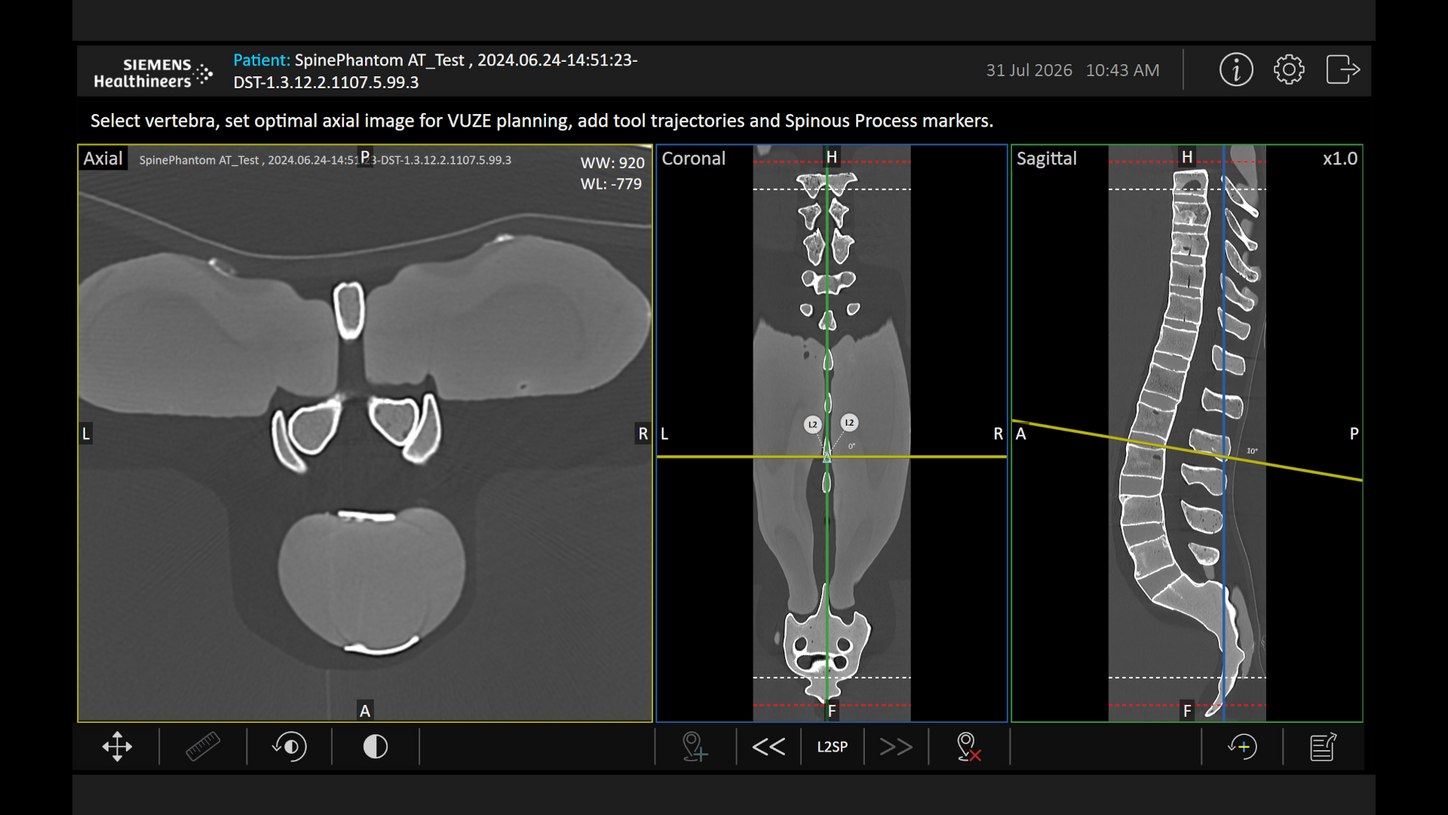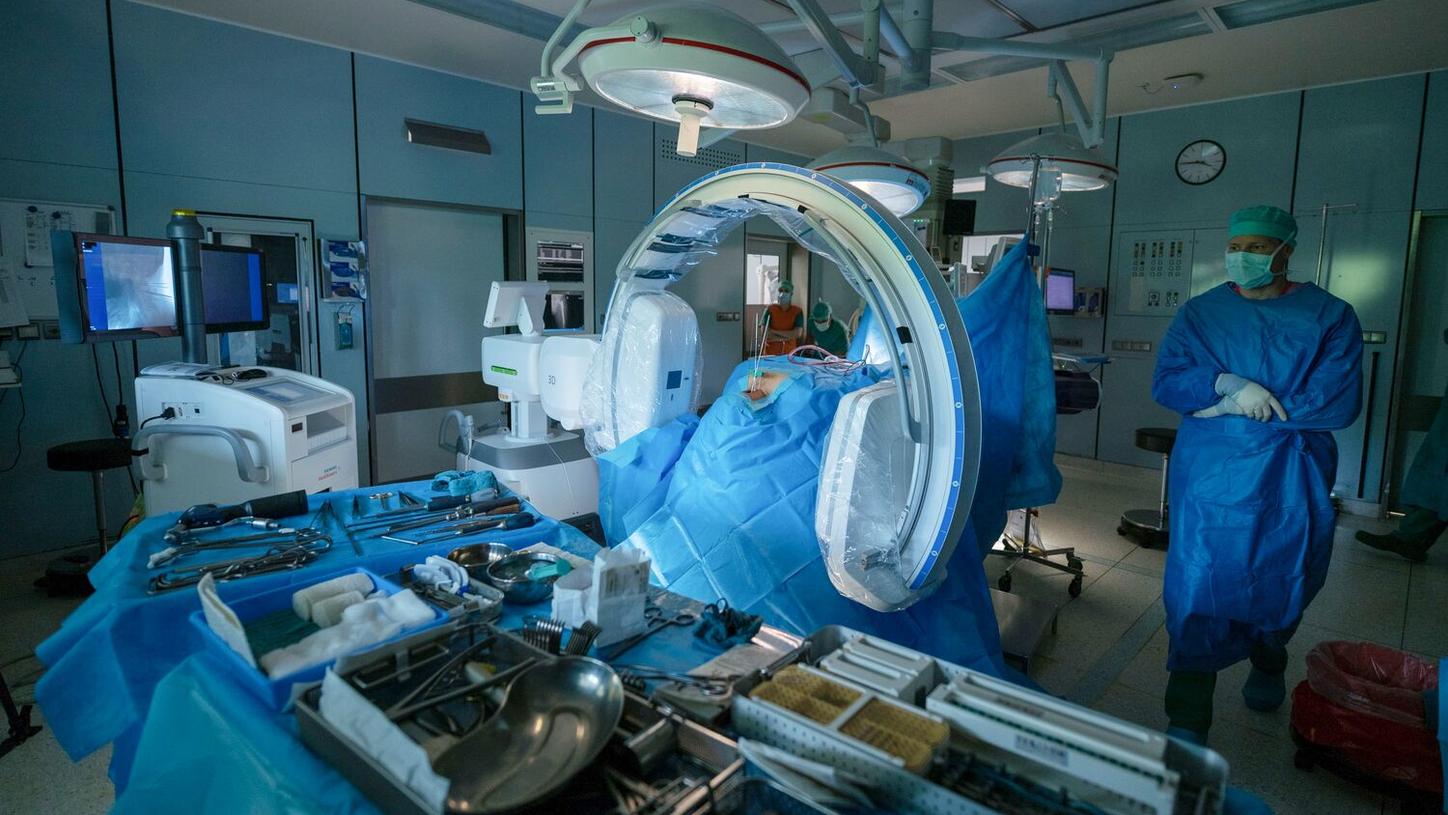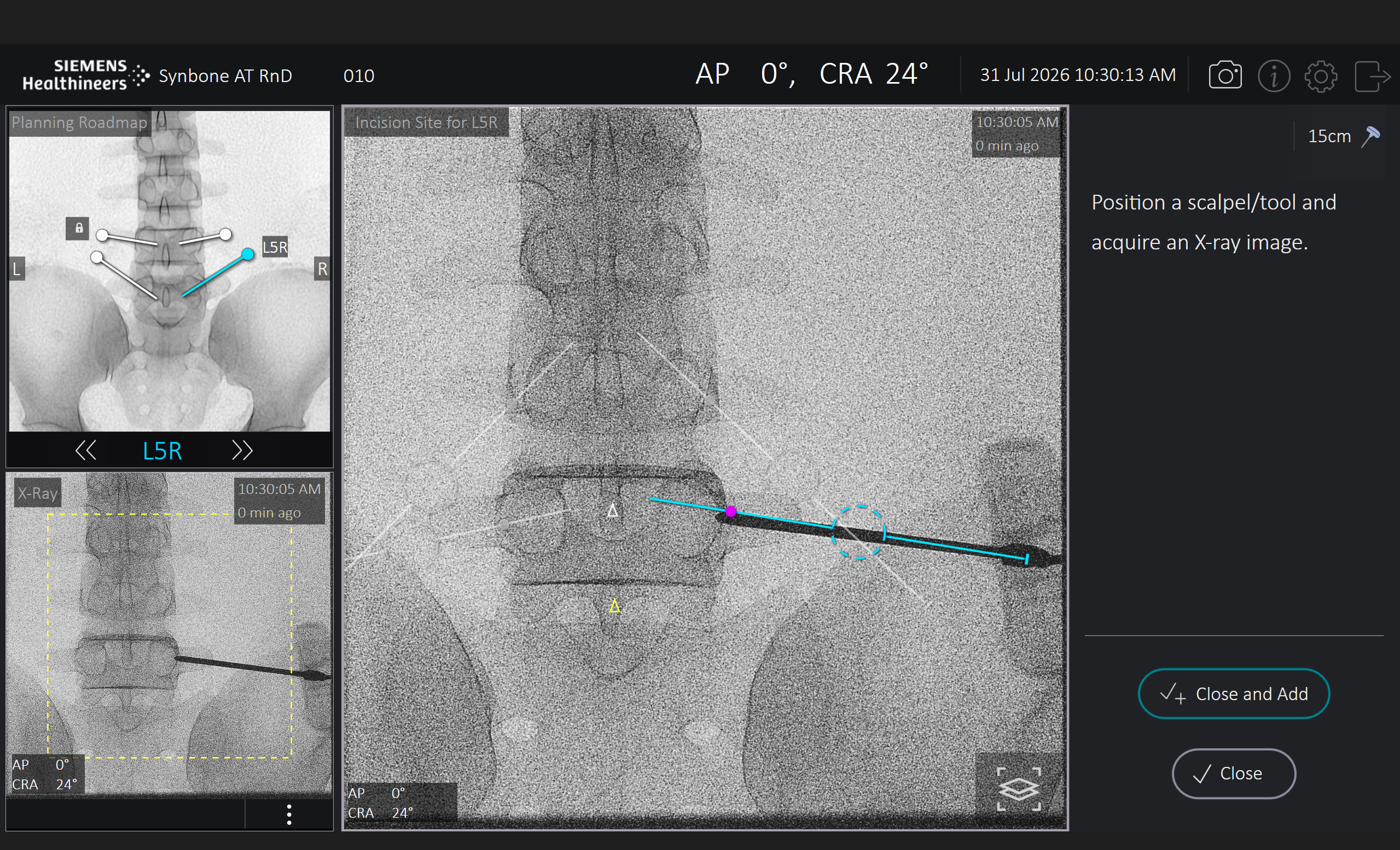






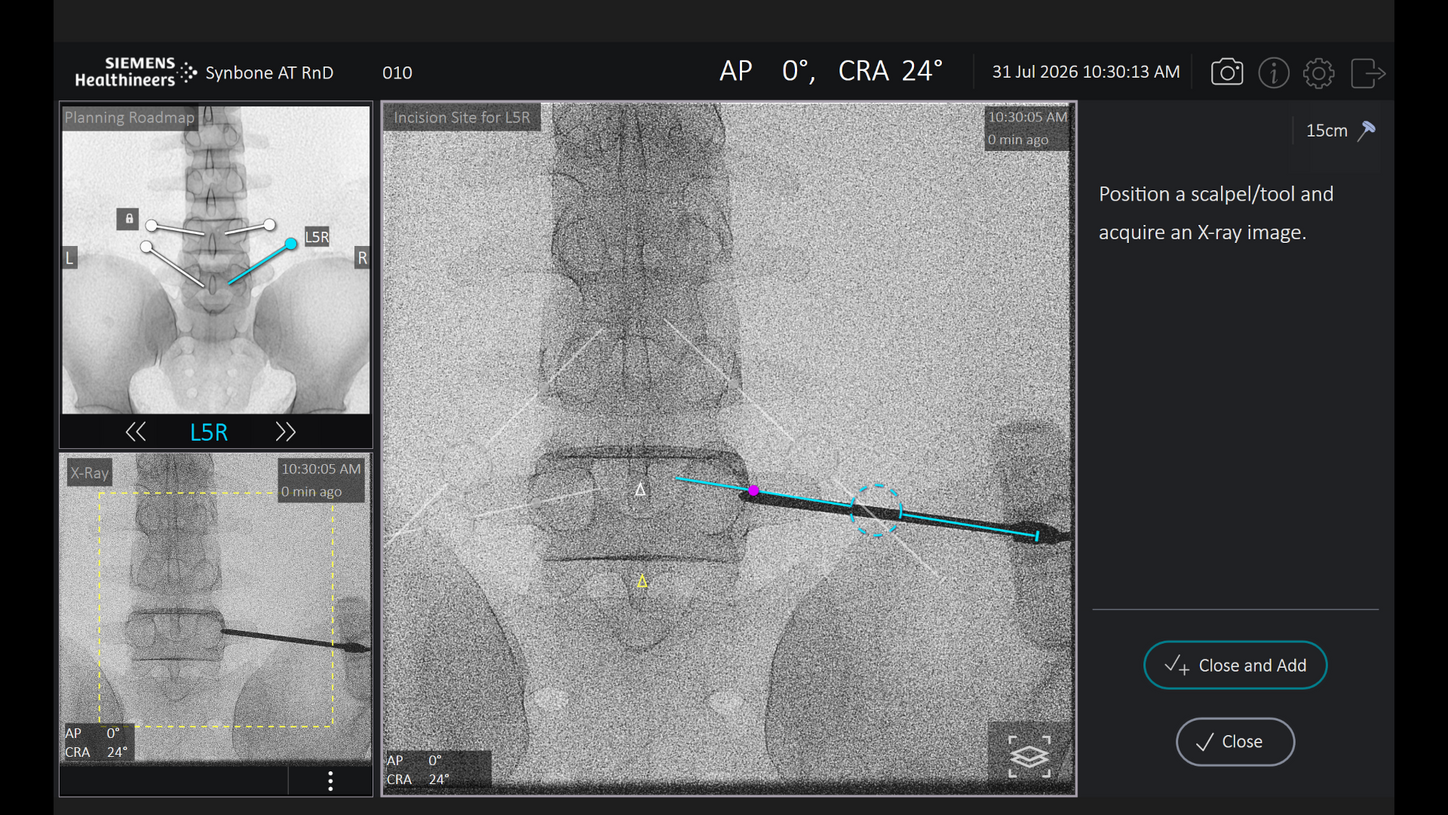
The Vuze2 guidance software for spinal surgery by Siemens Healthineers supports K-wire placement for pedicle screws by fusing preoperative Computed Tomography (CT) or intraoperative cone-beam CT (CBCT) images with intraoperative X-ray images of the patient without relying on external tracking hardware.
Press release

Siemens Healthineers Presents Software for Trackerless Guidance in Spinal Surgery

Published on September 8, 2026
  • Vuze meets growing demand for software guidance in spinal surgery 
  • Screw placement on artificial spine models with accuracy of up to 96.7%1 
  • Designed to integrate into mobile C-arm systems workflow for pedicle screw placement

Siemens Healthineers has incorporated Vuze2 guidance software for spinal surgery into its C-arm system Cios Spin and plans to expand integration to its other 2D mobile, 3D mobile, and 3D robotic C-arms in the future. The software supports K-wire placement for pedicle screws by fusing preoperative Computed Tomography (CT) or intraoperative cone-beam CT (CBCT) images with intraoperative X-ray images of the patient without relying on external tracking hardware like optical cameras, instrument markers, or physical reference frames attached to the patient. 

Spinal surgery volumes are rising steadily, driven by aging populations and lifestyle-related risk factors including sedentary behavior, obesity, and physical strain. In the U.S. alone, the population aged 65 and older is expected to increase to 82 million by 2050 from 58 million in 20223, driving the prevalence of degenerative spinal conditions and the need for interventions such as spinal fusion and stabilization procedures. Spine care is shifting toward minimally-invasive techniques, which help reduce tissue damage, blood loss, and recovery times. Over the past year, procedure volumes in the U.S. have increased by an estimated 18.7%4. Minimally-invasive surgeries require guidance technologies to help improve outcomes, as misplaced screws can result in neurological, vascular, or visceral injury and may compromise implant stability. Pooled data show a median placement accuracy of up to 95% for navigated techniques, compared to 92% for fluoroscopy only5. Until now, however, achieving this level of precision has often involved added complexity, longer setup times, and additional hardware and extra cost. 

“Our goal is to close the gap between conventional fluoroscopy and advanced optical navigation systems,” said Peter Seitz, head of image-guided surgery and robotics at Siemens Healthineers. “With Vuze, we expand what mobile C-arms can do in the operating room without adding complexity. Navigation technologies have proven their clinical value, and our vision is to bring that value within reach of every care setting, broadening access for guided spine surgery and complementing the ecosystem of guidance solutions.” 

Vuze spinal guidance software provides intraoperative guidance for K-wire placement during pedicle screw procedures – the metal implants that act as an anchor point to hold the spine steady while bones heal – and integrates smoothly into established minimally-invasive spine surgery workflows. It combines pre-operative 3D planning with intraoperative fluoroscopy to provide continuous image guidance. 

Professor Veit Braun, head of neurosurgery at Diakonie Klinikum Jung-Stilling, Siegen, Germany, has been testing the software extensively. He said: “For 30 years, I’ve been waiting for a spinal navigation without tracking tools that fits into the way I already work. Vuze may in the future deliver that: no separate workflow, no instrument trackers, no reference frames, no cameras, no line-of-sight requirements.”6 

Vuze trackerless spinal guidance technology builds on the expertise of Siemens Healthineers in intraoperative imaging and is designed to integrate into the workflows of its 2D mobile, 3D mobile, and 3D robotic C-arms already used in operating rooms worldwide. Siemens Healthineers acquired Vuze last year, after a long-term collaboration with the company. 

Stefan Assmann, senior director of startup connect, Siemens Healthineers, said: “Through a successful proof of concept, we validated the combined solution, built trust between our teams, and established a strong foundation for future strategic decisions. This journey highlights how successful acquisitions are often rooted in successful partnerships first.”

Further information on Spine Surgery can be found here: https://www.siemens-healthineers.com/clinical-specialities/surgery/surgical-disciplines/spine-surgery-equipment.

2
5
6

Siemens Healthineers 2026

Siemens Healthineers pioneers breakthroughs in healthcare. For everyone. Everywhere. Sustainably. The company is a global provider of healthcare equipment, solutions and services, with activities in more than 180 countries and direct representation in more than 70. The group comprises Siemens Healthineers AG, listed as SHL in Frankfurt, Germany, and its subsidiaries. As a leading medical technology company, Siemens Healthineers is committed to improving access to healthcare for underserved communities worldwide and is striving to overcome the most threatening diseases. The company is principally active in the areas of imaging, diagnostics, cancer care and minimally invasive therapies, augmented by digital technology and artificial intelligence. In fiscal 2025, which ended on September 30, 2025, Siemens Healthineers had approximately 74,000 employees worldwide and generated revenue of around €23.4 billion. Further information is available at siemens-healthineers.com.