








Press release
The Future of Radiotherapy is Here: Siemens Healthineers Launches Accela
Booth #1111, ASTRO 2026, Boston, MA
Published on September 27, 2026
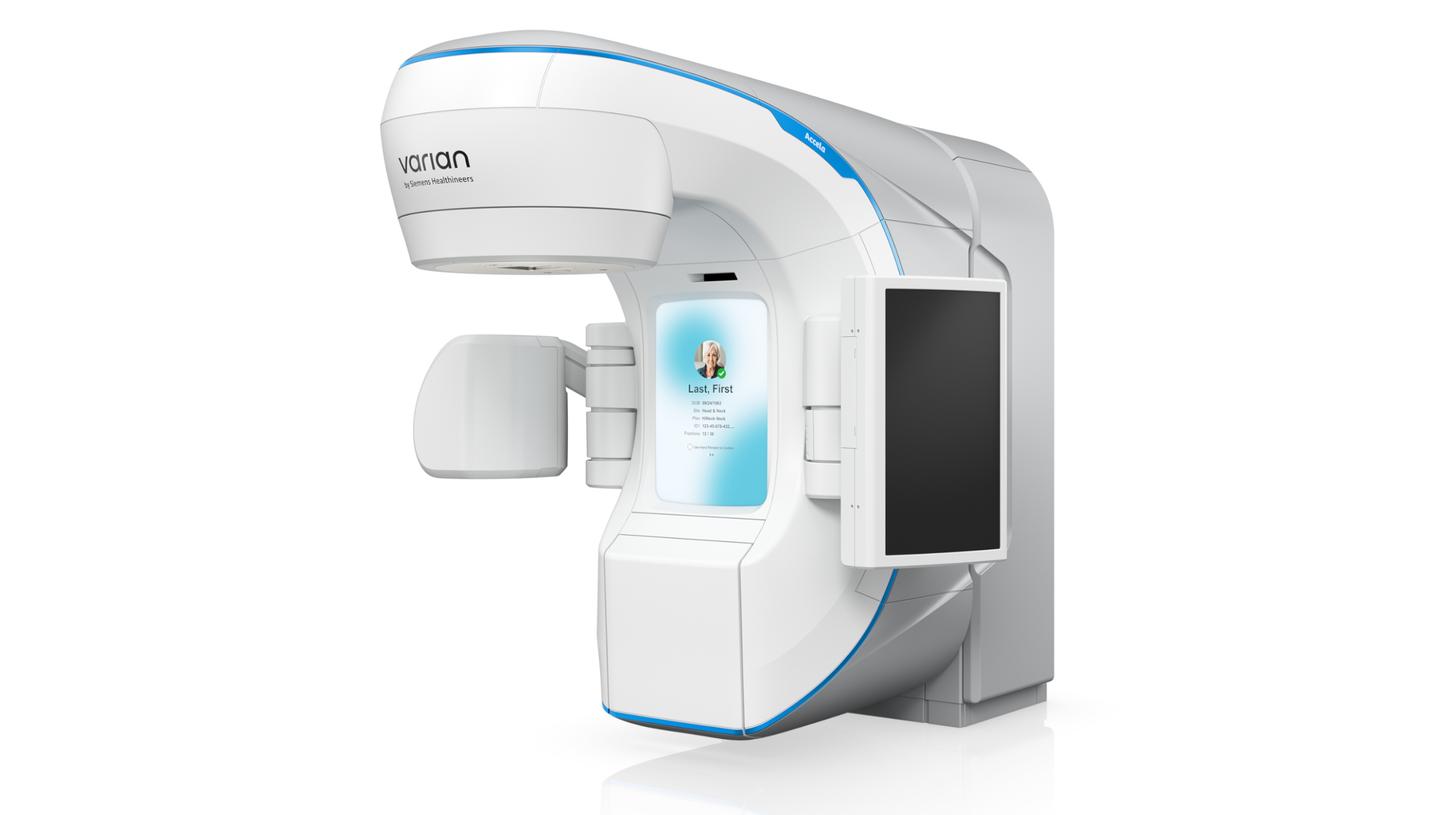
Accela, the first radiotherapy solution engineered around NeoArc, combining speed and precision for a broad range of cases while improving the scalability of complex treatments and reducing the time patients spend in radiotherapy treatment.
Download image
Download this press release
(pdf, 66.04 KB)Contact


1510(k) pending. Not available for sale in any market and no guarantee of commercialization or feature availability.
2DMAT is a new technique in radiation oncology using a faster gantry, multi-leaf collimator, and dose rate to create conformal treatment plans while improving treatment delivery times for patients.
Siemens Healthineers 2026
Siemens Healthineers pioneers breakthroughs in healthcare. For everyone. Everywhere. Sustainably. The company is a global provider of healthcare equipment, solutions and services, with activities in more than 180 countries and direct representation in more than 70. The group comprises Siemens Healthineers AG, listed as SHL in Frankfurt, Germany, and its subsidiaries. As a leading medical technology company, Siemens Healthineers is committed to improving access to healthcare for underserved communities worldwide and is striving to overcome the most threatening diseases. The company is principally active in the areas of imaging, diagnostics, cancer care and minimally invasive therapies, augmented by digital technology and artificial intelligence. In fiscal 2025, which ended on September 30, 2025, Siemens Healthineers had approximately 74,000 employees worldwide and generated revenue of around €23.4 billion. Further information is available at siemens-healthineers.com.