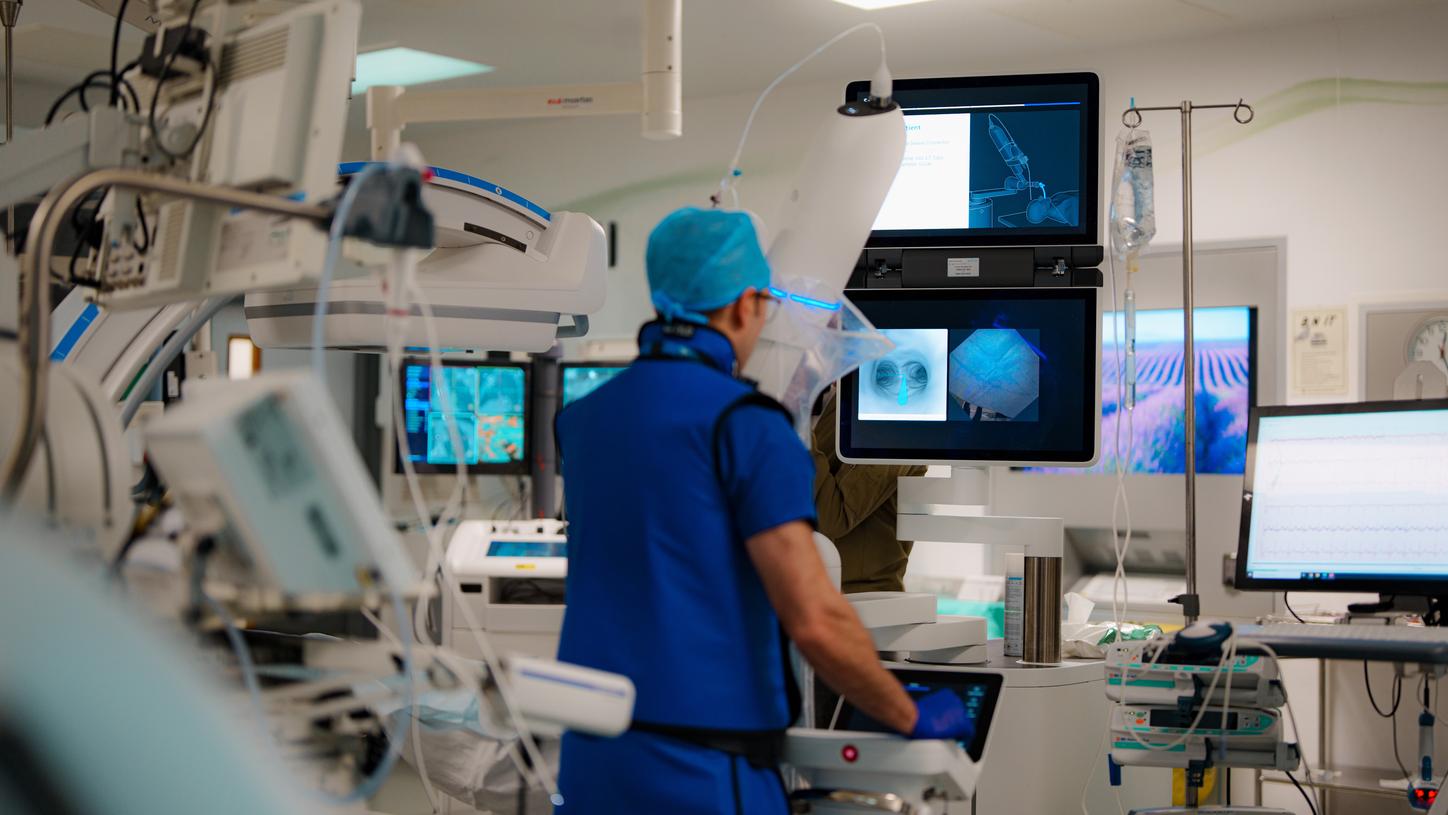
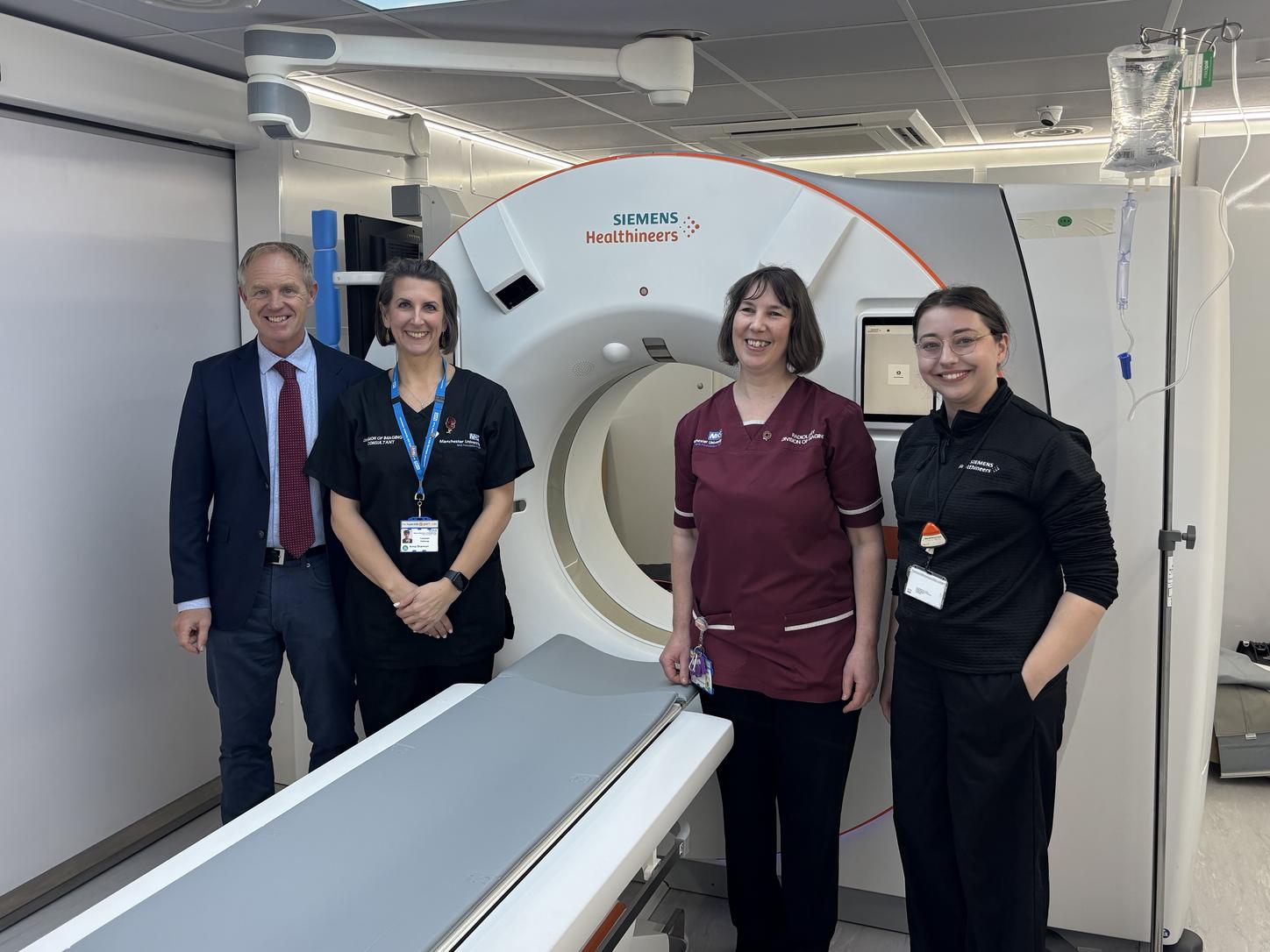
Manchester University NHS Foundation Trust is nearly doubling biopsy capacity in lung cancer diagnostics with a bespoke, end-to-end modular lung biopsy unit, powered by Siemens Healthineers technology. Developed at Wythenshawe Hospital to meet rising demand and support earlier detection across Greater Manchester, the service integrates a purpose-built imaging and recovery space with interventional biopsy facilities, dramatically improving operational efficiency and patient experience.
The lung screening service has grown substantially to meet regional needs, increasing from fewer than 100 biopsies a year in 2014 to more than 700 annually today. This expansion supports Greater Manchester’s ambition to diagnose lung cancer earlier, when outcomes are significantly better - with around 65% of people diagnosed at the earliest stage surviving five years or more nationally, compared with less than 10% at the latest stage¹. The new unit enables patients to be biopsied and treated sooner, directly improving health outcomes.
Central to the unit’s success is advanced imaging and procedural technology from Siemens Healthineers. The SOMATOM X.Cite CT scanner delivers high-resolution imaging with integrated laser guidance for precise targeting of small or hard to reach lung lesions. As part of the wider lung biopsy service, the Cios Spin mobile 2D/3D C-arm provides real‑time intraoperative imaging and immediate verification of needle placement without moving the patient, supporting safer, more accurate biopsies and streamlined workflows. Together, these systems enable clinicians to perform more biopsies per session and accelerate diagnosis with consistently high imaging quality.
In practice, combining a purpose-built environment with high-performance imaging technology has transformed how lung biopsies are delivered in Greater Manchester. Patients benefit from shorter visits, fewer transfers, reduced anxiety and quicker diagnostic turnaround, while clinicians gain improved workflow, greater throughput and a cohesive environment designed around the needs of both patients and staff. The new environment is also proving invaluable for training the next generation of thoracic radiologists, offering hands on experience at a time when the UK faces a shortage of specialists in lung intervention.
“Having imaging, procedure and recovery in one place has completely reshaped the way we deliver lung biopsies,” states Anna Sharman, consultant radiologist at Manchester University NHS Foundation Trust. “The workflow is more efficient, our patients spend less time waiting or being moved between areas, and the imaging technology helps us target lesions with real precision. It’s a model that is already making a significant difference to how quickly we can diagnose lung cancer, ensuring both clinical excellence and operational efficiency.”
“This kind of integrated service is becoming increasingly important as demand for lung cancer diagnostics grows,” states Darren Buckley, regional sales director at Siemens Healthineers Great Britain and Ireland. “The approach taken in Greater Manchester shows that combining the right environment with the right tools can support earlier diagnosis, improve patient experience and build sustainable services for the future. It points the way for how lung cancer pathways could evolve across the UK, helping more patients access faster, more coordinated care.”