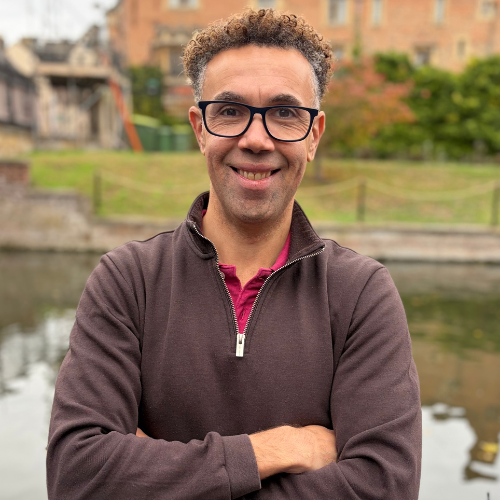
Rob Dove, Head of Talent Acquisition, North West Europe
I absolutely love leading the recruitment team. I love being able to attract and recruit great talent to join our organisation. We design inclusive, engaging, and hopefully fun recruitment experiences for everybody, and I love seeing people thrive in our organisation as their careers continue. I partner with many stakeholders in HR and senior leadership across Great Britain, Ireland, and the Nordics, and I really enjoy the business side of it as well. I'm also an active member of a couple of ERG groups, including race and disability, and that's important part of my role and something I thoroughly enjoy.
My career with Siemens Healthineers started shortly before the first COVID lockdown when I joined our Siemens Healthineers Magnet Technology in Oxford, on an initial contract basis. As somebody with Multiple Sclerosis, this is really personal to me because I had my MS diagnosis through an MRI scanner, and the work we do at Oxford is to design the superconducting magnets for MRI scanners globally. Having the opportunity to use my skills in this field is very meaningful for me. Subsequently, I was lucky enough to be given a permanent role, and then, about 12 months later was asked to apply for Head of Talent Acquisition for Great Britain and Ireland, which I was fortunate to get. I then joined the Europe, Middle East, and Africa leadership team, where my role expanded to look after the Nordics and Baltics as well.
There have been many occasions where I've felt supported at work. I think, one that stands out particularly was when we had an email come round inviting people to join a new, disability ERG group at Oxford. There were 18 of us at the first meeting, who either directly or indirectly were affected by disability. I didn't know a lot of people in the room, but it was great to see it had senior sponsorship from both the site MD and Head of Manufacturing. People completely opened up about their motivation for being there. We subsequently have gone on to become Disability Confident as an organisation. I knew it was my home already, but at that point I knew his is absolutely where I want to be.
With MS, one of the things I experience is Optical Neuritis, which affects the way I see. I find driving at nighttime quite difficult with the headlights. I shared this with the HR business partner, and she was brilliant during the winter months, giving me the flexibility to get to work a little bit later or leave a little bit earlier. My role is now very hybrid. I am lucky enough to be able to choose which location and times I'm in the office, and I'm able to fit all my work around the hours I choose to work, which is fantastic.
I think my advice would be if you want to work for an organisation where you really want to have a sense of pride in what you're doing and the impact the work has on healthcare globally, then it's a brilliant place to be.
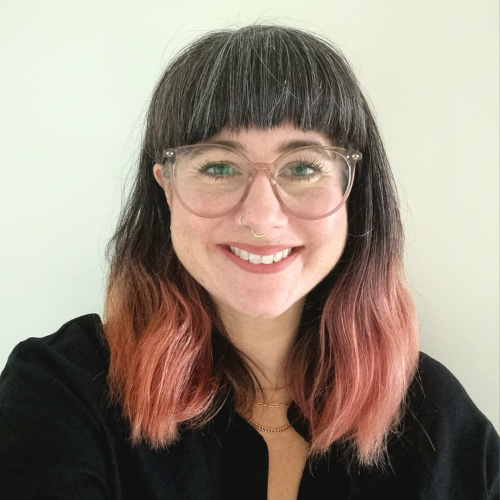
Aimee Garwell, Talent Acquisition Partner - Early Careers
I have a form of epilepsy where I experience seizures while I'm asleep. I was diagnosed when I was 11 years old and, over the years, I've learned a lot about managing my condition and understanding what helps me stay well.
Like many people with long-term health conditions, my experience hasn't always been straightforward. Finding the right medication took time, and there have been periods when my epilepsy has had a greater impact on my life, including during pregnancy and at times when my sleep has been disrupted.
One of the biggest things I've learned is how important it is to work in an environment where you feel supported and understood. Earlier in my career, I worked in hospitality where long shifts, late finishes and unpredictable hours were common. For someone with epilepsy, maintaining a healthy sleep routine is particularly important, so moving into a role with more predictable hours made a significant difference.
Today, I work in a role where I can balance my work responsibilities while also managing my health effectively. I work in Talent Acquisition, looking after UK&I early careers, recruiting apprentices, interns and graduates. I really enjoy this particular area of recruitment because I like working to start people off on their career journeys. At this stage, it’s so much about recruiting for potential rather than experience and setting them up for future career success.
There are times when my epilepsy can affect me. After a seizure, I can experience significant fatigue and may need time to recover. My medication can also sometimes cause tiredness or brain fog. What has made a real difference is knowing I can have open conversations with my manager when I need support. For example, if illness or disrupted sleep increases the risk of a seizure, I've been able to work flexibly and adjust my schedule to prioritise my wellbeing while continuing to do my job effectively.
When I first applied for my role, I chose not to disclose my epilepsy. At the time, I was concerned that people might make assumptions about what I could or couldn't do. Looking back, I would now make a different decision.
Once I got to know my team and the organisation, I realised that I was working in an environment where I could be open about my condition and have honest conversations about support when needed. Within my first few months I realised the company has a culture of openness. I noticed during casual and informal conversations with people at various levels of the organisation that they mentioned their own personal health challenges and it made me realise that this wasn’t a taboo topic.
If you're considering applying for a role and wondering whether to talk about your disability, my advice would be not to be afraid of those conversations. Siemens Healthineers will want to understand how to help you succeed and may be able to offer support you hadn't even considered. Through my role in recruitment, I see first-hand the advantages of sharing your disability when you apply. It allows us to level the playfield. We will do all we can to support you to do and be your best.