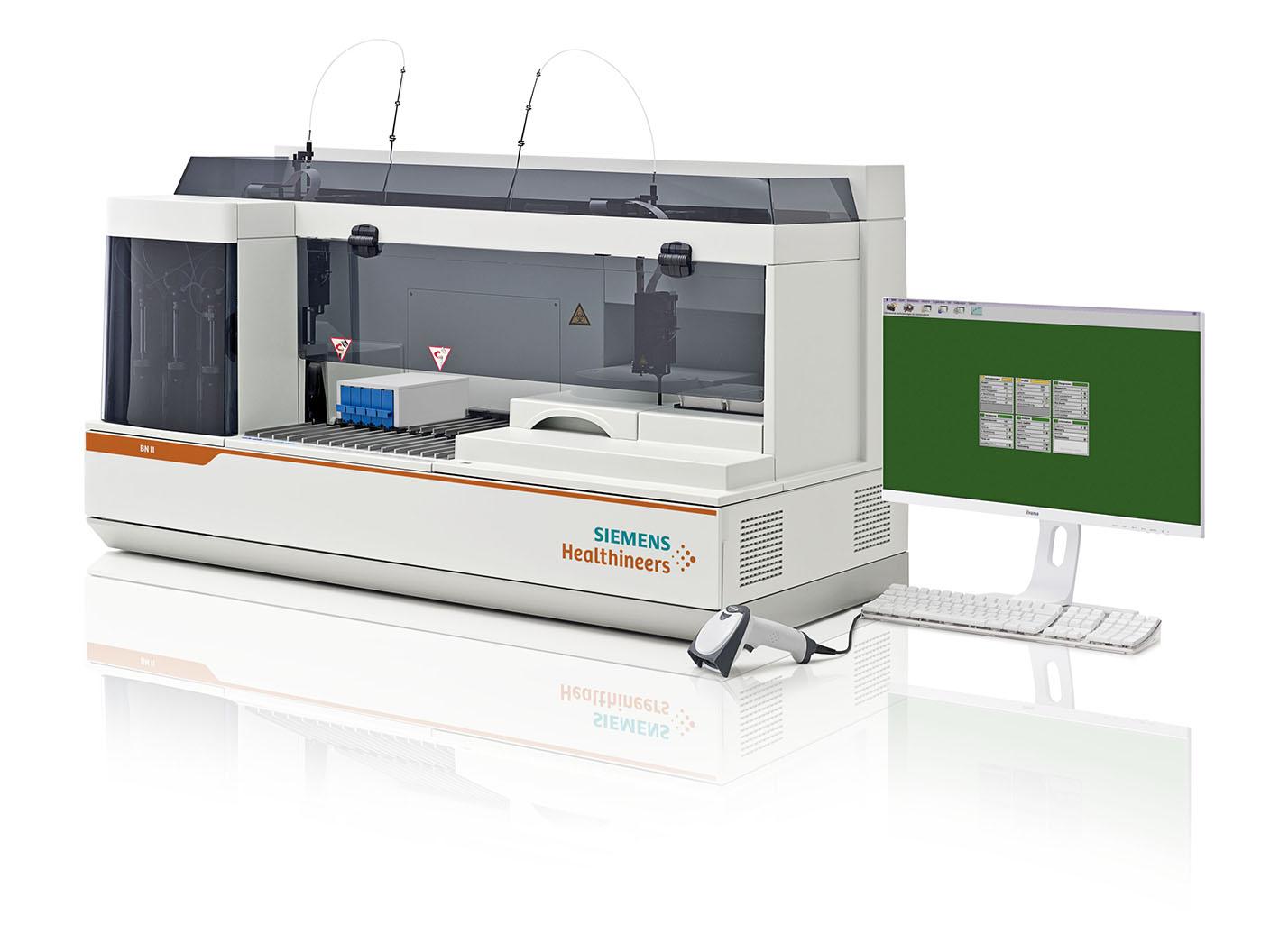
Next-generation BN II SystemThe nephelometric performance you trust.
The speed and workflow you need.
The next-generation BN II System combines the modern features that high-volume labs need – including onboard reagent cooling, the broadest menu of plasma protein assays,* and automation connectivity options – with proven nephelometric technology for confidence in results.
Benefits
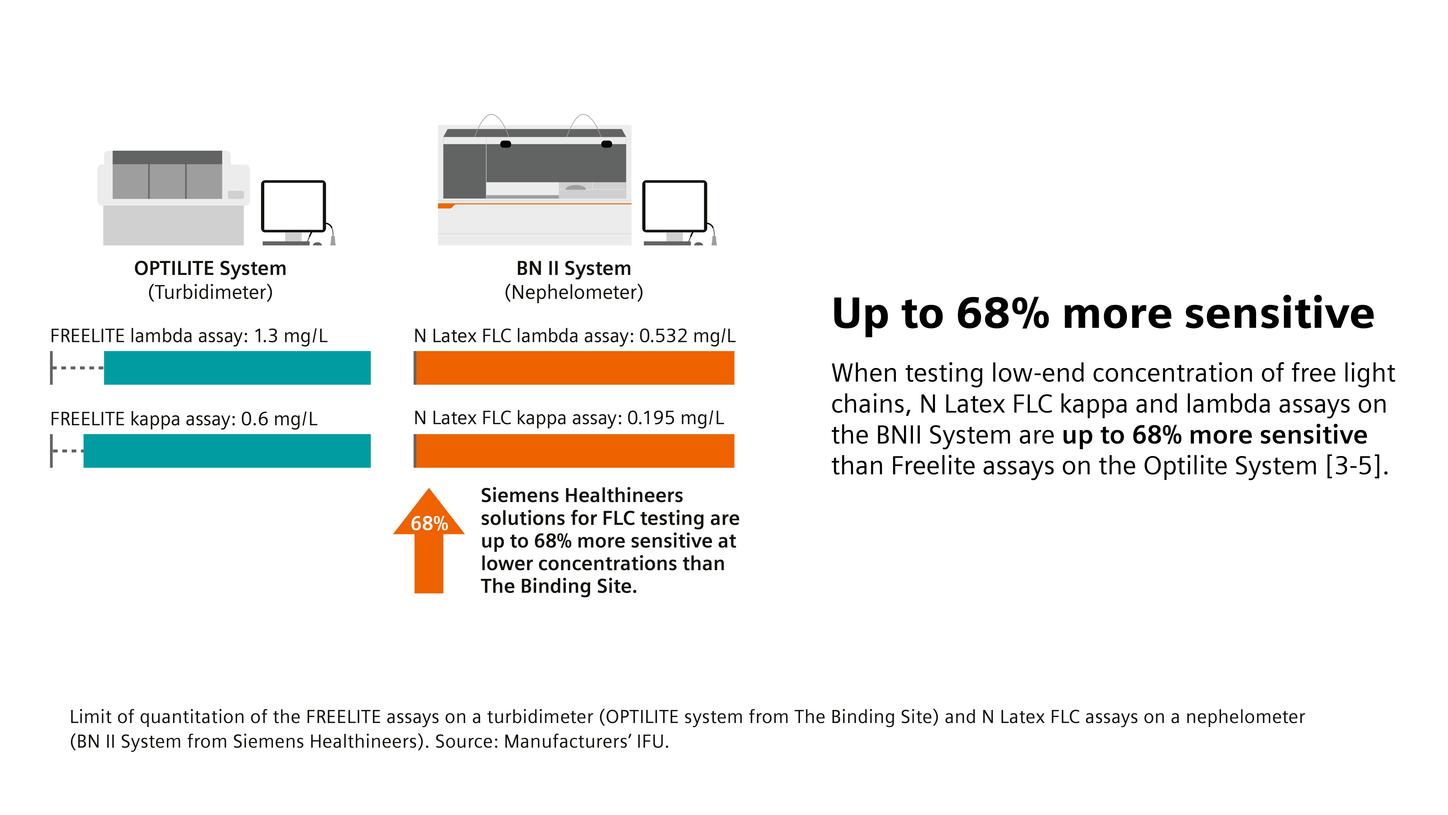
Highly precise and reproducible, nephelometric technology provides additional sensitivity that is critical for testing diseases such as multiple myeloma, for which accurate free light chain test results are required to derive a true free light chain kappa-to-lambda ratio. With proven nephelometric technology, the next-generation BN II System provides:
- Sophisticated antigen-excess pre-reaction protocols for more-accurate results and fewer repeats
- Wide initial measuring ranges, reducing the need for retesting
- Automatic specimen and reagent level detection prior to processing to ensure accuracy of results
- Automatic serial dilution technology supports reliable results and helps to keep the dilution factor low
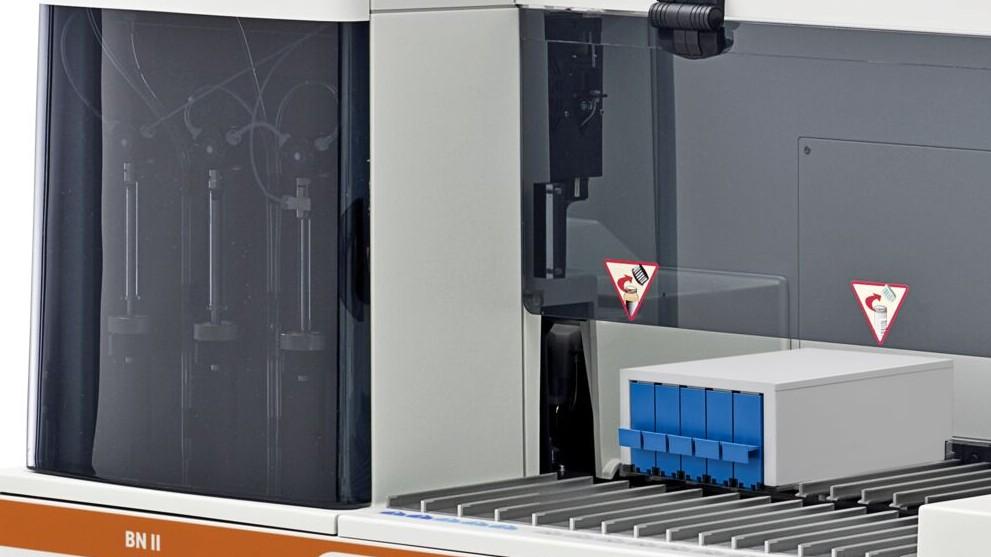
With onboard reagent cooling, the next-generation BN II System:
- Enhances reagent stability through integrated onboard cooling
- Reduces manual reagent handling and daily reagent management activities
- Helps improve workflow efficiency and maximize walkaway time
With the industry’s broadest plasma protein assay menu* of more than 70 plasma protein assays and applications across multiple sample types, the next-generation platform:
- Consolidates testing on a single system with assay applications for serum, plasma, urine, and CSF samples
- Helps reduce send-outs through a comprehensive test menu that supports assessment across a wide range of clinical conditions
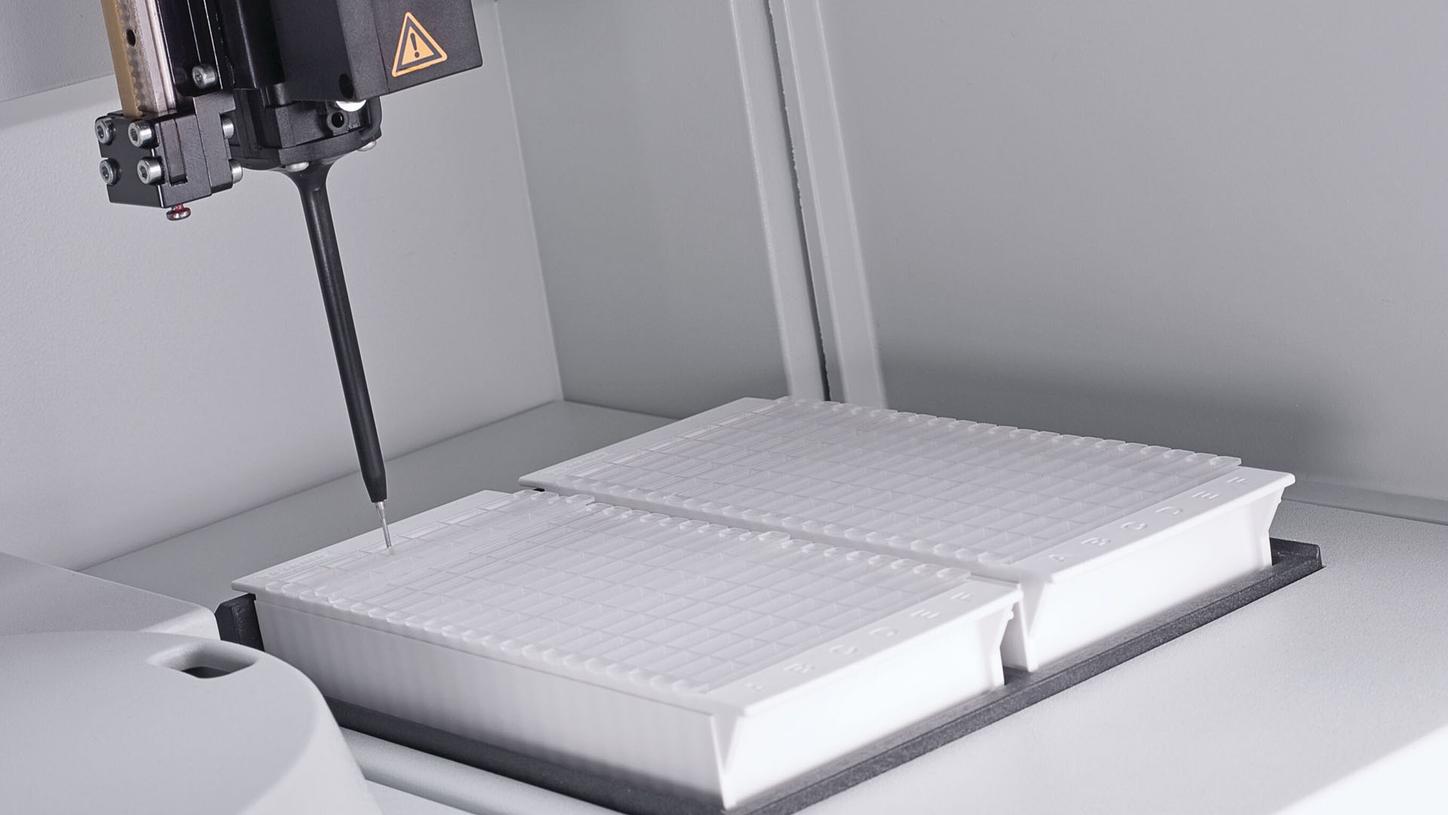
Automation of serial dilutions in a dedicated station supports reliable quantification of both low- and high-concentration samples. The next-generation system’s advanced protocols:
- Reduce the need for repeat testing, helping save time and reagents while also increasing confidence in results
- Support accurate quantification across wide concentration ranges
- Help maintain assay linearity across a broad measuring range
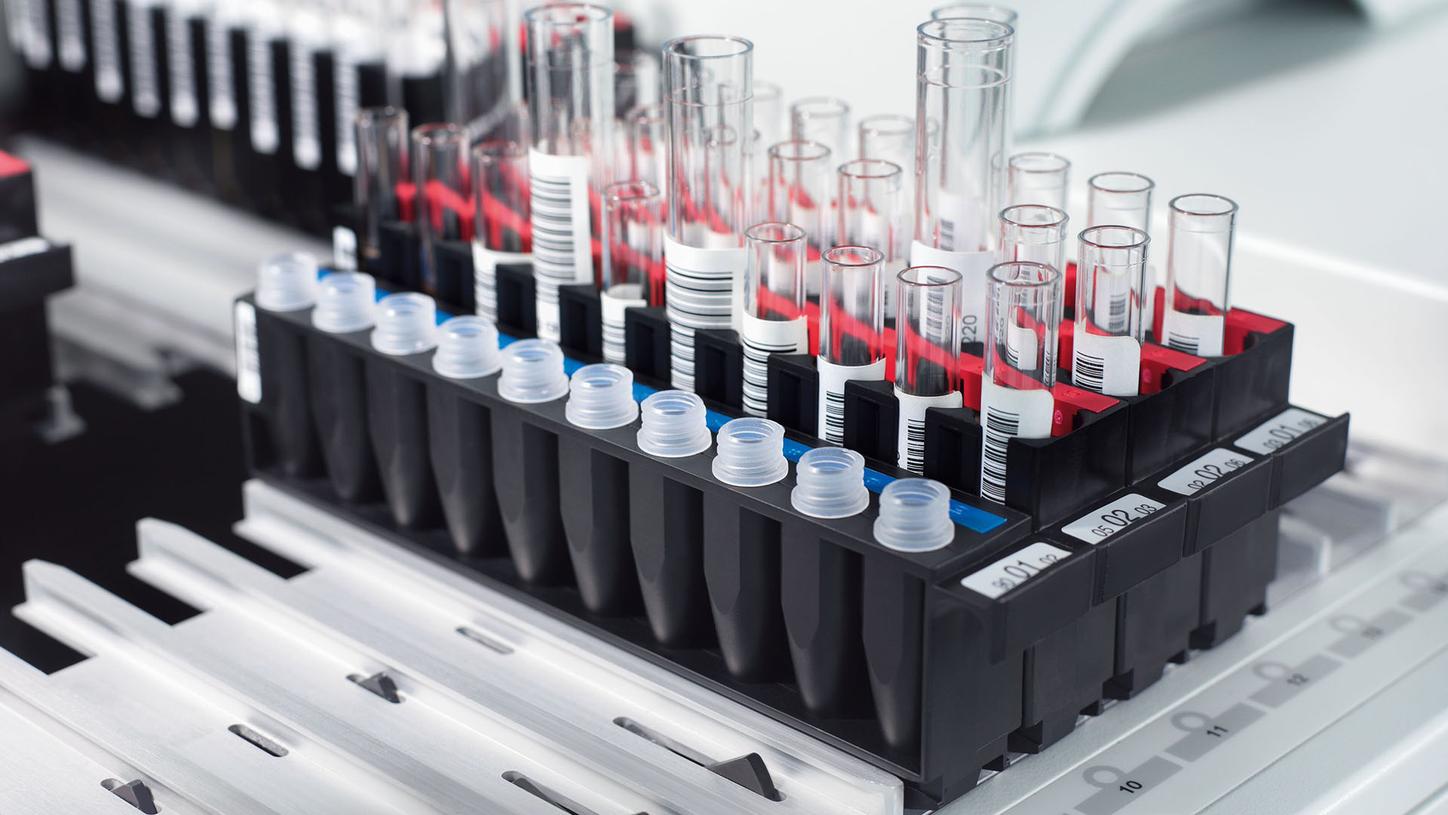
Designed to support labs with high testing volumes, the next-generation BN II System:
- Supports up to 143 tests per hour in high-volume or free light chain testing environments†
- Enables continuous loading of samples and consumables for uninterrupted operation and reduced downtime
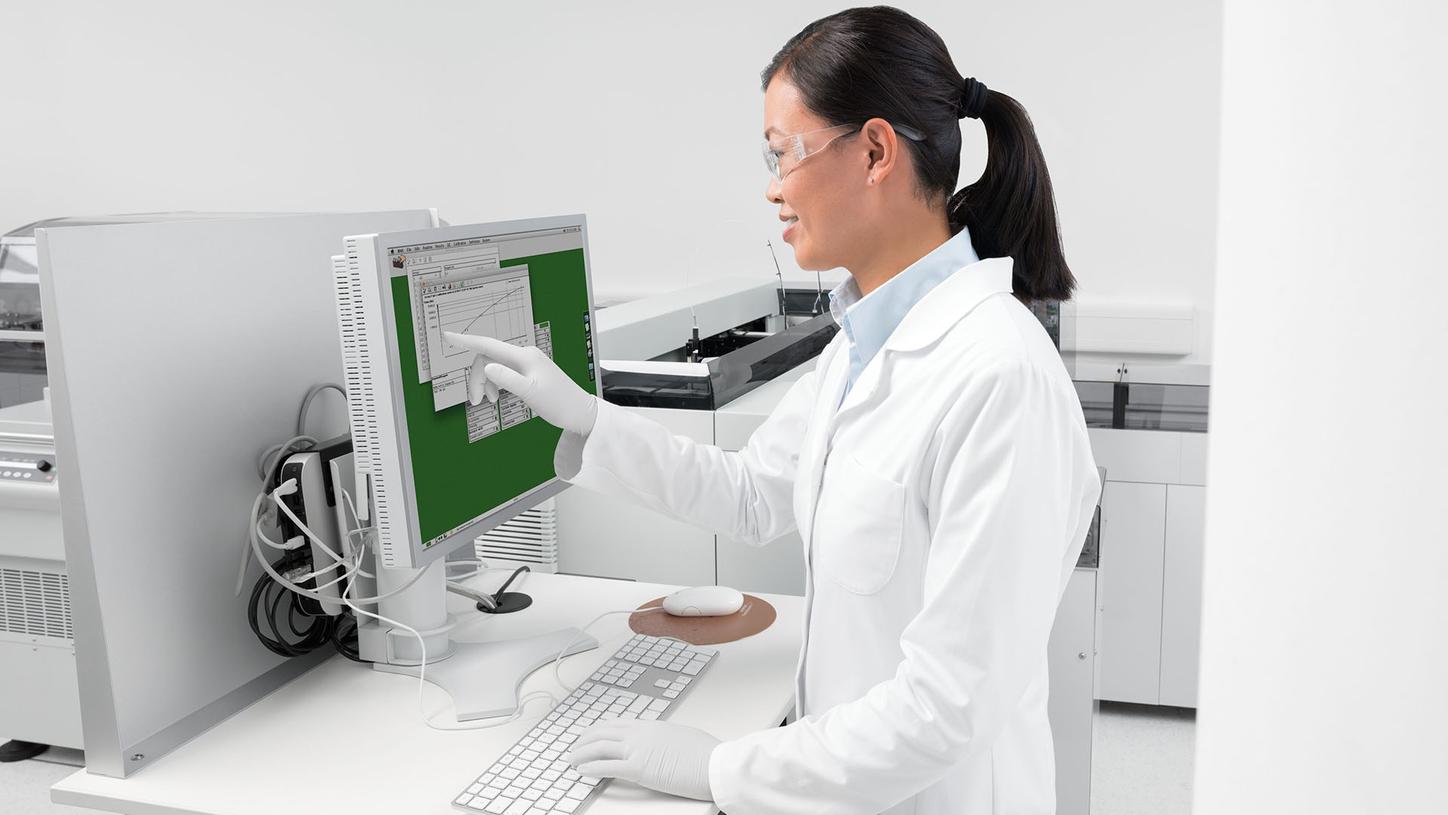
With password-protected access and an intuitive, secure user interface, the next-generation BN II System:
- Helps control system access, permissions, and user responsibilities through a multi-dialog interface
- Supports compliance protocols with applicable data privacy regulations, helping protect both personnel and patient information throughout the testing workflow
- Provides detailed audit trails – including user actions, system events, and workflow activities – supporting compliance initiatives, including FDA 21 CFR Part 11 workflows
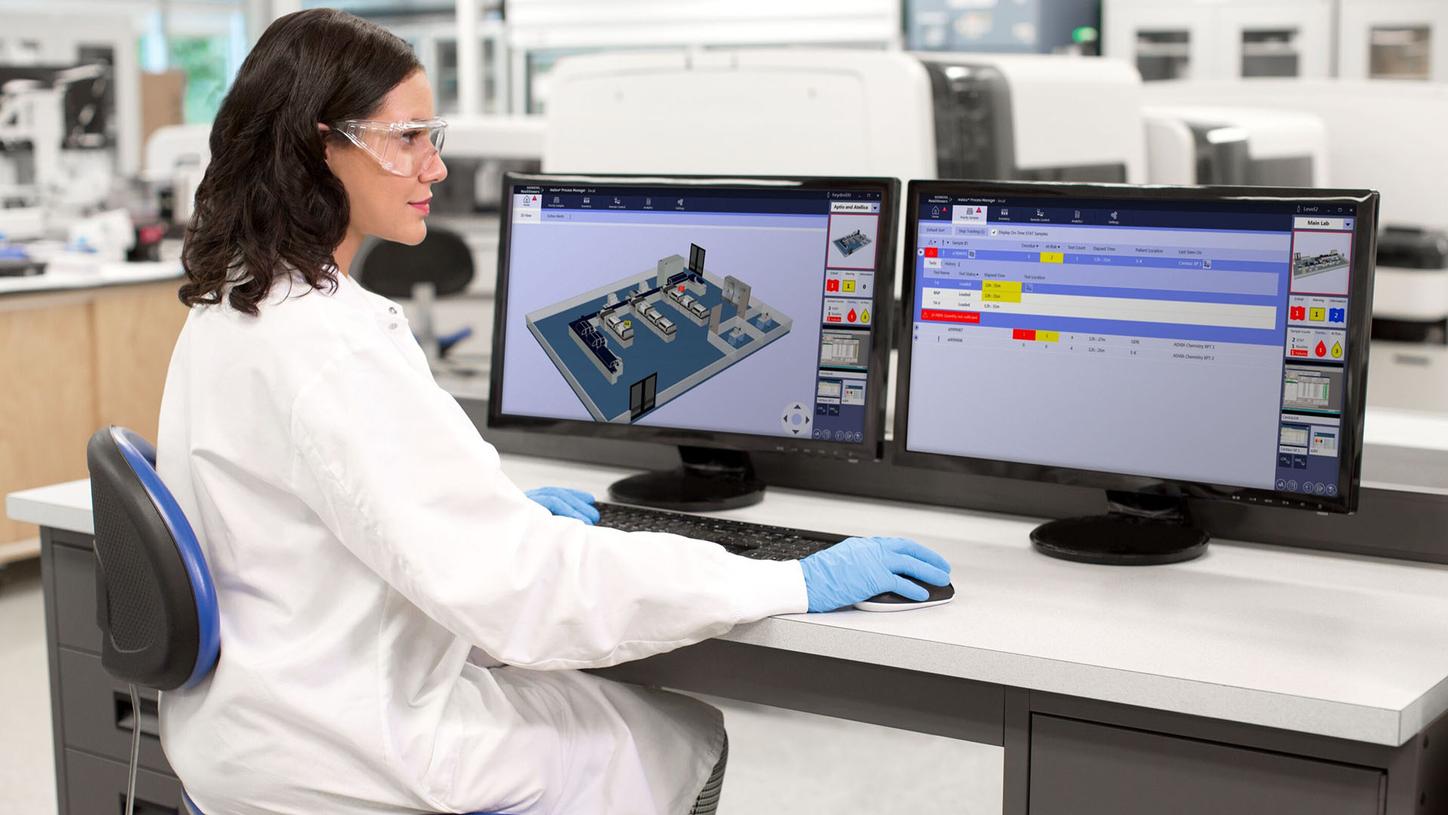
As part of an integrated laboratory workflow, the next-generation BN II System offers:
- Efficient data exchange and streamlined result reporting through bidirectional communication
- Data management integration within modern laboratory environments
- Sample, process, and clinical insight efficiencies with connectivity to Atellica Diagnostics IT‡ and Protis Decision Support Software‡,§
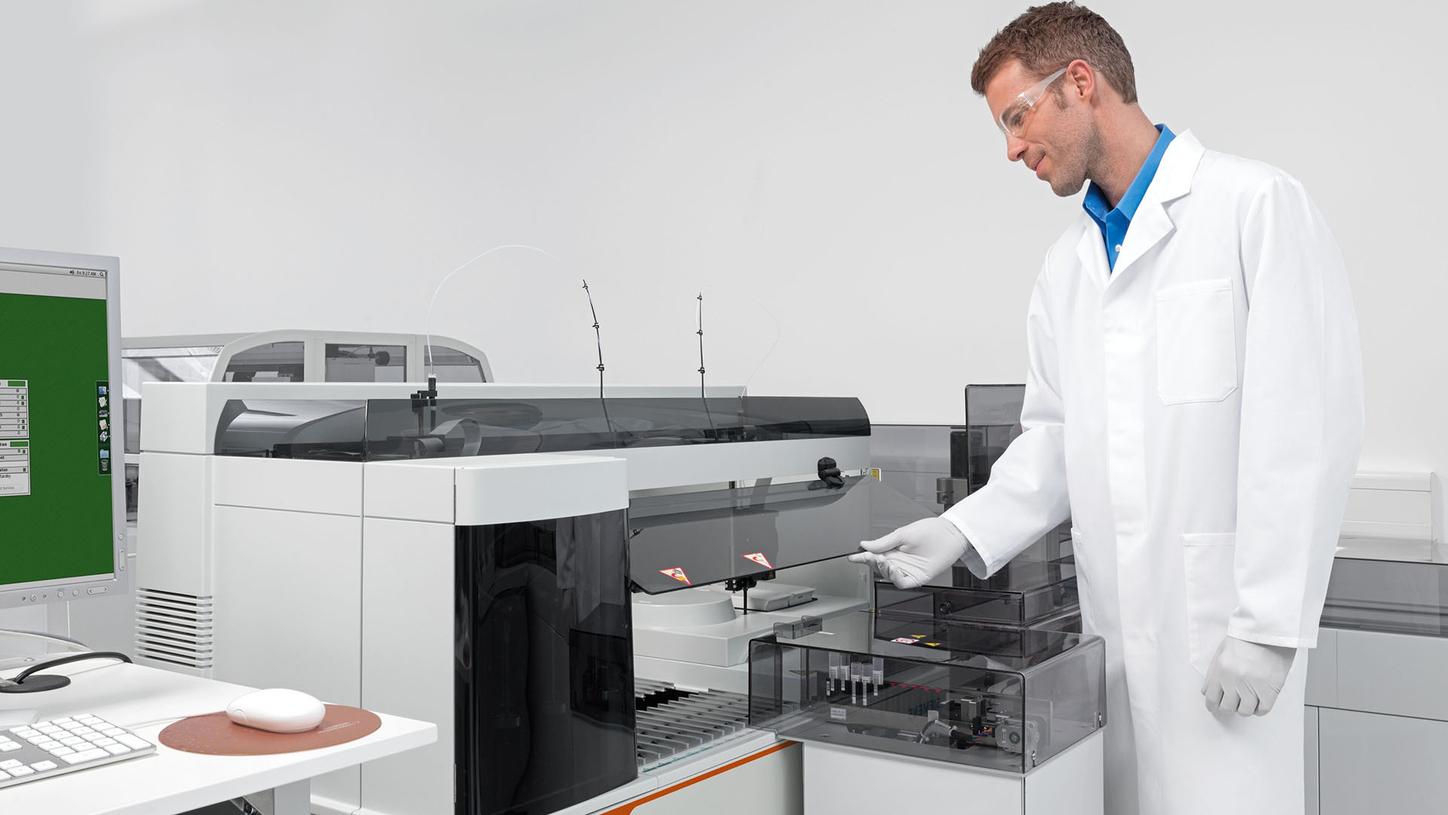
For labs looking to further reduce manual workflows, extend walkaway time, and streamline sample routing, the next-generation BN II System offers an automation-ready protein testing solution. Whether you are looking to realize the benefits of track-based automation now or want to leave your options open for the future, connecting to Aptio, FlexLab™, or FlexLab™ X Total Lab Automation can help your lab:
- Reduce manual interaction
- Extend walkaway time
- Maintain continuous access to reagents and consumables
- Improve biohazard safety
Highly precise and reproducible, nephelometric technology provides additional sensitivity that is critical for testing diseases such as multiple myeloma, for which accurate free light chain test results are required to derive a true free light chain kappa-to-lambda ratio. With proven nephelometric technology, the next-generation BN II System provides:
- Sophisticated antigen-excess pre-reaction protocols for more-accurate results and fewer repeats
- Wide initial measuring ranges, reducing the need for retesting
- Automatic specimen and reagent level detection prior to processing to ensure accuracy of results
- Automatic serial dilution technology supports reliable results and helps to keep the dilution factor low
Technical Details
Measuring principle
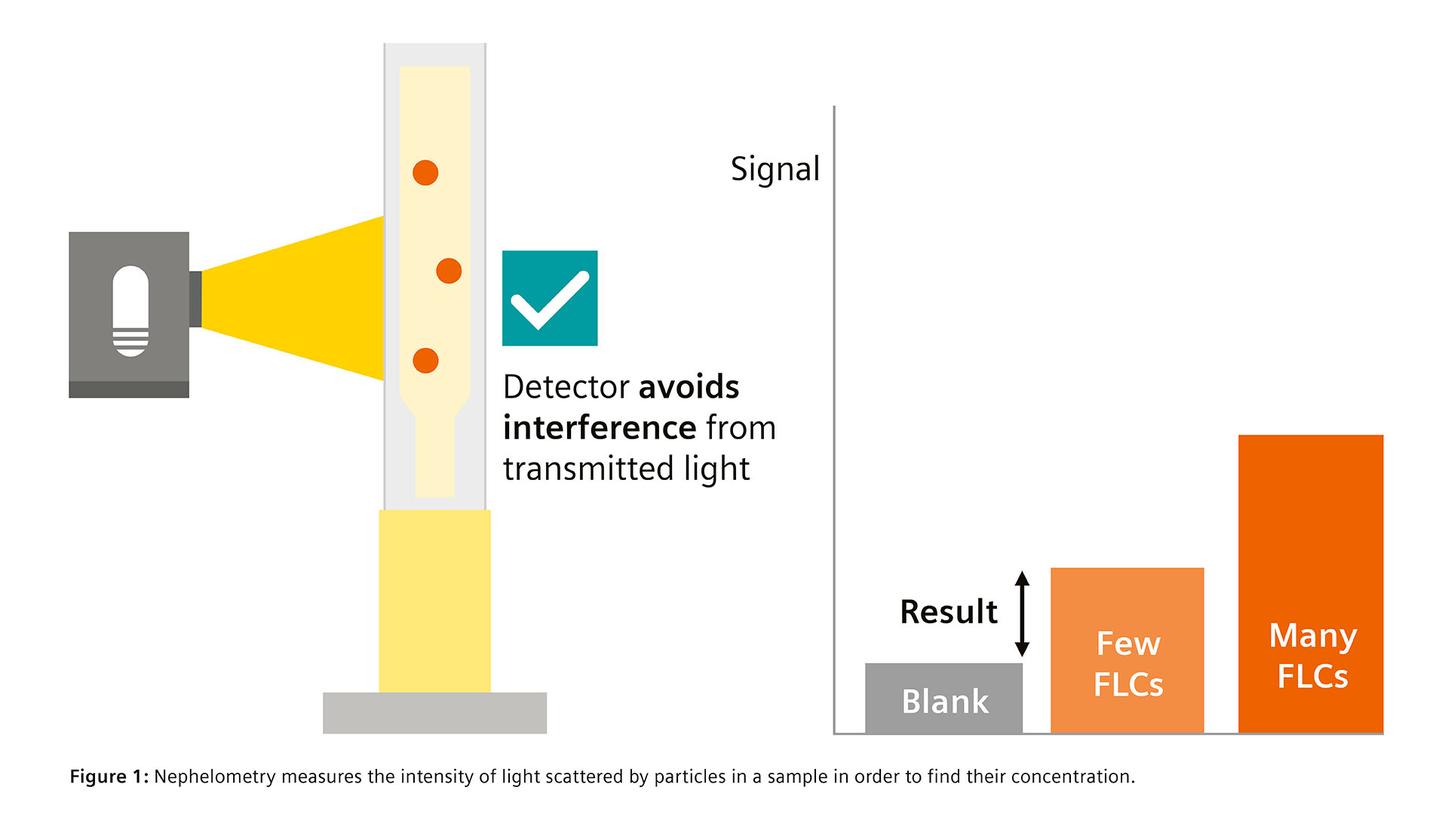
Nephelometry; measurement of the scattered light intensity at a fixed angle of 13-24°
Methods
More than 70 programmed assay protocols
Sample throughput
Effective: approximately 143 tests/hour, depending on the assay mix
Nominal: 225 tests/hourAnalysis method
Fixed-time kinetics, end-point measurement, VLin integral
Calibration
Multi-point calibration
Rack transport unit
Racks for up to 8 standard or control vials
Racks for up to 7 reagent vials
Racks for up to 10 sample tubesReagent handling
Up to 35 cooled onboard positions for reagents and supplemental reagents
Reagent cooling
Integrated onboard cooling at 14°C ± 1.5°C
Size of sample tubes
Diameter: 12-16 mm
Height: 55-100 mm
Supports pediatric microtubes up to 1.5 mLBarcode types
Automatic barcode reading including 2/5 interleaved, Codabar, Code 39, Code 93 and Code 128
Sample dilution
Automatic dilution up to 1:160,000
Level detection
For samples, standards, controls, reagents and system liquid containers
Reaction cuvettes
60 reusable cuvettes
Sample types
Serum, plasma, urine, and CSF
Traceability
Complete traceability including operator information, test date/time, reagent details, controls, calibrations and kinetics
Instrument dimensions and weight
Analyzer dimensions (W × H × D): 124 × 92 × 63 cm (49 × 36 × 25 in.)
Analyzer weight: 150 kg (331 lb)Computer and printer
Computer and monitor dimensions (W × H × D): approximately 43 × 43 × 17 cm (17 × 17 × 7 in.)
Printer dimensions (W × H × D): approximately 41 × 27 × 37 cm (16 × 11 × 15 in.)
Automation connectivity
Aptio Automation
FlexLab™ Automation
FlexLab™ X Total Lab Automation
Evidence
Nephelometric technology for quantification of high-sensitivity plasma protein assays
Highly precise and reproducible, nephelometric technology provides additional sensitivity that is critical for testing diseases such as multiple myeloma, for which accurate free light chain test results are required to derive a true free light chain kappa-to-lambda ratio.

Recommended by IMWG Guidelines
In 2014, the International Myeloma Working Group (IMWG) updated its diagnostic criteria for multiple myeloma. It established that a serum-free light chain (FLC) assay measured via nephelometry or turbidimetry can define active multiple myeloma even before traditional CRAB organ damage appears, provided specific quantitative thresholds are met.1