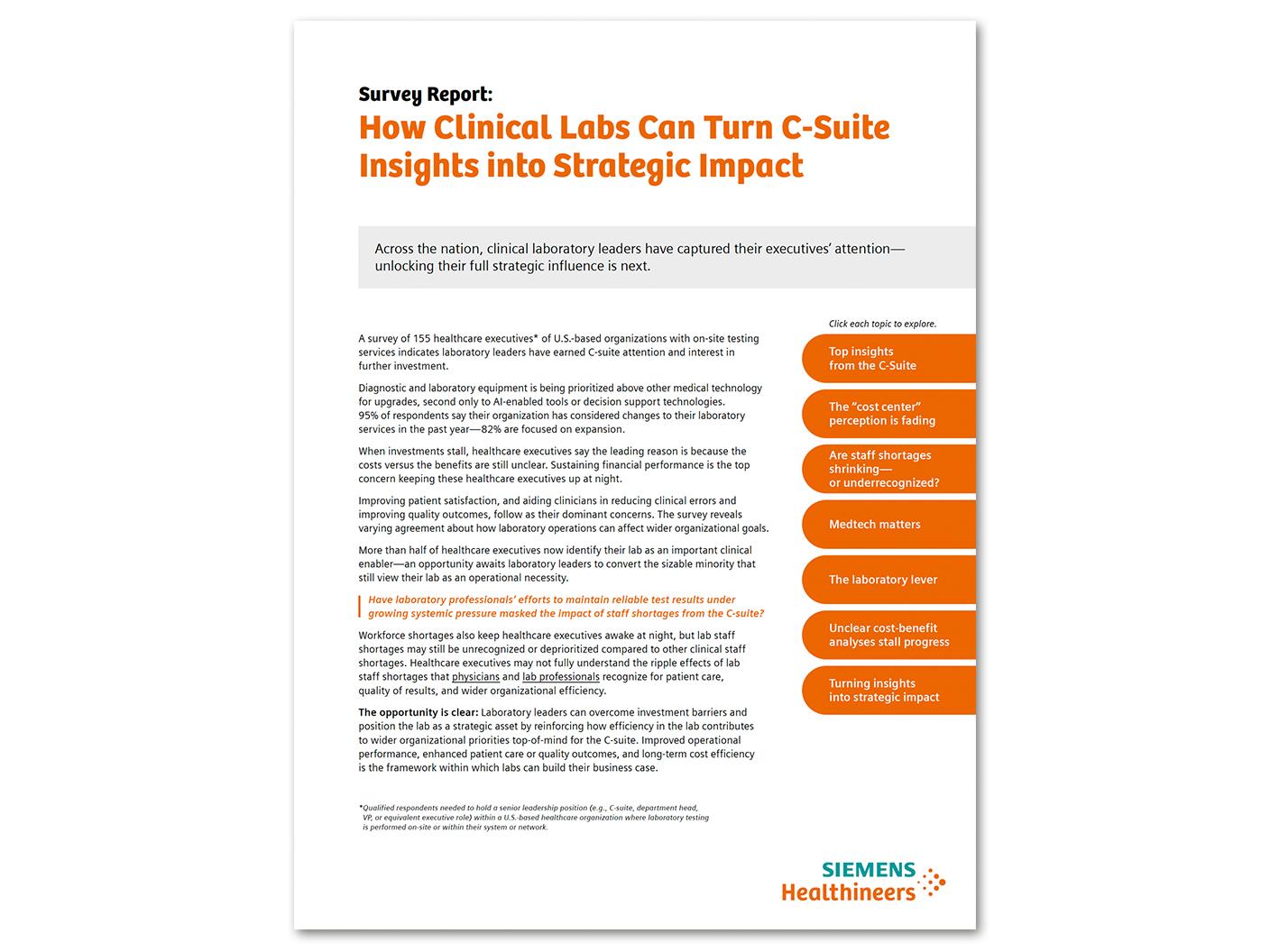
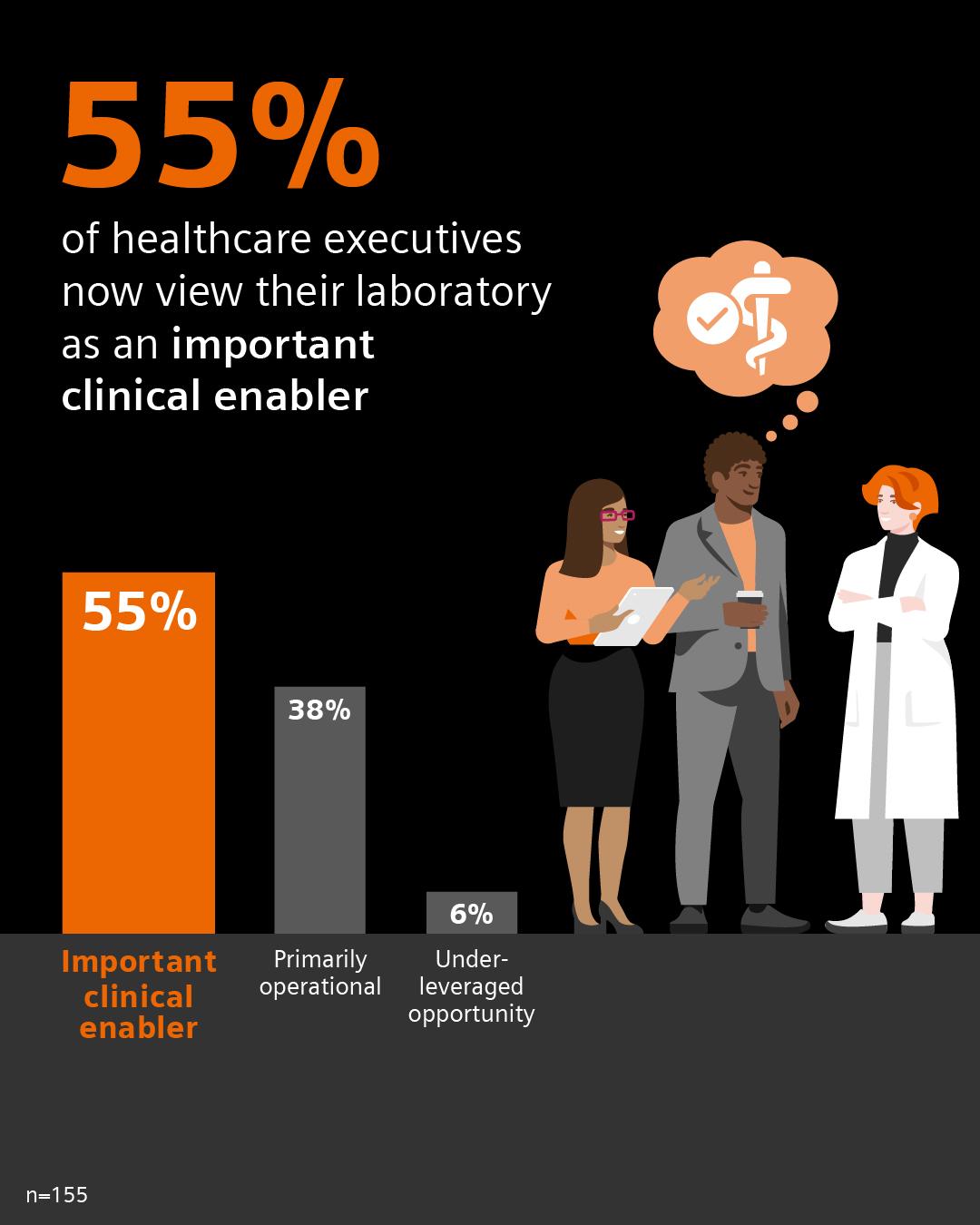
Across the nation, healthcare leaders’ perceptions of their clinical laboratories are shifting favorably. A survey of 155 U.S. healthcare executives, conducted by YouGov on behalf of Siemens Healthineers, indicates the cost center perception is fading, replaced by the view that labs are clinical enablers or underutilized opportunities for healthcare organizations. High interest in enhanced lab services is driving investment, though efforts stall when the benefits are unclear. Healthcare executives may still underestimate how prolonged staff shortages in the lab can have a ripple effect throughout the wider organization. To accelerate investment and secure strategic influence among the executives who still view their lab as an operational necessity, lab leaders can reinforce how efficiency in the lab contributes to wider organization priorities top-of-mind for the C-suite. Read the report to learn about trending C-suite priorities, investment goals, and perceptions about how labs support optimal patient care and wider organization efficiency.
Key survey insights
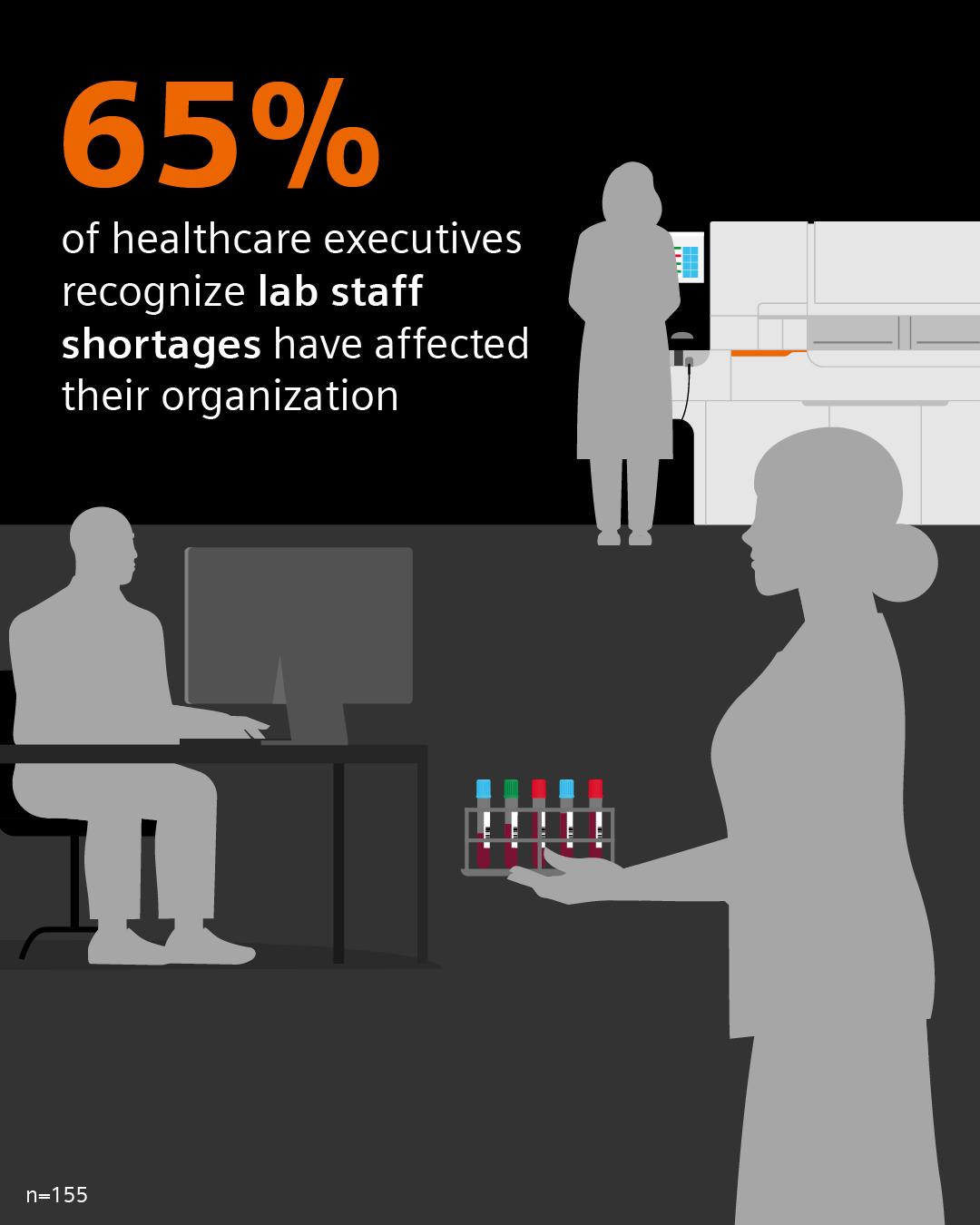
"Healthcare executives’ interest in their organizations’ laboratory services surpassed our expectations. The findings reflect an achievement laboratory professionals can be proud of – recognition that the laboratory is a valuable lever in support of health systems’ most important goals. This is an exciting opportunity for laboratory leaders to continue expanding their strategic influence across their organizations and, with this research, Siemens Healthineers is offering a framework to help."

Survey Insights from Michele Zwickl
The lab has historically been viewed as a cost center rather than a value driver for healthcare organizations. This survey clearly illustrates that is no longer the predominant view. In fact, healthcare executives widely recognize the laboratory’s importance to patient care and organizational performance and are making investments in the laboratory accordingly. Diagnostic and laboratory equipment is being prioritized for upgrades, second only to AI-enabled tools or decision support technologies. The lab has earned attention and even investment dollars—but this recognition does not consistently translate into viewing the lab as a strategic asset. This is the next opportunity for laboratory leadership.
Most executives see the lab as an essential support system: 87% strongly agree laboratory testing is a fundamental tool for patient care, and 81% acknowledge turnaround times can directly affect patient care. While the majority view the lab as an important clinical enabler, 38% still see it mainly as an operational necessity with limited strategic focus—there’s work to be done yet to convince some execs that the lab can be a strategic resource to help support wider operational goals. This is where we can partner with our laboratory customers to build a clear, compelling case that highlights the strategic value of diagnostics.
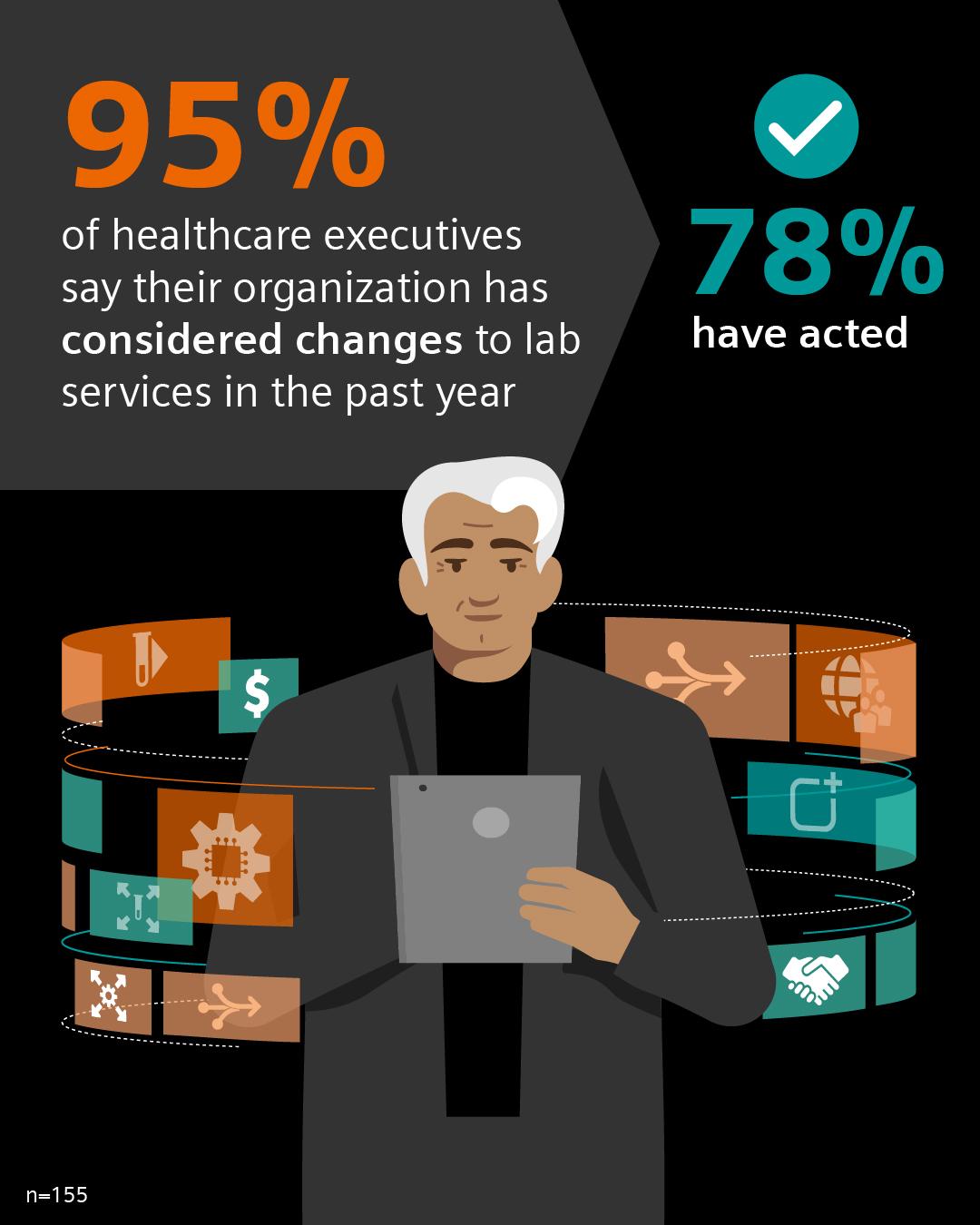
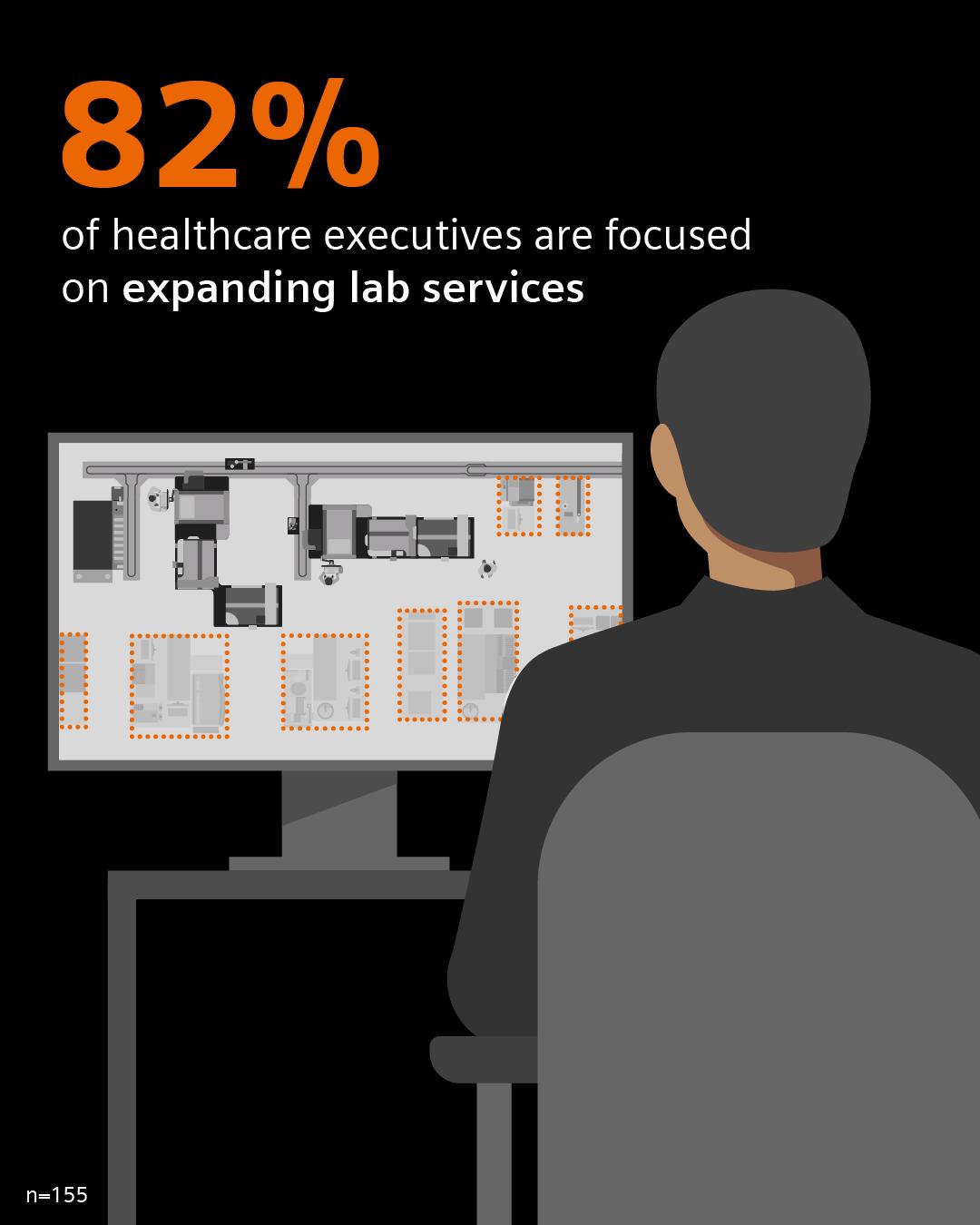
According to the survey, 92% of healthcare executives say their laboratory's financial performance is closely evaluated, while 95% of executives say their organization considered changes to laboratory services in the past year, ranging from expansion, to outsourcing, to consolidation—the majority (82%) focused on expanding laboratory services (65% acted). One-third considered outsourcing laboratory services, but the consideration-to-action conversion was much lower than other actions taken. The good news is executives’ focus is primarily on adding value, including expanding lab infrastructure and broadening their test menu.
While 84% report aging lab equipment, it was interesting to see that the starkest disagreement within the survey pertained to adoption of technologies that reduce manual workloads for overtaxed staff. These technologies can offer organizations improved quality, consistency, and operational resilience. This finding reveals a clear opportunity for laboratory leaders to strengthen their cost-benefit analyses with real-world success stories, which experienced vendor partners such as Siemens Healthineers or fellow lab leaders can help support.
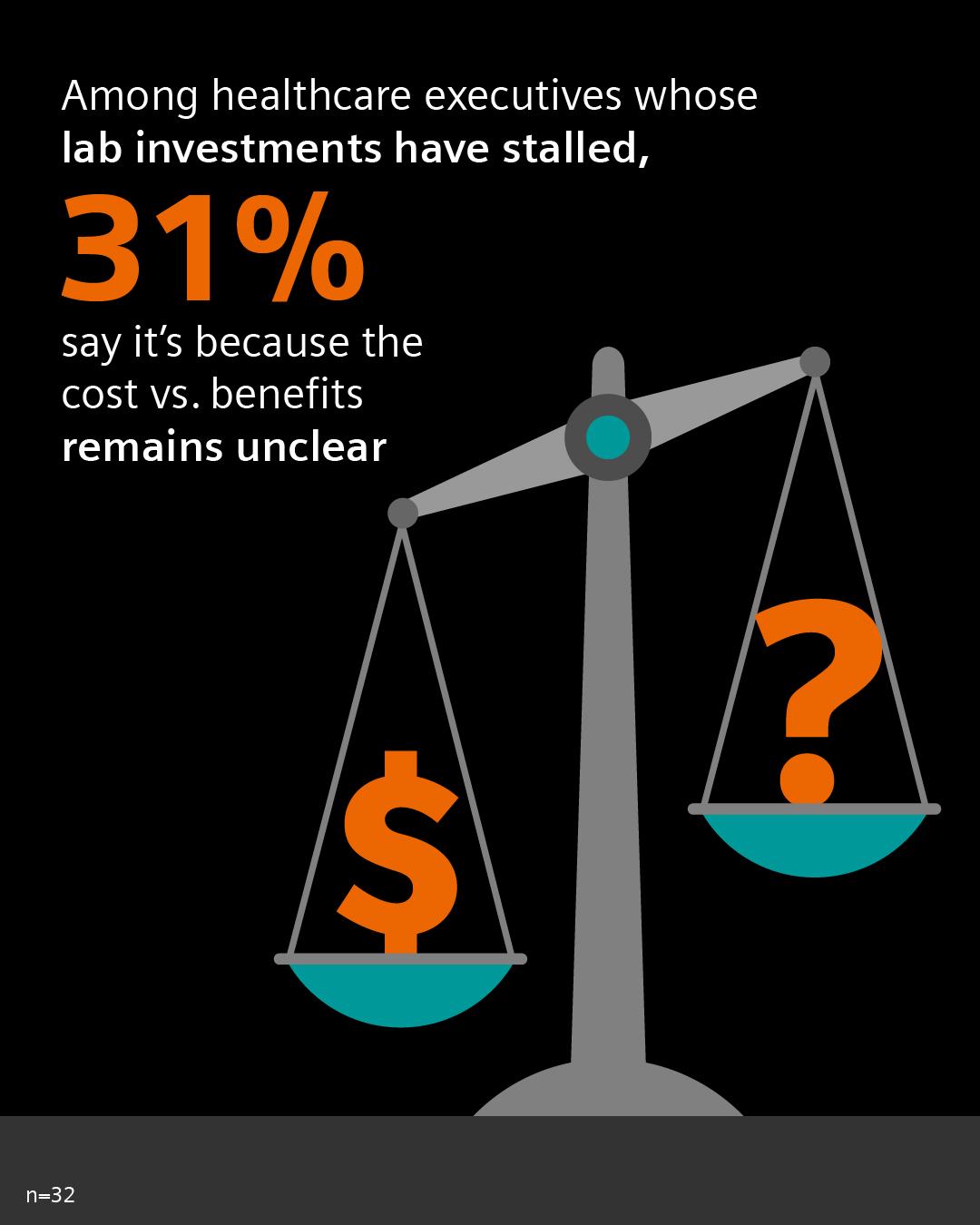
The biggest barrier is not always lack of interest—it is lack of clarity. Among executives who hesitated on lab investments, 31% said the cost-benefit was unclear, 19% cited financial hurdles, and 16% said they were unsure how to optimize operations. This points to a major opportunity for laboratory leaders to connect investment decisions to measurable outcomes the C-suite cares about.
Executives are looking for improvements that extend beyond the lab itself. The survey found that 72% prioritize improved operational performance and 70% want enhanced patient care and quality outcomes from technology investments they are currently considering. For lab leaders, that means the most persuasive business case is one that links lab improvements to enterprise-wide performance, patient care, and long-term value.
The findings suggest that laboratory leaders have an opportunity to frame their needs in terms executives already prioritize: operational performance, enhanced patient care and quality outcomes, and long-term cost efficiency or return on investment. When labs clearly show how staffing, infrastructure, and workflow investments support broader goals of healthcare executives, they are better positioned to move from being recognized as an operational necessity to being valued as a strategic asset.
Featured insights
How laboratory services affect stakeholder satisfaction