Solutions in building and scaling infrastructures and a new understanding of tumor biology are two of many topics that are helping to advance theranostics.
Photography by Simon Lau and Annika Daria Neubauer.
Article content reflects MI World Summit 2026 Session 4, Copenhagen, Denmark.
Radionuclide therapy is a cornerstone of patient management in diseases like prostate cancer, neuroendocrine tumors, and thyroid cancer. But when it comes to new applications, it is unclear what will be the next target and cancer, remarked Prof. Thomas Hope from the Department of Radiology at the University of California in San Francisco, USA. There is a lot of innovative research, he continued, but it isn’t clear which of the many research projects will eventually be integrated into clinical practice.
During the Molecular Imaging World Summit 2026 in Copenhagen, Denmark, Hope and other global molecular imaging leaders presented on a range of topics focused on advancing theranostics.
Theranostics at an inflection point
For Hope, advancing theranostics beyond where it is today means considering fundamentals. One of these fundamentals is tumor biology, and the other one is dosage. “The classic paradigm is that radioligand therapy works by causing DNA damage. We don’t pay attention to anything else.” This might be a bit short-sighted, according to Hope, since individual immune response is critical in terms of response to radionuclide therapy.
In fact, said Hope, in prostate cancer care, there was data suggesting that immune response was a stronger predictor of response to PSMA therapy than absorbed dose. Currently, it looks as if lower absorbed doses could act as a sort of primer for the immune system, while higher absorbed doses were what resulted in DNA damage. Hope believes that these findings could possibly be incorporated into innovative therapeutic concepts. He is conducting a PSMA-therapy trial in which he compares standard dosing with an adaptive dosing schedule that is more reactive to PSA-changes. In this reactive approach, doctors don’t aim at maximum depth of response. Instead, they try to extend the durability of response by letting PSMA therapy and individual patient’s immune system work collaboratively.
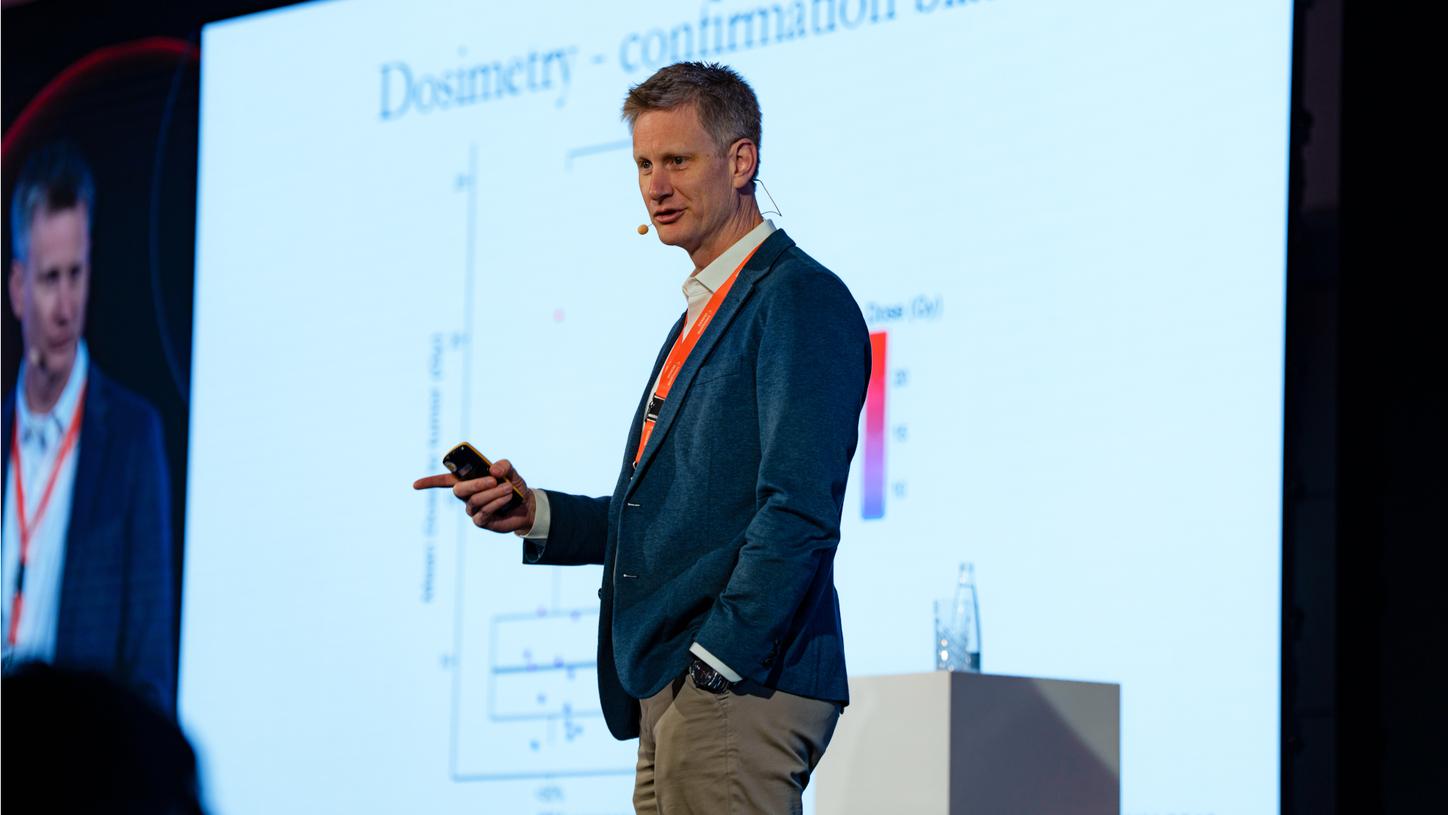
For Hope, advancing theranostics beyond where it is today means considering fundamentals.
Digital theranostic twin
One way of personalizing theranostics was brought forward by Prof. Arman Rahmin from the Department of Integrative Oncology at the University of British Columbia in Vancouver, Canada. He pointed out that in radionuclide therapy, what was standardized now was injected dose, and not actually absorbed dose. One way to standardize absorbed dose is conventional dosimetry. But Rahmin favors a different approach: “We are convinced that we can do imagebased dosimetry with the help of computational and artificial intelligence (AI) models.”
Rahmin’s vision is creating a digital theranostic twin, a project that is not only pursued in his research, but which is also the topic of a dedicated working group at the Society of Nuclear Medicine and Molecular Imaging (SNMMI). Digital theranostic twins, according to Rahmin, were not a totally new idea. But they have come much closer to reality thanks to recent progress in AI and thanks to the availability of highly sensitive molecular diagnostics, such as large axial field-of-view PET/CT scanners.
By simulating not only anatomy, but also pharmacokinetics and pharmacodynamics, digital theranostic twins could in principle be used to calculate the absorbed dose on an individual level and thus contribute to a highly personalized form of radionuclide therapy. The other scenario, according to Rahmin, was running virtual theranostic trials. These could be used both to optimize existing therapies and to initially evaluate totally new application areas of radionuclide therapy. “Images are not there just to select patients for therapy,” said Rahmin. “They are not just pictures to look at or to quantify, but they open an entirely new paradigm to use.”
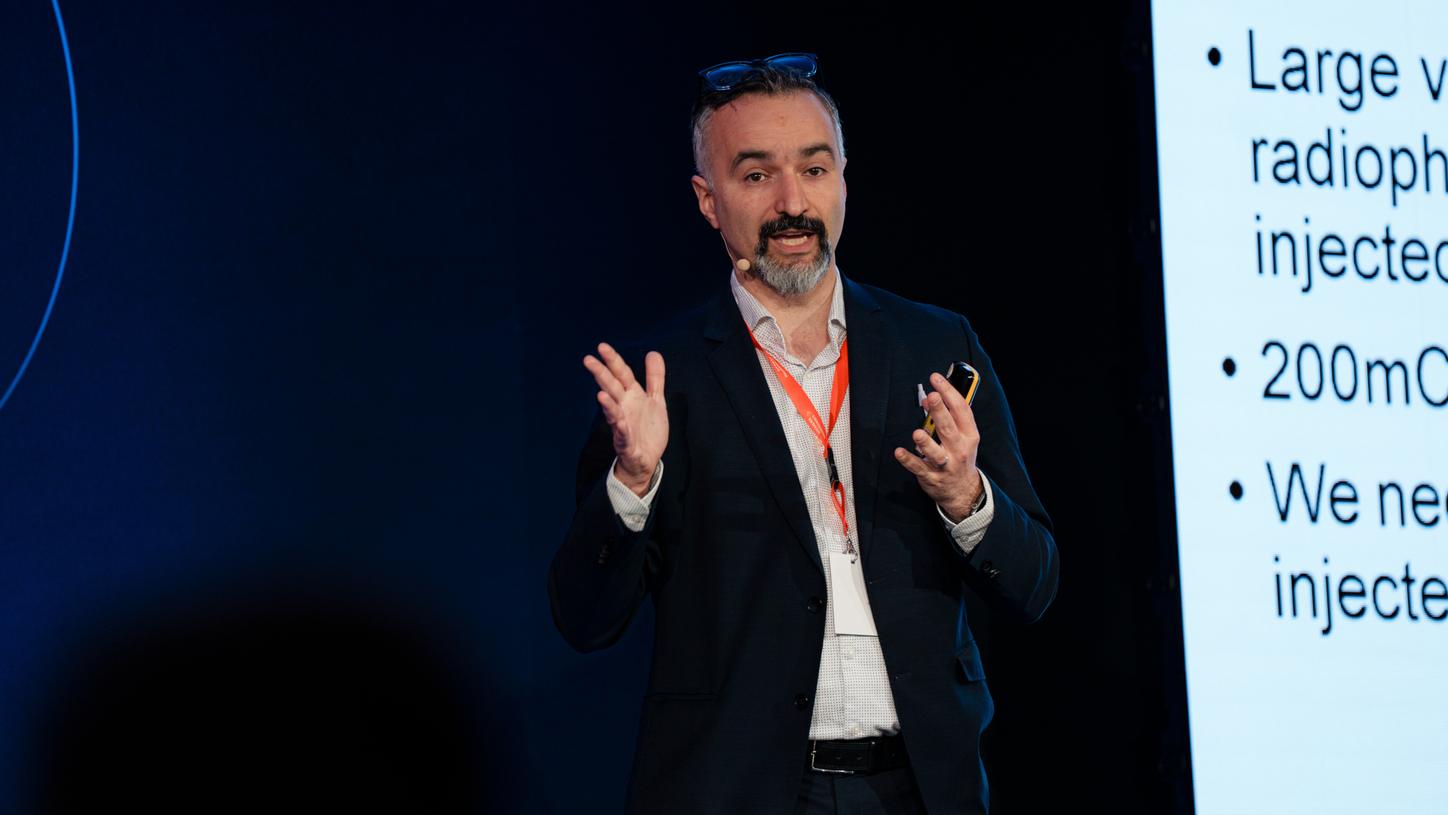
Rahmin’s vision is creating a digital theranostic twin, a project that is not only pursued in his research, but which is also the topic of a dedicated working group at SNMMI.
Access is doable
Theranostics has a reputation of being logistically complex and expensive, and thus more suitable for highly industrialized countries. But this is not the case, according to Dr. Ishita B. Sen of the Fortis Memorial Research Institute in Gurgaon, India. Although there are challenges like out-of-pocket expenditure, insurance gaps, skill shortage, and transportation difficulties related to the cold-chain and short-lived isotopes, setting up a proper theranostics infrastructure is possible in India and has been done successfully in many parts of the country. Specifically, local production of DOTATATE is working well, and Ga-68 PSMA-11 kits are widely available. “One reason for the growth in recent years is that, in India, most theranostic procedures can be done as outpatient procedures―without increasing ambient radioactivity,” said Sen. Strategies for further expansion included public-private partnerships, global collaborations and a thorough digital integration which allows some remote patient management with the help of telemedicine services. In a highly innovative facility like Fortis, much more than standard care is possible. Sen presented several cases, including a prostate cancer patient who received upfront PSMA therapy after having refused androgen deprivation therapy and stayed in remission for six years. In metastatic neuroendocrine tumors, Sen said, Ac-225 PRRT (peptide receptor radionuclide therapy) has been started, and the responses are impressive. Ac-225 is also used for PSMA therapy in prostate cancer. Here, Fortis was one of the main contributors to the international WARMTH clinical trial that gave a huge boost to this kind of PSMA therapy in 2024.1
Even more on the innovative side, Sen and her colleagues have combined Lu-177 PRRT with external beam radiation therapy in meningioma. “We achieved a durable response without many of the side effects we would have seen had we increased the dose of external radiation.” On the diagnostic side, Ga-68 Exendin imaging is available for insulinoma patients which helps surgeons to provide more targeted resections.
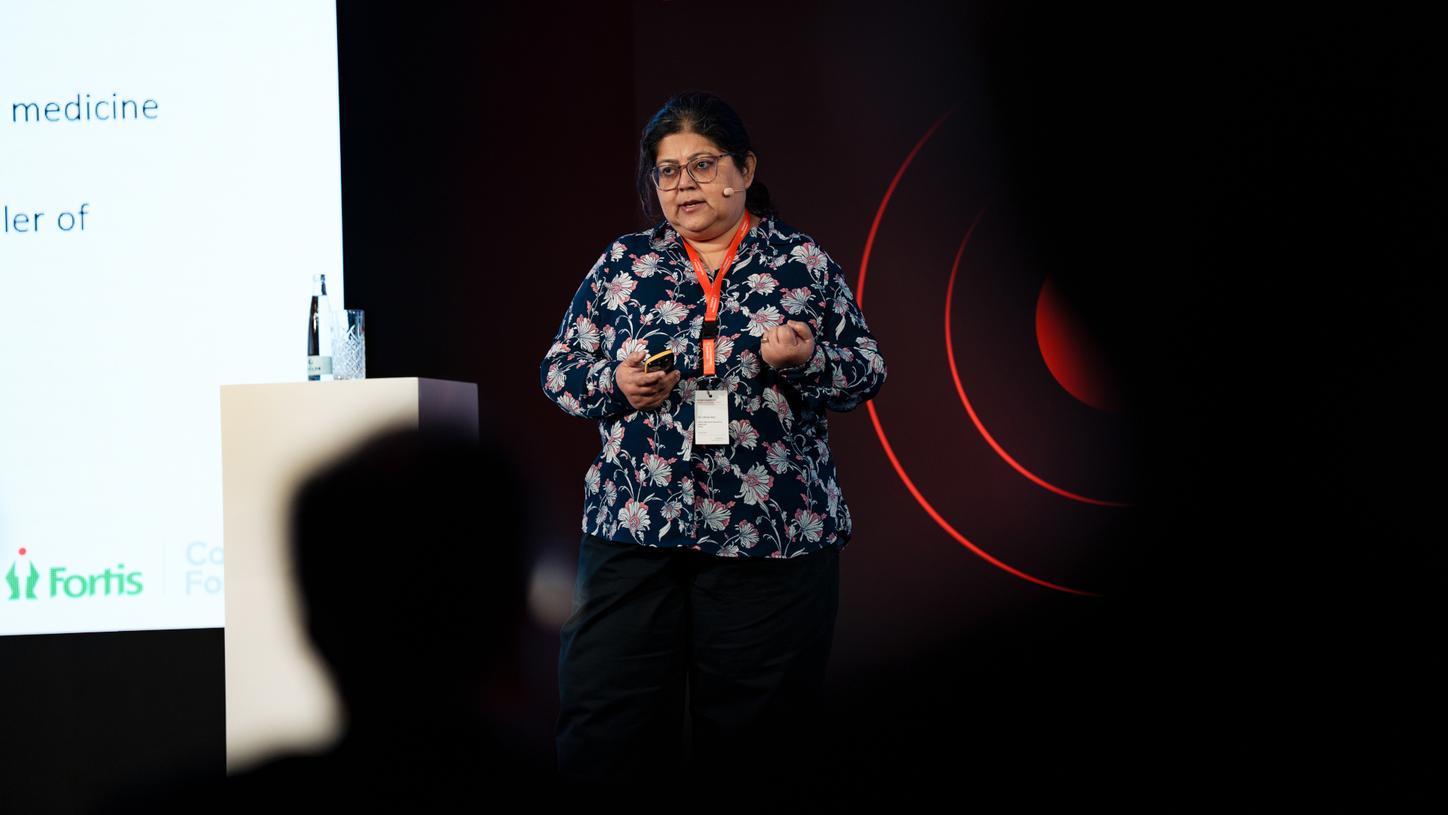
Sen explains that reason for the growth in recent years in India is that most theranostic procedures can be done as outpatient procedures―without increasing ambient radioactivity.
Future-proofing theranostics
How to build a molecular imaging center of excellence to enable state-of-the-art theranostics in a highly industrialized environment was addressed by Prof. Ryan Avery, Northwestern University, Chicago, Illinois, USA. “We need more and more nuclear imaging thanks to the increasing use of immunomodulators, the advent of CAR-T-cell-therapies and new radiopharmaceuticals coming into the market.” To be able to meet the demand today and in the future, Northwestern University has modernized its molecular imaging department in recent years and acquired, among others, a Biograph Vision Quadra PET/CT, a Biograph mMR PET/MR, and a Symbia Pro.specta SPECT/CT―in addition to the already existing PET/CT and SPECT/CT fleet.
Avery emphasized that the ambitious molecular imaging program in Chicago was not only about new methodologies, but in large parts about capacity. “We needed the scanners not just for exciting things like multiparametric PET imaging, high-resolution imaging, and dynamic imaging, we also needed rapid imaging, since the demand is growing continuously.” Avery, too, said that long-term strategic partnerships were an important success factor. It also made a lot of sense to stay consistent in technology and not mix machines and providers randomly. In the end, according to the radiologist, staying up to date in molecular imaging was not really a choice―it was a necessity. “If your institution doesn’t offer it, someone else will.”
Access to theranostics has improved worldwide and will continue due to a broad spectrum of molecular imaging solutions that allow tailoring equipment to individual needs. Changes in our understanding of tumor biology are leading to new theranostic care concepts that take into account factors such as individual immune response.

Ryan presents on how to build a molecular imaging center of excellence to enable state-of-the-art theranostics in a highly industrialized environment.
About the author
Philipp Grätzel is a medical doctor by training, who has been working as a healthcare and technology Primafila Correspondent in Berlin, Germany, for many years.