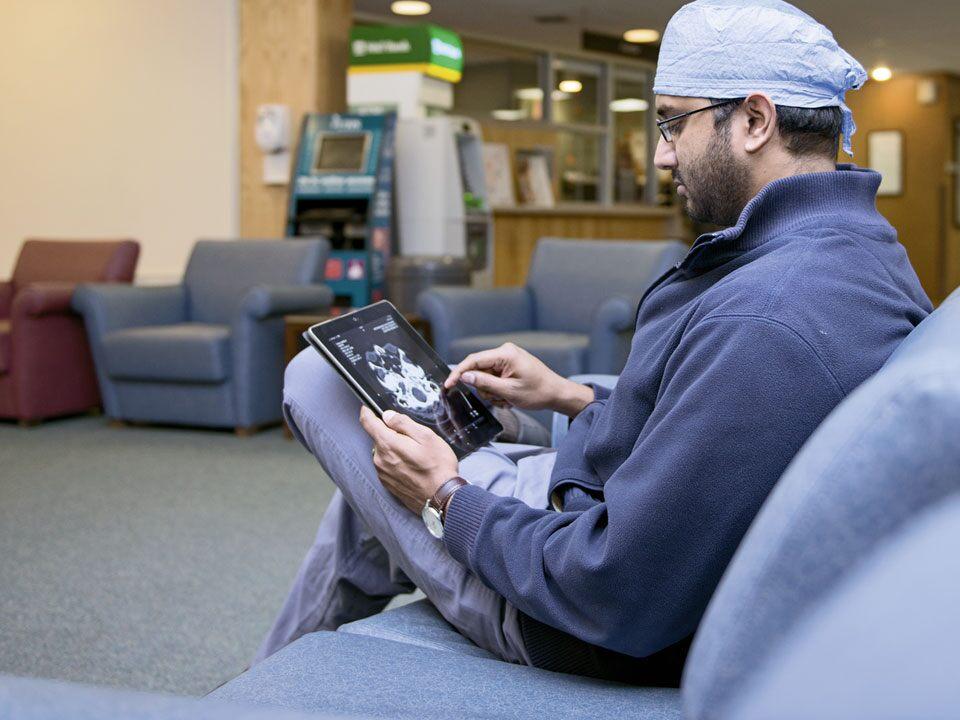
March 18, 2015 | In clinical settings, mobile access to data is used to give patients more personalized care and support their decision-making. With syngo®.via WebViewer, radiologists in Innsbruck have their images conveniently with them on their iPad.1,2,3
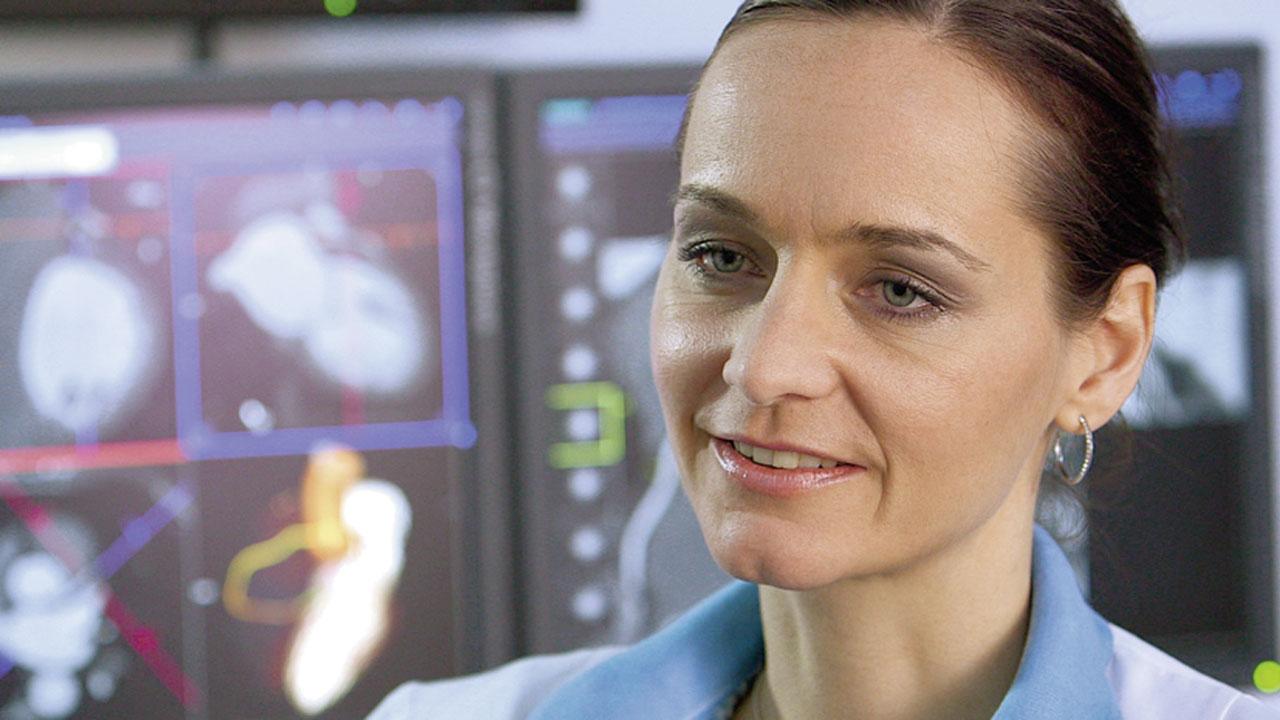
“To me, best medical practices are key in providing patient care,” says Gudrun Feuchtner, describing how she views her professional practice. Feuchtner, a diagnostic radiology specialist, has worked at the Innsbruck University Medical Center for 13 years and has also completed the official process to become an associate professor. In her view, best medical practices in imaging include, in particular, the latest technologies that help ensure high quality standards. And, naturally, she says that what people want most of all in a hospital setting is personal care, or personalized medicine: “There’s nothing worse for a patient than the feeling of being cared for as if he or she is on an assembly line,” she says.
All Images at Hand
The only way to help alleviate that feeling is personal interaction with medical staff, which Feuchtner – whose professional focus is computed tomography (CT) imaging of the heart and blood vessels – found to be an issue in the past. “Logistically speaking, it isn’t possible for the doctor to show the radiological images to the patient directly and use them to discuss the doctor’s findings, since the image viewing programs are only available in radiology diagnostics rooms or physicians’ rooms,” she says. Consequently, it used to be necessary to bring the patient into the doctor’s office, or the doctor had to go to the prep room or the patient’s room. “This means traveling a lot in everyday clinical practice, which is very time-consuming,” Feuchtner points out. And, therefore, viewing images with the patient was not the usual practice, at least until now.

Saving Time in Crucial Moments
Today, the professor and her colleagues in cardiac surgery and cardiology can move around the medical center with an iPad and use the center’s Wi-Fi to access radiological image data from anywhere3. “The mobility is unbeatable, since the images are streamed live and directly, without any redirecting via the PACS (picture archiving and communication system).”
Illustrations for Interventions
“But our cardiac surgeons don’t just use it for that. For example, our pediatric cardiac surgeon, senior physician David Vondrys, who is a university instructor, also uses the iPad to explain the plans for a surgical intervention on pediatric cardiac patients. Senior physician Dr. Nikolaos Bonaros, also a university instructor, uses it to illustrate minimally invasive cardiac surgical interventions.”
“Especially in large medical centers, where examining rooms and clinical departments are often located far away from each other, syngo.via WebViewer is a huge advantage,” explains Norbert Mükke, Marketing Manager, SYNGO, Siemens Healthcare. “Doctors have direct access to the image data no matter where they are within the medical center.”
IT is the Foundation of Radiology
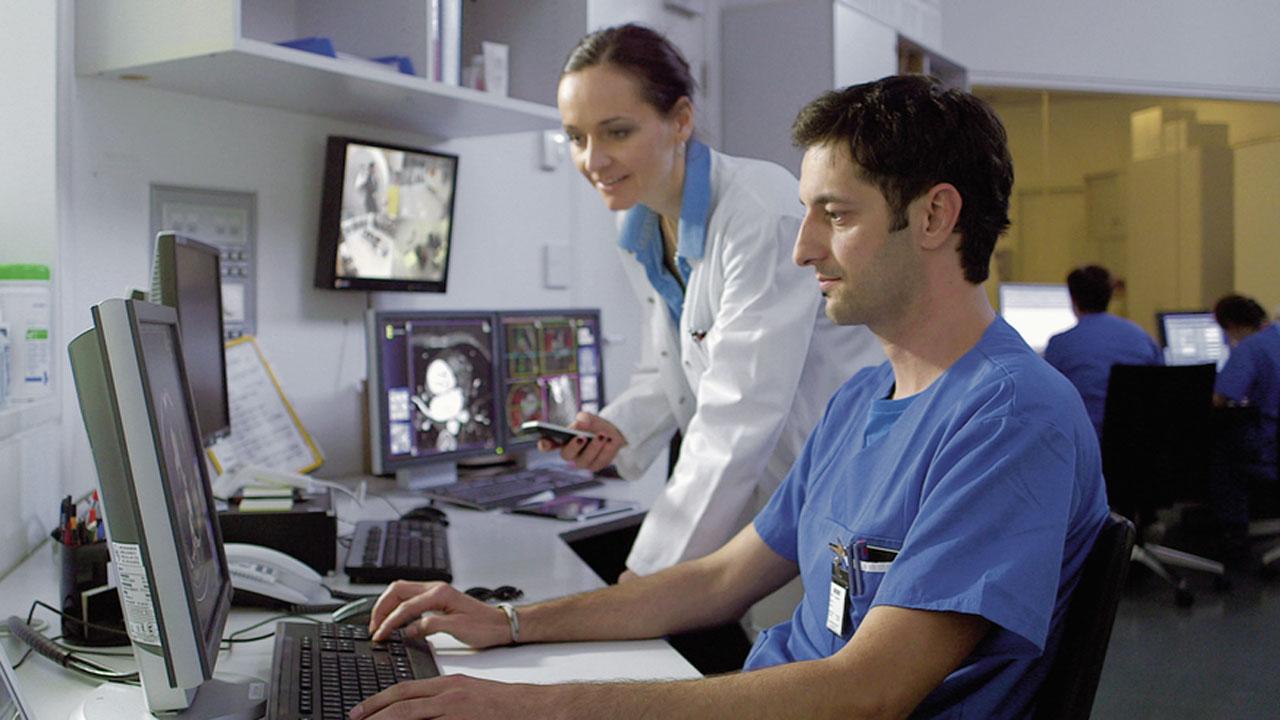
IT plays a key role in infrastructure, especially in radiology, and the university medical center in the Inn River valley is no exception. With 1,450 beds, it serves as a tertiary healthcare center, covering almost all medical specialties. Innsbruck is home to one of three university medical centers in Austria – the others are in Vienna and Graz – so there are many facilities at the center for both research and teaching. The doctors here are responsible for all of western Austria, and, in certain clinical specialties such as heart surgery, also for some parts of South Tyrol (a neighboring area in northern Italy), Feuchtner reports: “We serve patients from a large area, and we have 60 radiologists, so we also have a lot of technology on hand.”
Data Volume Increasing Sharply
IT is the “most important supporter” for specialists, Feuchtner says. “As the digitization of images advances and data volume increases sharply, the systems used for archiving images face big challenges.” The existing PACS in Innsbruck also makes a significant contribution in this regard; after all, Feuchtner says, there is “almost complete electronic archiving of images” at the facility. And where a CT system used to read out 64 slices per tube rotation, the figure has already risen to 192 x 2 slices in the latest dual energy systems, such as SOMATOM® Force.
Mobility Is a Must, Not an Option
Along with the challenge of rising data volumes, an additional evolutionary step lies ahead for IT organizations in the healthcare sector: mobilization of data and information within the center itself and outside, to other institutions.
In interventional radiology and neuroradiology, there is a model involving external on-call service: “In an emergency, the radiologist is contacted at home, and he or she can then use the images to decide whether it is necessary to go to the hospital.” In either case, it is crucial to take data security into account when providing the image data from the scanners outside the hospital.
Mobile Data Shorten Clinical Processes
Another trend is the increasing specialization taking place in the healthcare sector due to technological advances. “In radiology, new specializations such as cardiac CT imaging are continually being studied and implemented,” Feuchtner says. This method can be used to prepare sectional images of the heart, using a contrast agent to show the coronary vessels. However, as physicians increasingly specialize in highly complex fields, their availability also becomes more and more restricted. Having mobile diagnostic data can help to compensate for this; a specialist might not even work at the same hospital, but can also be consulted digitally, via tele-consulting. After all, the time saved is valuable to both the doctor and the patient, Feuchtner points out: “Waiting for the doctor isn’t the ideal scenario for a patient in cardiac diagnostics who is experiencing chest pain,” she says.
3D Images in Seconds
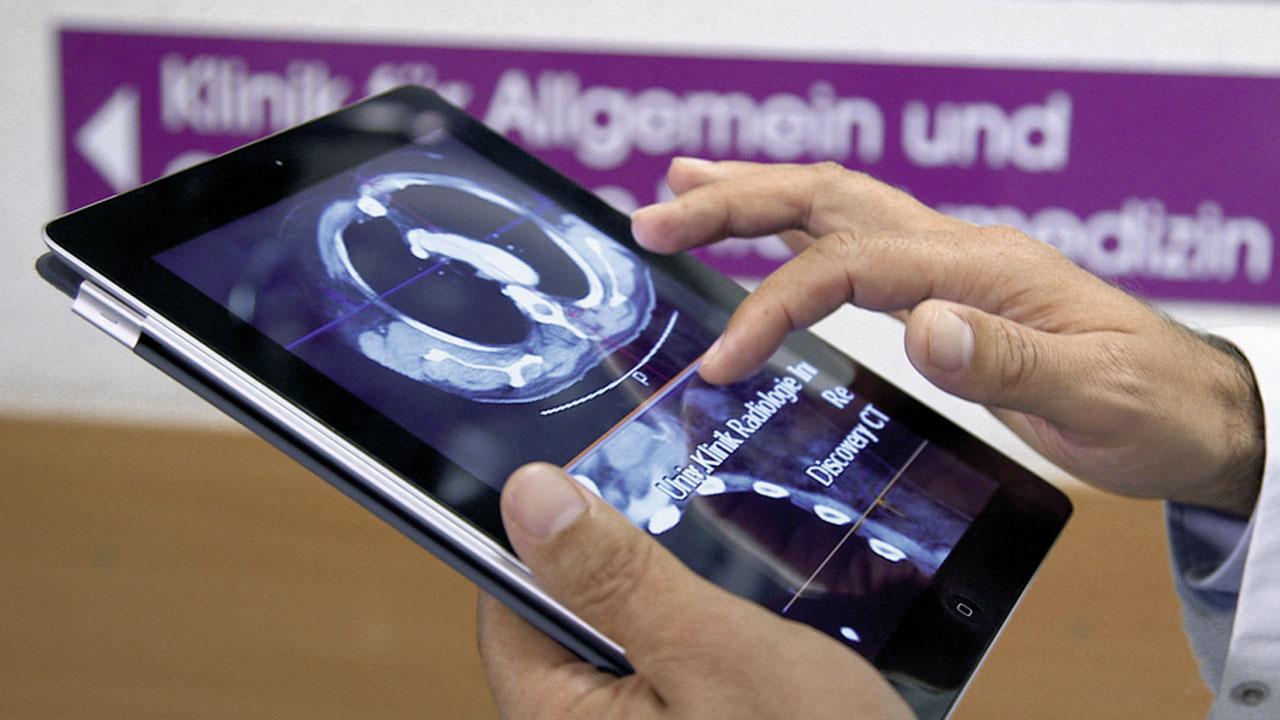
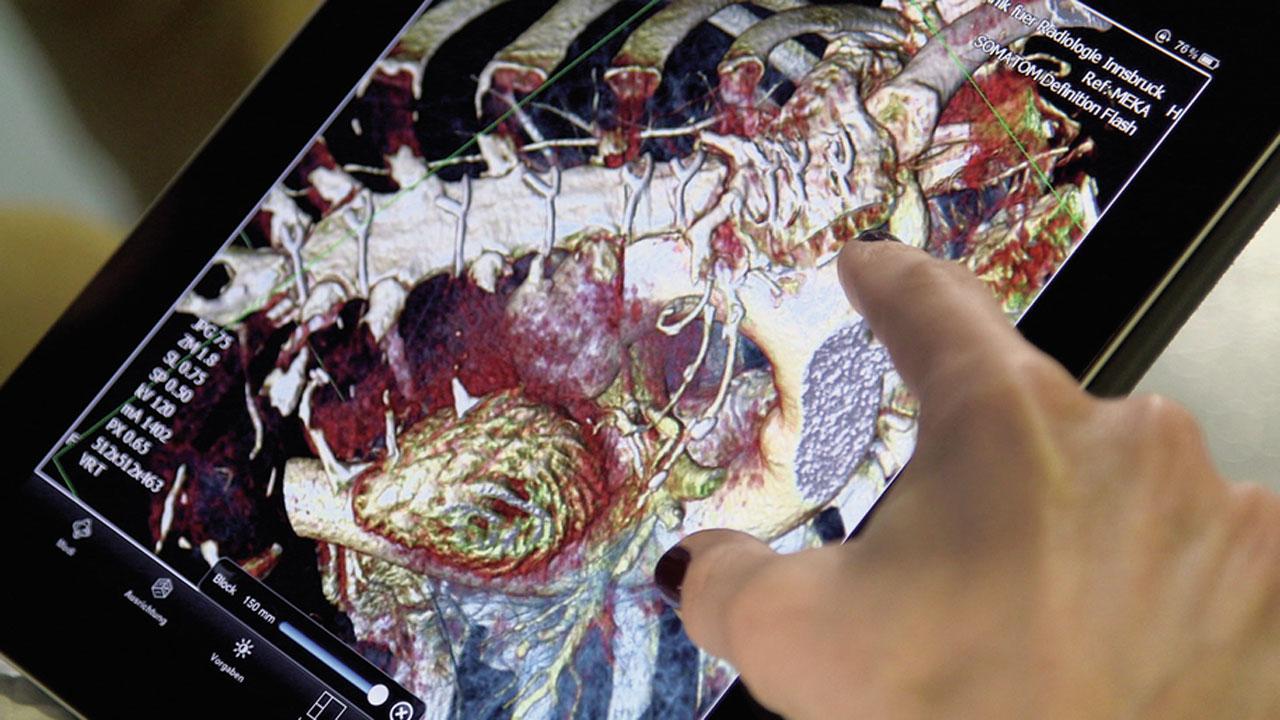
To support her on the move, Feuchtner uses syngo.via WebViewer from Siemens, which allows her to take images with her wherever she goes. “When I launch the app, I can access the exams directly,” she explains. The images load in seconds, depending on the iPad generation and data transfer rate – syngo.via WebViewer supports access via Wi-Fi and mobile radio in the app and via a browser.
The images are reconstructed in three dimensions and can be rotated at all levels, and the doctor can enlarge, rotate, and view sectional images in different orientations. For security reasons, the image files for the syngo.via WebViewer mobile app are available from the server only on a read-only basis. Full functionality for complex three-dimensional post-processing can be granted easily by using the syngo.via client4 at a clinical workstation.
Patients Like 3D Visualization
“The patient sees his or her entire rib cage, including the ribs and the heart, in 3D,” Feuchtner reports from her clinical practice. This means that a physician can discuss the findings and diagnosis much better than with a traditional sectional image in black and white. “I can’t recall a single scenario where I wouldn’t have shown the 3D images,” she says. In cardiac surgery in particular, this kind of visualization is ideal in order to explain the upcoming surgery to the patient.
Help Patients Understand
The images from the Siemens system are in color, which Feuchtner says helps patients to understand what they are seeing. In a survey, Feuchtner also evaluated the value of the images: “Over 70 percent of our patients gave us full points for 3D visualization, and the rest still gave us top grades.” Significant improvement was also achieved as regards the question of whether the patient had understood the explanation given beforehand with or without 3D visualization. The cases involved are usually special, not standard interventions. It was always the patients’ choice whether or not they wished to see the images. “One surprising thing for us was the relatively high proportion of patients who said the images were understandable. We would have expected more difficulties with understanding anatomy,” Feuchtner states.
Many Applications in Research and Teaching Activities
However, the applications go far beyond patient care. The iPads could also be used for university teaching activities, for example for training residents. Besides that, the iPad is also suitable for case demonstrations at interdisciplinary conferences such as the heart surgery/cardiology consult. “High volumes of data – like those generated in a cardiac CT scan or in angio videos – quickly pose a challenge to normal IT systems,” Feuchtner says.
24/7 Availability
These mobility gains are also ideal for on-call and overnight services as well as expert consultations (second opinions): “I can be reached anytime with questions, and I can offer an expert opinion quickly, even if I am not on-site; for example, if I’m at a conference in another country or after a night shift, without having to travel to the hospital.”
After all, hospitals, like many other areas of life, face a growing trend toward 24-hour availability, increasingly blurring the line between work and personal life – “a trend that raises some legitimate questions…” as Feuchtner points out.
A Seal of Quality for the Hospital
Like others, Feuchtner takes a positive overall view: “Using this method is not only worthwhile for medical professionals, but definitely also for patients.” That includes the issue of “lifestyle modifications” – the patient’s willingness to make lifestyle changes like quitting smoking. “If we can show a person the deposits in his or her own coronary vessels directly and understandably by way of 3D visualization, it has more of an impact than simply saying, ‘it isn’t good for your heart,’” Feuchtner affirms.
The Power of Images
As the saying goes, a picture is worth a thousand words. Overall, Feuchtner views being able to access images via iPad and syngo.via WebViewer as a kind of quality seal for the hospital and its adherence to best medical practices. “A patient who can also see his or her images in a timely fashion definitely leaves the hospital with a better feeling than one who merely undergoes an anonymous CT scan and then has to wait to discuss the results, often for days,” she says.