N Latex FLC kappa assayA fast, simple, and more accessible alternative to traditional oligoclonal band (OCB) measurement.
Testing for Multiple Sclerosis (MS) has historically been performed by measuring oligoclonal bands (OCBs) using electrophoresis, which requires both expensive specialty equipment and a high level of skill, leading many laboratories to outsource this sophisticated, labor-intensive testing.
With the 2024 McDonald diagnostic criteria now recognizing kappa free light chains in CSF as a valid alternative to OCBs, the N Latex FLC kappa (CSF) assay1 offers laboratories a fast, simple, and more accessible approach to support confident MS diagnosis.
Benefits

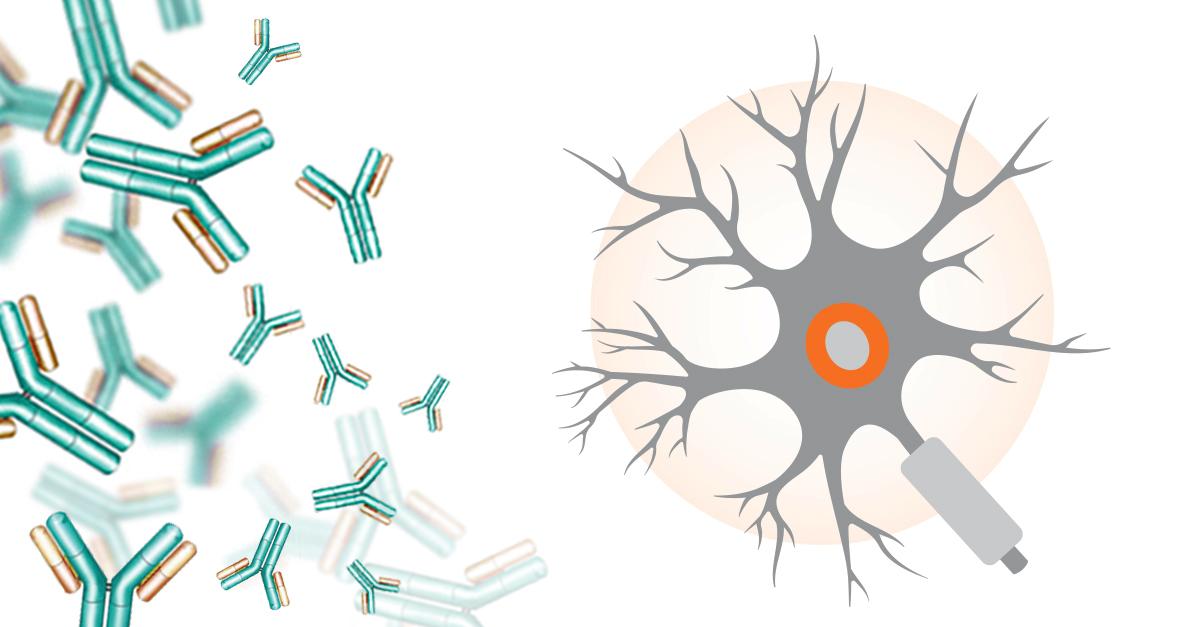
In 2024, the McDonald Diagnostic Criteria Guidelines for MS were updated to recognize kappa free light chains (KFLC) in cerebrospinal fluid as a valid alternative to oligoclonal IgG bands for demonstrating intrathecal immunoglobulin synthesis.
The KFLC index is now considered interchangeable with oligoclonal bands and can therefore be used in their place when confirming a diagnosis of multiple sclerosis.2,3
- The diagnostic sensitivity of KFLC is equal to OCB on a 95% confidence level.
- KFLC and OCB concordance is ~90%, indicating a strong agreement between methods.
- KFLC showed strong diagnostic performance in a systematic review of 32 studies with approximately 3300 CIS/MS patients.
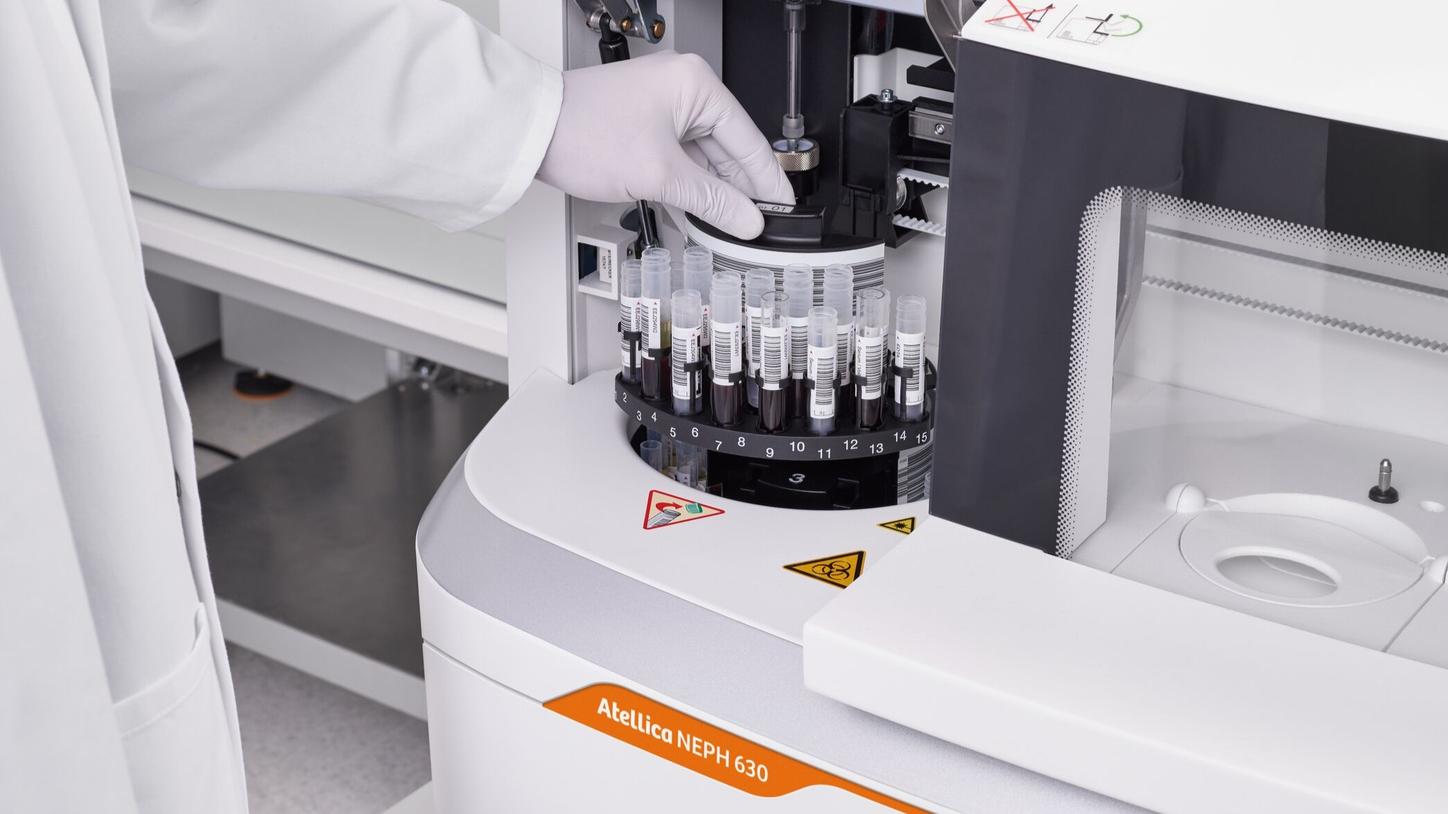
The N Latex FLC kappa assay offers a fast, simple, and more accessible alternative to traditional OCB analysis.
- Eliminates the need for time-consuming electrophoresis testing, supporting faster results for quicker clinical decisions
- Simplifies testing complexity by reducing the manual, multi-step workflow required for OCB detection
- Minimizes the need for expensive specialty equipment and expert interpretation, enabling labs to perform testing in-house
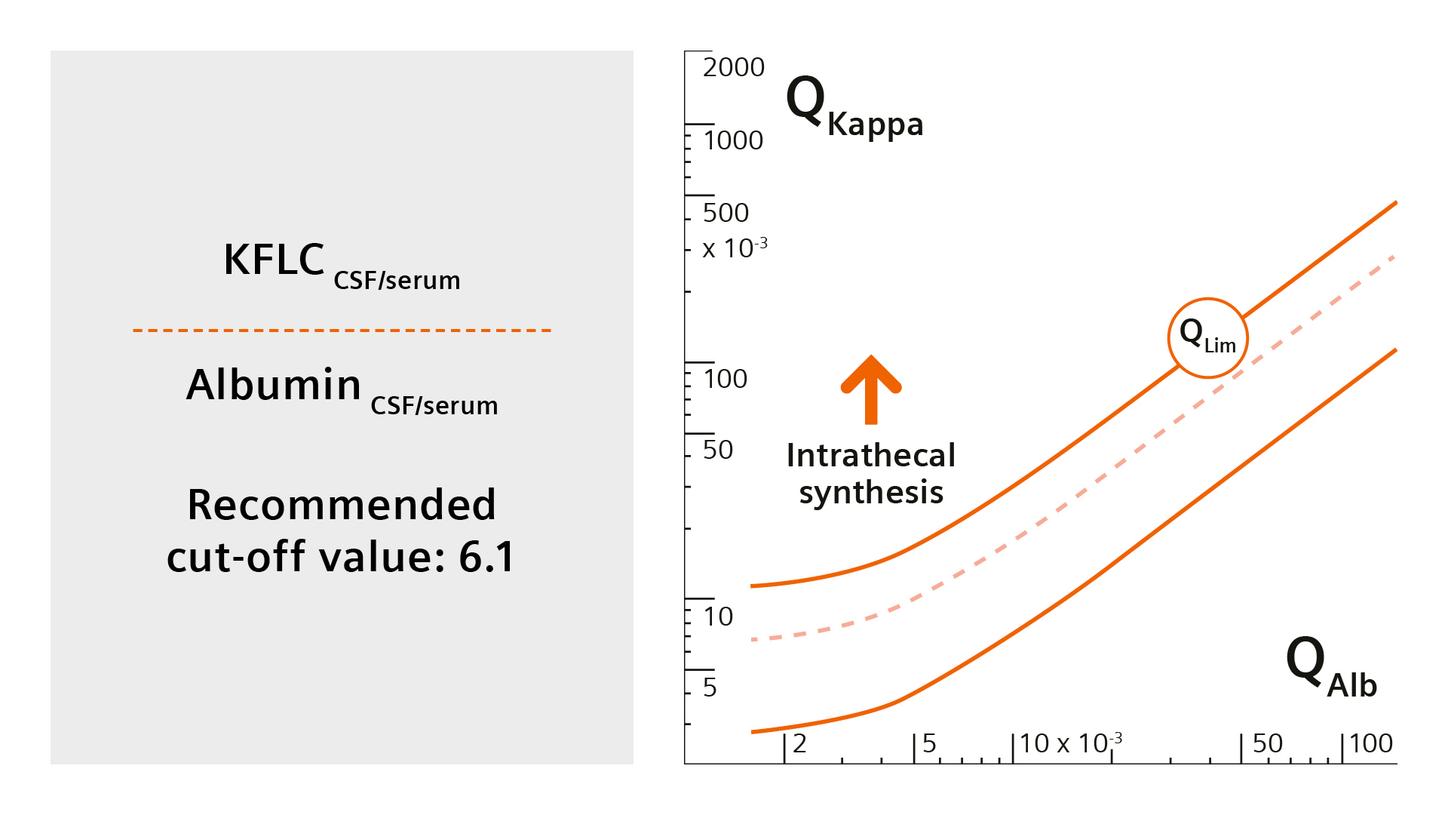
The N Latex FLC kappa assay provides quantitative results for objective decision-making. Assessment of KFLC in cerebrospinal fluid is supported with two established methods:
KFLC Index
This approach measures KFLC and albumin levels in both CSF and serum to generate a numerical index. A recommended cut-off value of 6.1 indicates intrathecal KFLC synthesis – an important marker supporting the diagnosis of multiple sclerosis.
Reiber Diagram
This graphical method plots the KFLC quotient against the albumin quotient. When the plotted point lies above the Q-Lim (upper reference line), it signals intrathecal immunoglobulin synthesis.
In 2024, the McDonald Diagnostic Criteria Guidelines for MS were updated to recognize kappa free light chains (KFLC) in cerebrospinal fluid as a valid alternative to oligoclonal IgG bands for demonstrating intrathecal immunoglobulin synthesis.
The KFLC index is now considered interchangeable with oligoclonal bands and can therefore be used in their place when confirming a diagnosis of multiple sclerosis.2,3
- The diagnostic sensitivity of KFLC is equal to OCB on a 95% confidence level.
- KFLC and OCB concordance is ~90%, indicating a strong agreement between methods.
- KFLC showed strong diagnostic performance in a systematic review of 32 studies with approximately 3300 CIS/MS patients.
Technical Details
Analytical Assay Performance
Assay principle
Latex-enhanced immuno-nephelometry
Sample types
Human serum, EDTA plasma, heparinized plasma,* and CSF*
Reference range
Serum: 6.7–22.4 mg/L
CSF: ≤ 0.34 mg/LInitial measuring ranges
3.5–110 mg/L
Total measuring range
0.17–≥2000 mg/L
Measuring time
12 minutes
Onboard reagent stability
2 weeks on Atellica NEPH 630* System
5 days (6 days with evaporation stoppers) on BN II SystemCalibration frequency
6 weeks
Precision
Repeatability: <5%
Within-lab: <6.5%Antigen-excess security
Up to 24,600 mg/L for serum, EDTA, and heparinized plasma
Up to 562 mg/L for CSF
Evidence
“The kFLC index is an appropriate paraclinical test for the diagnosis of multiple sclerosis.”
Downloads
|
Download