Varian, the cancer-care business of Siemens Healthineers, has published the results of its FAST-02¹ clinical trial, which studied the effect of proton Flash therapy on painful thoracic bone metastases in people with cancer. Building on the results of FAST-01, which demonstrated that proton Flash therapy is feasible² and was safely delivered to patients with extremity bone metastases, FAST-02 extends the therapy to patients with metastases in the ribs, clavicle, scapula, and sternum.
Flash therapy delivers treatment at ultra-high dose rates, typically in less than 1 second—more than 100 times faster than conventional radiation therapy—and has demonstrated potential in pre-clinical studies to reduce damage to surrounding healthy tissues while maintaining effective tumor control. To date, FAST-01 and FAST-02 are the only in-human proton Flash clinical trials conducted worldwide.
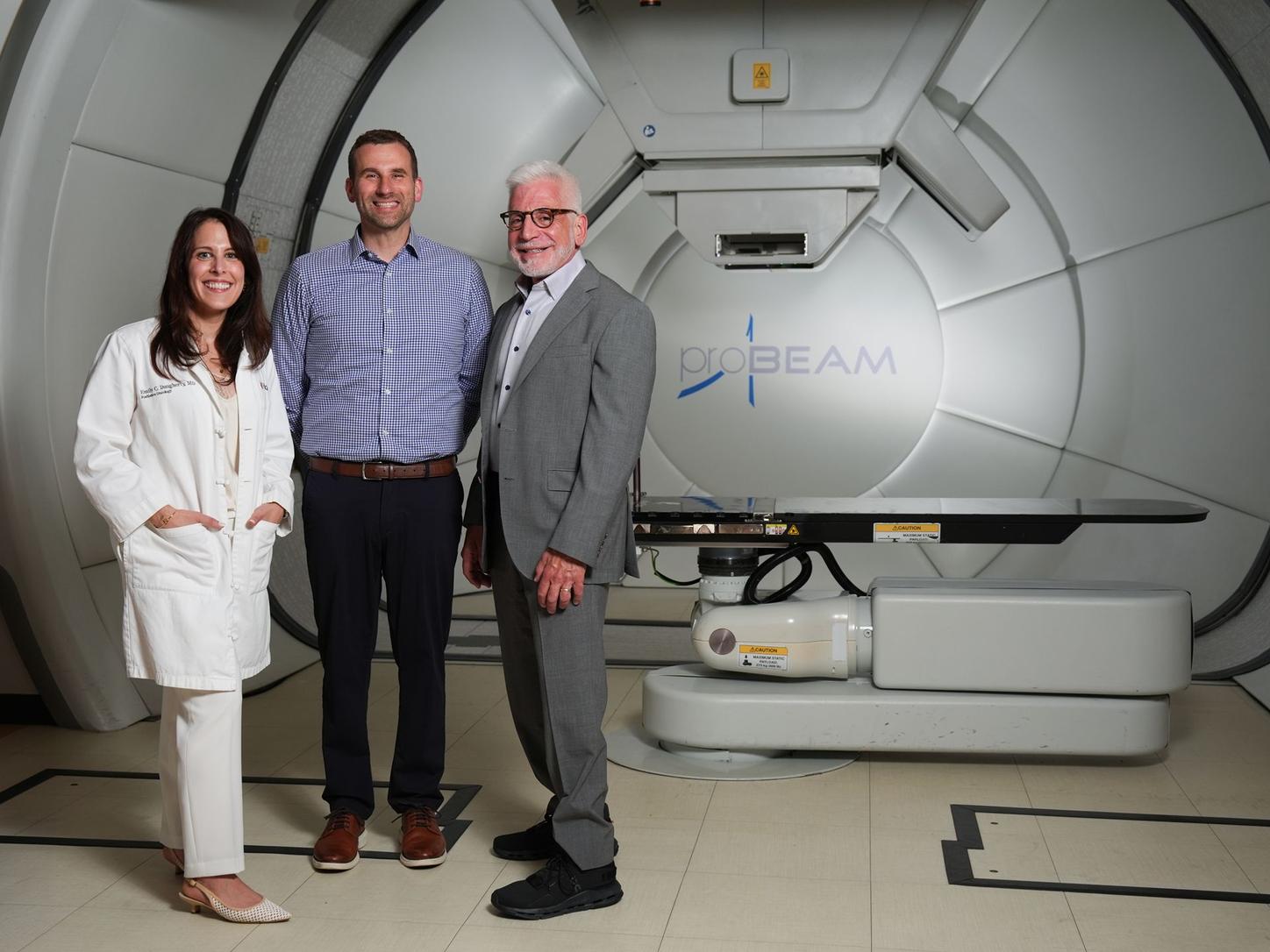
Principal Investigator John Perentesis, MD, professor and director of the Cancer and Blood Disease Institute, Cincinnati Children’s Hospital, and Lead Co-investigator Emily Daugherty, MD, associate professor of radiation oncology at the University of Cincinnati Cancer Center, led the trial, conducted at the Cincinnati Children’s/University of Cincinnati Proton Therapy Center.
The trial enrolled 10 adult participants, each receiving a single 8 Gy fraction at a dose rate greater than 40 Gy/second. Treatment-related adverse effects were evaluated, and efficacy was assessed by using participants' reported one- to three-month pain relief scores. Of the eight participants with three-month pain scores, six participants (75%) reported complete pain relief, and two (25%) had a partial reduction in pain, while of those with one-month pain scores, one reported stabilized pain, while the other reported a partial pain response.
“The significance of FAST-02 lies in our treatment sites being bone metastases within the thorax, meaning proximity to the lungs, heart and spinal cord,” said Dr. Daugherty. “Assessing critical organ side effects is essential for any future implementation of FLASH in deep-seated tumors. Importantly, the results continue to show that Flash effectively controls pain with minimal side effects, and there were no serious adverse events related to the treatment. Despite participants being treated for thoracic metastases, no cardiac or pulmonary toxicities were observed.”
Ricky Sharma, MD, PhD, head of clinical strategy at Varian, added: "The next step for Flash researchers is to perform larger, multi-center clinical trials across a range of cancer types. We hope these trials will show how transformative this new treatment could be in the clinic."
As part of the FAST-02 trial, Varian’s ProBeam proton therapy system was modified³ to enable ultra-high-dose-rate delivery for Flash treatments. In parallel, the Eclipse treatment planning system was enhanced to support Flash therapy planning. Varian is advancing its proton Flash capabilities through an integrated approach that includes planning, quality assurance, and radiation-delivery technologies. Analysis of the trial results will inform future clinical studies and further evaluation of the potential of Flash technology.
For information about the FAST-02 clinical trial, go to: ClinicalTrials.gov
Media contact
Julie Gibson
+1 917 929 5779
julie.gibson@siemens-healthineers.com
Visit the Siemens Healthineers Press Center.
Subscribe to our “Medtech matters” newsletter on LinkedIn.
Siemens Healthineers pioneers breakthroughs in healthcare. For everyone. Everywhere. Sustainably. The company is a global provider of healthcare equipment, solutions and services, with activities in more than 180 countries and direct representation in more than 70. The group comprises Siemens Healthineers AG, listed as SHL in Frankfurt, Germany, and its subsidiaries. As a leading medical technology company, Siemens Healthineers is committed to improving access to healthcare for underserved communities worldwide and is striving to overcome the most threatening diseases. The company is principally active in the areas of imaging, diagnostics, cancer care and minimally invasive therapies, augmented by digital technology and artificial intelligence. In fiscal 2025, which ended on September 30, 2025, Siemens Healthineers had approximately 74,000 employees worldwide and generated revenue of around €23.4 billion. Further information is available at siemens-healthineers.com.