Stroke care is complex and every second counts. From rapid diagnosis to intervention and follow-up, every step matters.
We empower your team with:
- Streamlined workflows for faster decision-making
- Advanced technologies to support timely interventions
- Expert guidance for continuous improvement
Below you can explore how our advanced stroke solutions can help you improve outcomes, reduce risks, and optimize resources across the entire care pathway.
Stroke solutions
Reduce patient transport risks and empower ICU teams with real-time insights.
After thrombectomy, many stroke patients require intensive monitoring in the ICU. These patients face a high risk of sudden deterioration, demanding rapid evaluation. Yet, for 1 in 4 patients, transport increases the risk of adverse events.1
Bringing critical care imaging directly to the bedside changes everything.
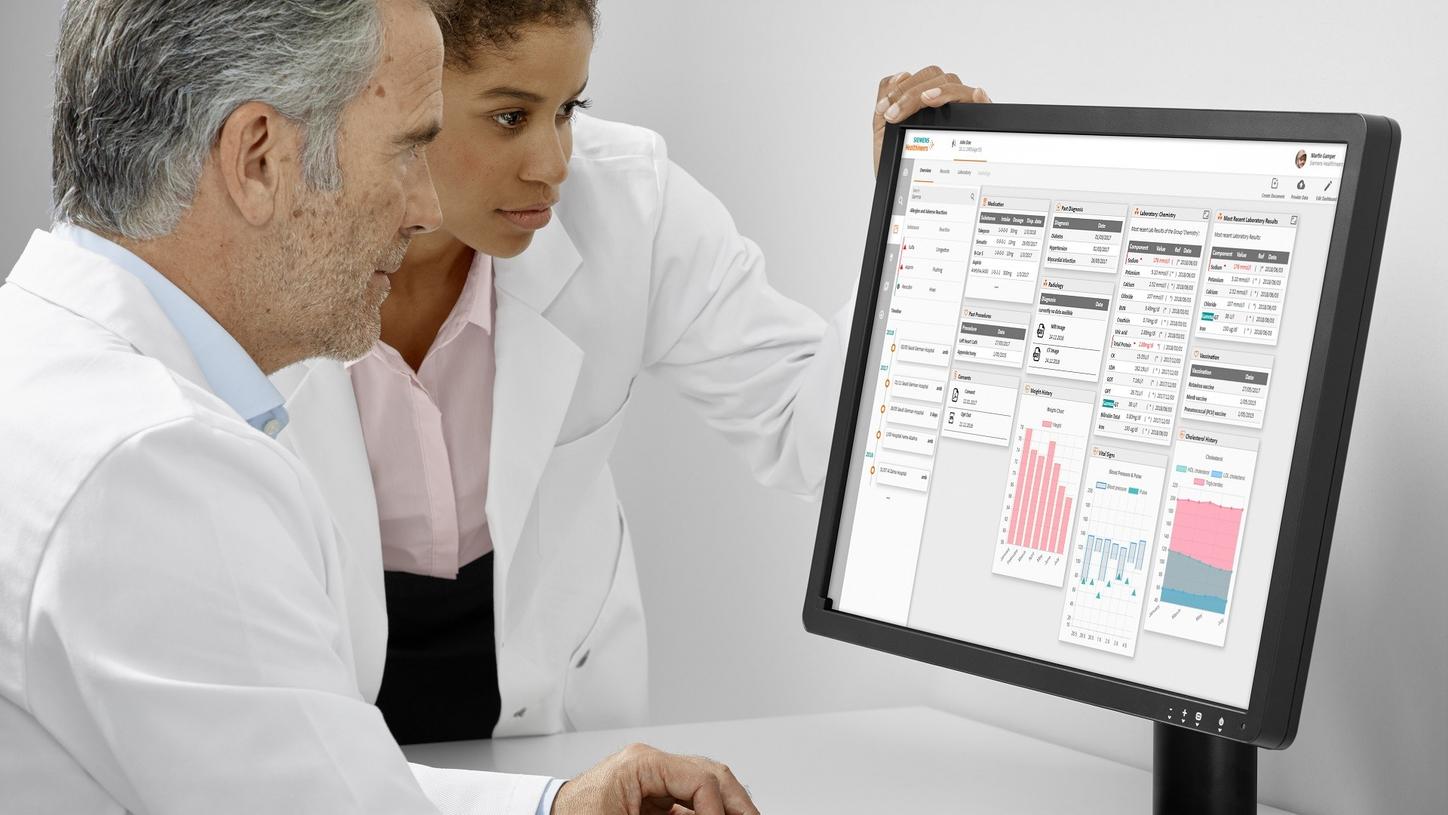
Get the big picture. Act with confidence.
When every second counts, fragmented data slows you down.
Our eHealth Solutions give care teams
- One view for better care: Anticipate patient needs with a comprehensive clinical summary.
- Quick access: Key results, images, and insights when you need them.
- Seamless collaboration: Share data and connect teams for timely, confident decisions.
Time saved, lives improved
Bring patients to the right treatment faster than before
Every minute counts in stroke care. Delays can mean the difference between recovery and disability. Our Mobile Stroke Unit (MSU) solutions bring diagnosis and treatment closer to the patient before they even reach the hospital.
Why Mobile Stroke Units?
- Early diagnosis on the move
- High-end CT scanner on board
- Streamlined stroke pathway
Choose the workflow that fits your needs
Every stroke patient is different, and so is every hospital. From standard imaging of acute stroke to advanced integrated solutions and angio only stroke management, we offer flexible workflows designed to to speed up diagnosis and treatment, reduce door‑to‑needle time, and improve patient outcomes.
- Standard Workflow with CT, MRI & Angiography
- 2-in-1 Workflow with Angio-CT and Angio-MR
- Angio only approach in an emergency setting 2,5
- CT and Ultrasound at Point of Care
Reducing the risk of recurrent strokes
A first stroke is life-changing but the risk doesn’t end there. Up to 1 in 5 patients will experience another stroke within five years. That’s why prevention is critical.
Recurrent strokes often stem from underlying conditions such as cardioembolism, large artery atherosclerosis, and cerebral aneurysms, factors that contribute to millions of preventable strokes worldwide. Detecting these risks early and addressing them effectively is key to safeguarding patient outcomes.
Reduce patient transport risks and empower ICU teams with real-time insights.
After thrombectomy, many stroke patients require intensive monitoring in the ICU. These patients face a high risk of sudden deterioration, demanding rapid evaluation. Yet, for 1 in 4 patients, transport increases the risk of adverse events.1
Bringing critical care imaging directly to the bedside changes everything.
Get the big picture. Act with confidence.
When every second counts, fragmented data slows you down.
Our eHealth Solutions give care teams
- One view for better care: Anticipate patient needs with a comprehensive clinical summary.
- Quick access: Key results, images, and insights when you need them.
- Seamless collaboration: Share data and connect teams for timely, confident decisions.
Time saved, lives improved
Bring patients to the right treatment faster than before
Every minute counts in stroke care. Delays can mean the difference between recovery and disability. Our Mobile Stroke Unit (MSU) solutions bring diagnosis and treatment closer to the patient before they even reach the hospital.
Why Mobile Stroke Units?
- Early diagnosis on the move
- High-end CT scanner on board
- Streamlined stroke pathway
Choose the workflow that fits your needs
Every stroke patient is different, and so is every hospital. From standard imaging of acute stroke to advanced integrated solutions and angio only stroke management, we offer flexible workflows designed to to speed up diagnosis and treatment, reduce door‑to‑needle time, and improve patient outcomes.
- Standard Workflow with CT, MRI & Angiography
- 2-in-1 Workflow with Angio-CT and Angio-MR
- Angio only approach in an emergency setting 2,5
- CT and Ultrasound at Point of Care
Reducing the risk of recurrent strokes
A first stroke is life-changing but the risk doesn’t end there. Up to 1 in 5 patients will experience another stroke within five years. That’s why prevention is critical.
Recurrent strokes often stem from underlying conditions such as cardioembolism, large artery atherosclerosis, and cerebral aneurysms, factors that contribute to millions of preventable strokes worldwide. Detecting these risks early and addressing them effectively is key to safeguarding patient outcomes.
Reduce patient transport risks and empower ICU teams with real-time insights.
After thrombectomy, many stroke patients require intensive monitoring in the ICU. These patients face a high risk of sudden deterioration, demanding rapid evaluation. Yet, for 1 in 4 patients, transport increases the risk of adverse events.1
Bringing critical care imaging directly to the bedside changes everything.
Connect with one of our Stroke Ambassadors and discover how we can support your stroke program.
Customer stories
Transform Stroke Care Across the Entire Pathway
Optimizing stroke workflows is critical to improving patient outcomes. Leading hospitals are showing what’s possible.
Carlos Molina, MD from Vall d'Hebron hospital in Barcelona
Optimizing the stroke pathway in Barcelona
Carlos Molina, MD, and Alejandro Tomasello, MD, from Vall d'Hebron hospital in Barcelona aim to overcome bottlenecks in the workflow for stroke by using our technology in their one-step approach to stroke treatment. They were able to shorten the door-to-groin time to less than 30 minutes - an important step in improving patient outcomes.2
Improving the stroke pathway in southern Sweden
Distance is a real challenge in Sweden’s southernmost stroke network. Travel time to the nearest hospital can vary drastically. To address this situation Skåne University Hospital and the 13 regional Primary Stroke Centers (PSC) have installed a spoke-and-hub system with a number of procedural adjustments intended to speed up the pathway and improve diagnosis, especially for patients eligible for thrombectomy at the Comprehensive Stroke Center (CSC)2
Carlos Molina, MD from Vall d'Hebron hospital in Barcelona
Optimizing the stroke pathway in Barcelona
Carlos Molina, MD, and Alejandro Tomasello, MD, from Vall d'Hebron hospital in Barcelona aim to overcome bottlenecks in the workflow for stroke by using our technology in their one-step approach to stroke treatment. They were able to shorten the door-to-groin time to less than 30 minutes - an important step in improving patient outcomes.2
Improving the stroke pathway in southern Sweden
Distance is a real challenge in Sweden’s southernmost stroke network. Travel time to the nearest hospital can vary drastically. To address this situation Skåne University Hospital and the 13 regional Primary Stroke Centers (PSC) have installed a spoke-and-hub system with a number of procedural adjustments intended to speed up the pathway and improve diagnosis, especially for patients eligible for thrombectomy at the Comprehensive Stroke Center (CSC)2
Carlos Molina, MD from Vall d'Hebron hospital in Barcelona
Optimizing the stroke pathway in Barcelona
Carlos Molina, MD, and Alejandro Tomasello, MD, from Vall d'Hebron hospital in Barcelona aim to overcome bottlenecks in the workflow for stroke by using our technology in their one-step approach to stroke treatment. They were able to shorten the door-to-groin time to less than 30 minutes - an important step in improving patient outcomes.2
Talk to one of our Stroke Ambassadors today and discover how point-of-care imaging can make a difference for your patients and your team.
Customer case studies
11%2 Reduction in cost per case
Increase overall profitability
- Asset and fleet optimization via IT analytics to standardize quality of care and ensure maximized returns
- 11.2% reduction in cost per case while number of cases increased by 15.1%2

7%2 Inpatient length of stay
- As part of our Value Partnership to reshape healthcare delivery, Medical University South Carolina (MUSC), USA and Siemens Healthineers aim to optimize stroke care within the community
- 7% reduction in inpatient length of stay for ischemic patients2

Optimized scheduling
- Optimize scheduling in new neuro-interventional area through digital twin-enhanced workflow simulation

Pioneer robotic capability3
Future value creation:
- Collaboration to pioneer neuro-interventional robotic capability
- Explore implementation of artificial intelligence to guide providers during thrombectomy

33%2 Improve outcome and quality of life for stroke patients
Consulting for optimization of clinical processes and workflows
- State-of-the-art imaging modalities to advance clinical capabilities and drive reputation
- 33% reduction in the degree of severity of symptoms at discharge2
27%2 Faster treatment
Optimize processes to shorten door-to-groin times
- Support during the planning and construction phase. Site planning taking into account process efficiency aspects and on-site coordination via dedicated project manager
- 27% reduction in door-to-groin time2
11%2 Reduction in cost per case
Increase overall profitability
- Asset and fleet optimization via IT analytics to standardize quality of care and ensure maximized returns
- 11.2% reduction in cost per case while number of cases increased by 15.1%2
7%2 Inpatient length of stay
- As part of our Value Partnership to reshape healthcare delivery, Medical University South Carolina (MUSC), USA and Siemens Healthineers aim to optimize stroke care within the community
- 7% reduction in inpatient length of stay for ischemic patients2
Optimized scheduling
- Optimize scheduling in new neuro-interventional area through digital twin-enhanced workflow simulation
Pioneer robotic capability3
Future value creation:
- Collaboration to pioneer neuro-interventional robotic capability
- Explore implementation of artificial intelligence to guide providers during thrombectomy
33%2 Improve outcome and quality of life for stroke patients
Consulting for optimization of clinical processes and workflows
- State-of-the-art imaging modalities to advance clinical capabilities and drive reputation
- 33% reduction in the degree of severity of symptoms at discharge2
27%2 Faster treatment
Optimize processes to shorten door-to-groin times
- Support during the planning and construction phase. Site planning taking into account process efficiency aspects and on-site coordination via dedicated project manager
- 27% reduction in door-to-groin time2
11%2 Reduction in cost per case
Increase overall profitability
- Asset and fleet optimization via IT analytics to standardize quality of care and ensure maximized returns
- 11.2% reduction in cost per case while number of cases increased by 15.1%2