Do you want to experience the power of AI?
With AI-Rad Companion Trial Light1 you can easily experience the quality of our algorithms – directly via your browser and without any installation effort.

Deep learning-based autocontouring
Autocontouring in radiation therapy for various clinical environmentsAccurate contouring of structures, like organs of interest (OOI), and lymph nodes is one of the major bottlenecks of radiation therapy planning, but still the necessary first step in the process. Therefore, the increase in the number of patients puts significant pressure on radiation therapy staff responsible for consistent contouring results. Advances in technology and artificial intelligence can help automate repetitive tasks such as contouring, thus reduce workload, and standardize key simulation steps.
Learn more about automated organs-of-interest and gross tumor volume (GTV) contouring solutions in radiation therapy for various clinical environments supporting multiple guidelines.
With AI-Rad Companion Trial Light1 you can easily experience the quality of our algorithms – directly via your browser and without any installation effort.
Why AI-based autocontouring?
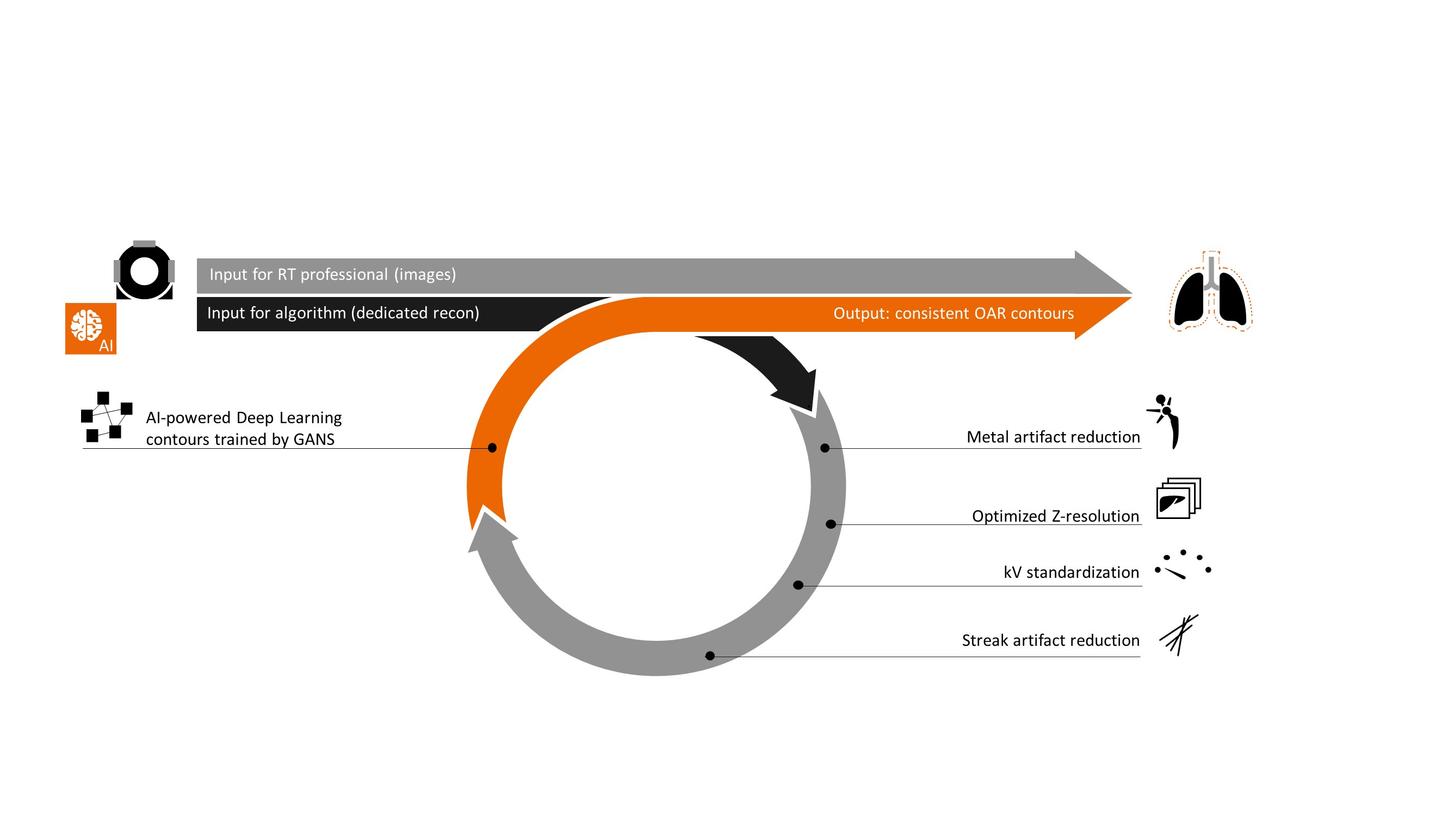
Our deep learning-based autocontouring solutions enable precise organs-of-interest contouring in radiation therapy for over 200 structures. They provide consistent results as a starting point for treatment:
>95% of the contouring results are clinically usable or require minor edits2.
Organs-of-interest contouring creates a substantial amount of effort and is a major source of variability in radiation therapy planning. Modern treatment techniques rely on consistent OOI contours as a starting point. The time spent on OOI contouring keeps staff from focusing on clinical tasks like devising an optimal treatment plan.
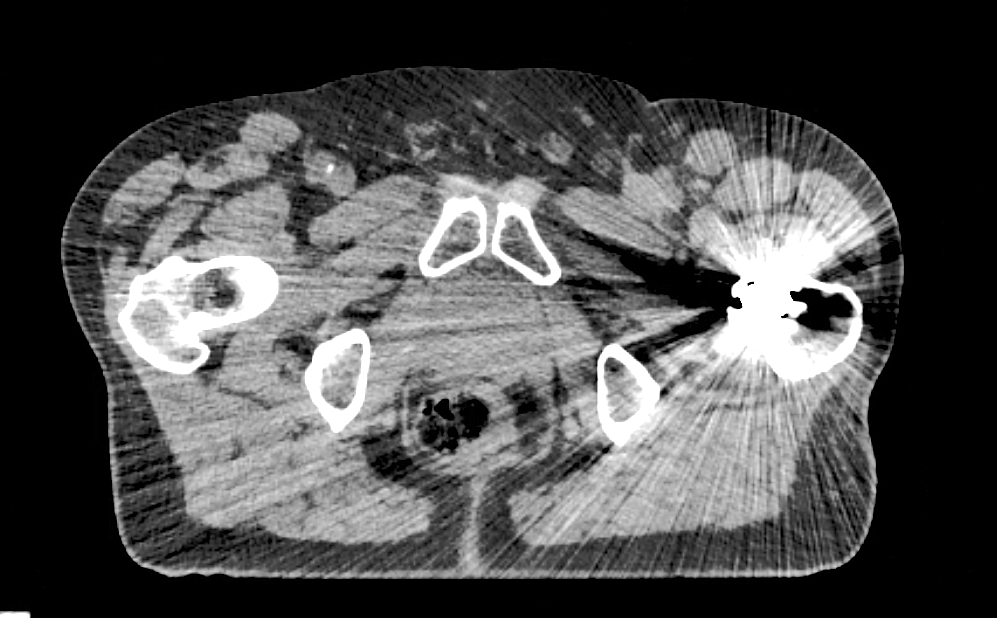
Courtesy of University Hospital Groningen, Netherlands
The quality of autocontouring depends on the quality of the CT images

The value of AI-based autocontouring
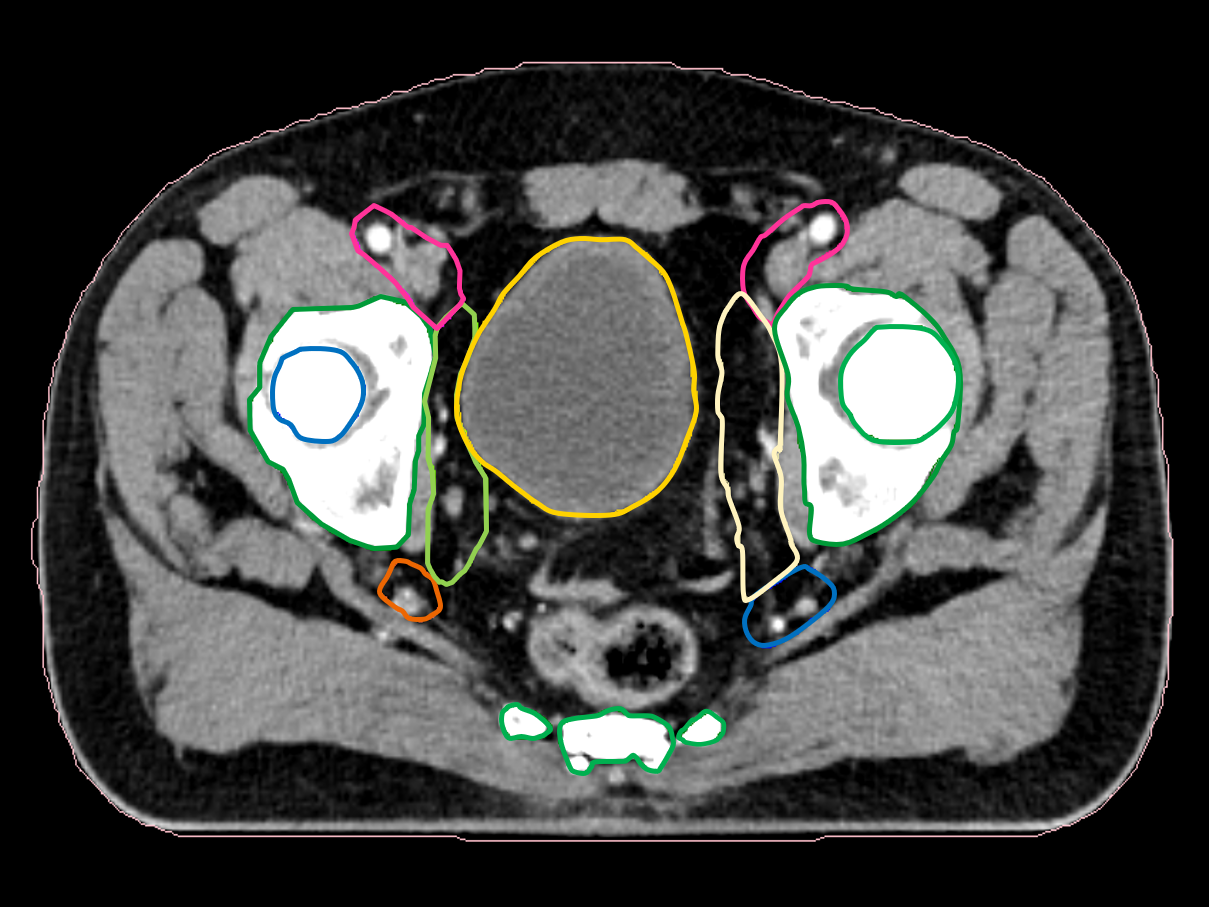
Consistency
Deep learning-trained organs-of-interest contouring for increased quality and consistency in radiation oncology.
Courtesy of Universitätsklinikum Erlangen, Germany

Efficiency8
Improve workflow efficiency to free up resources from routine delineating tasks in radiation oncology.
Courtesy of Radiologische Allianz Hamburg, Germany
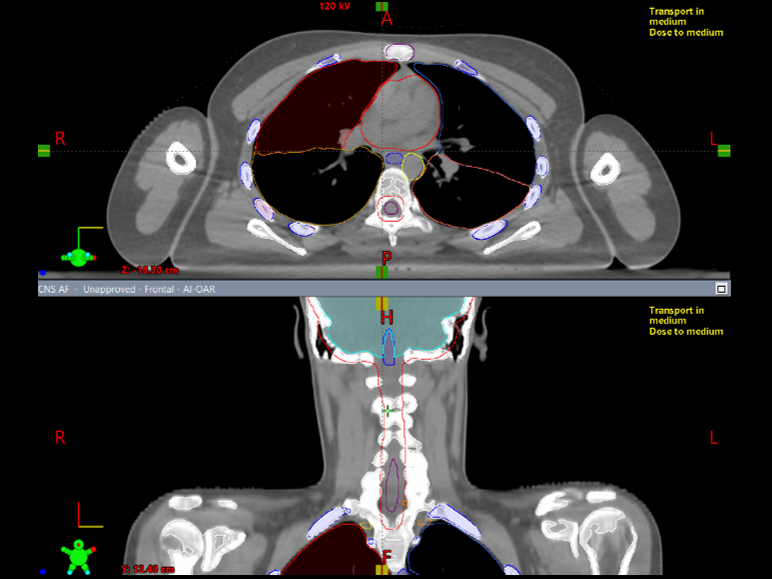
Accessibility
Seamless integration into the daily radiation oncology treatment planning workflow.
Eclipse version 17.0 was used to display the autocontouring results.

Courtesy of Universitätsklinikum Erlangen, Germany

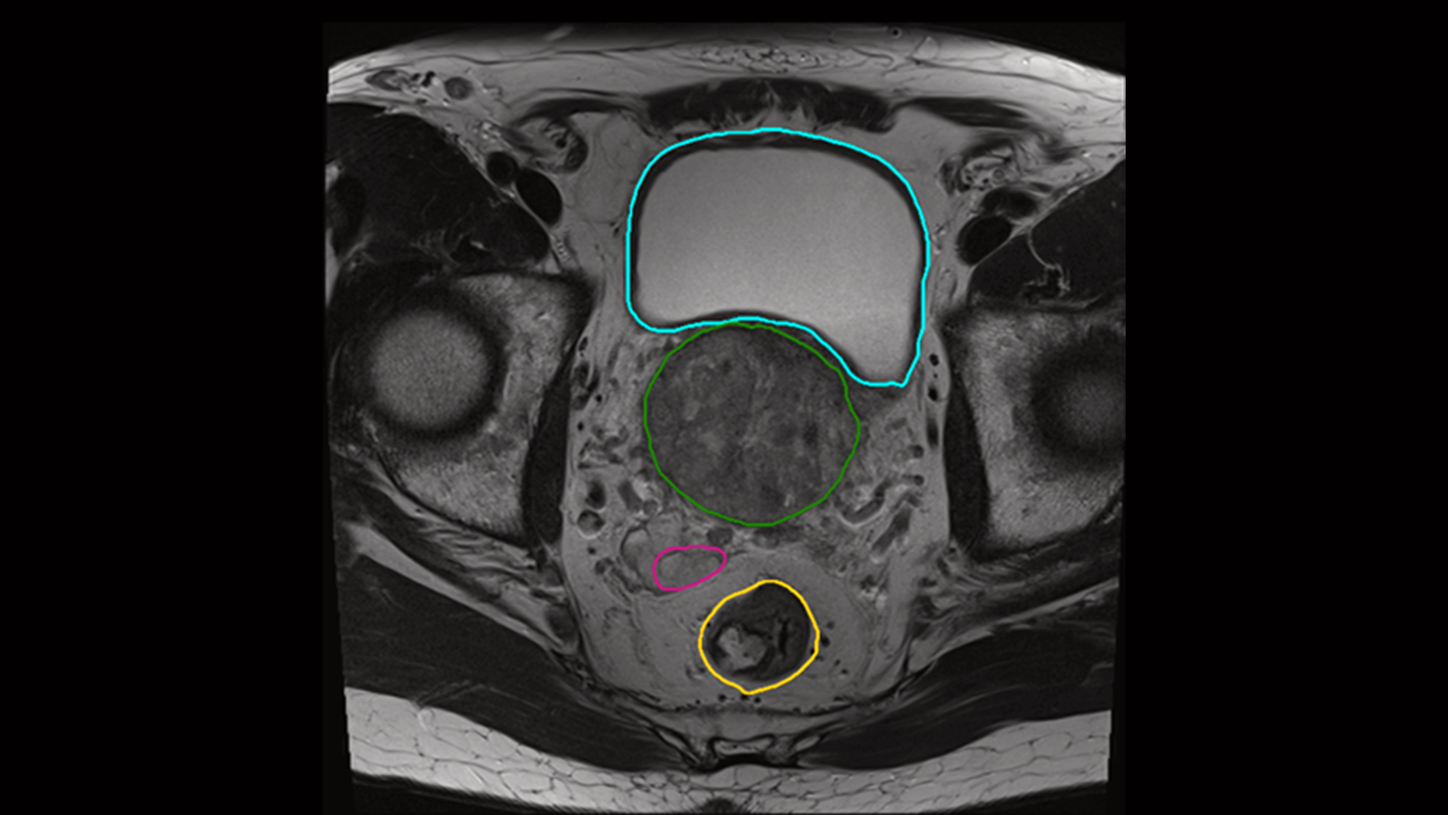
Courtesy of Leopoldina-Krankenhaus der Stadt Schweinfurt GmbH, Schweinfurt, Germany
AI-Rad Companion Organs RT and syngo.via RT Image Suite also support MR-based organs of interest for male pelvis.
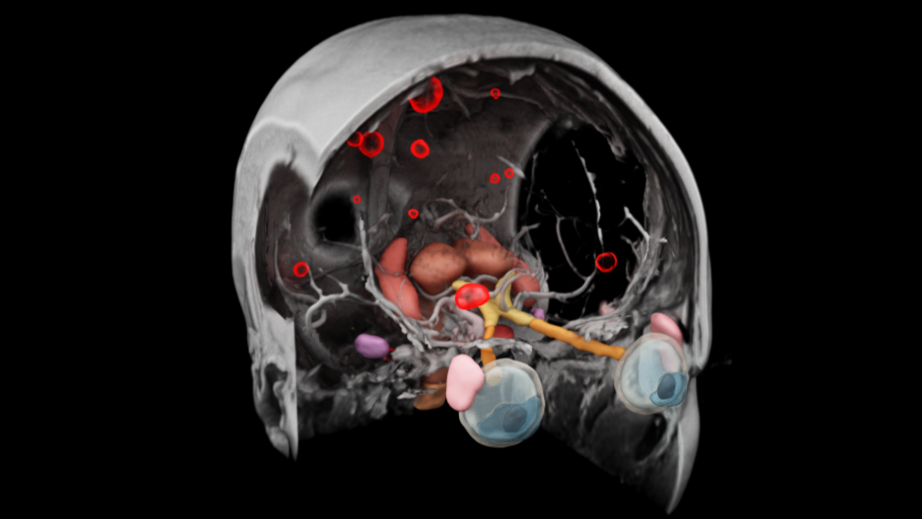
Clinical outcomes
We follow international consensus guidelines to train our deep learning algorithms for organs-of-interest contouring:
Hear what our customers say12:
The AI software completed the contouring for each patient in just one to two minutes, reducing the workload by an average of 75%, and in some cases saving over 25 minutes per patient. “We still needed to review the AI contours, but the correction time was only three to four minutes,” says Tezcanli. “One case required nine minutes, but even with that patient we had a time saving of 75%.”

Wu X, Udupa JK, Odhner D et al. Knowledge-Based Auto Contouring for Radiation Therapy: Object Definitions, Ground Truth Delineations, Object Quality, and Image Quality. Int J Radiat Oncol Biol Phys. 2017; 99 (2): E740
Cheung CW, Leung KY, Lam WW et al. Application of Model-based Iterative Reconstruction in Auto-contouring of Head and Neck Cases. Scientific Informal (Poster) Presentation at: LL-ROS-TH Radiation Oncology and Radiobiology Lunch Hour CME Posters; 2012 Nov 29; Chicago, IL
Radiation Oncology Incident Learning System, Aggregate Report Patient, Safety Work Product, Q4, 2017
IAEA, Radiotherapy in Cancer Care: Facing the Global Challenge, 2017
J Van der Veen, A Gulyban, S Willems, F Maes, S Nuyts, Interobserver variability in organ at risk delineation in head and neck cancer, 2021
AI-Rad Companion Organs RT and Eclipse are two independent medical devices having individual intended purposes and must/should not considered as a system.