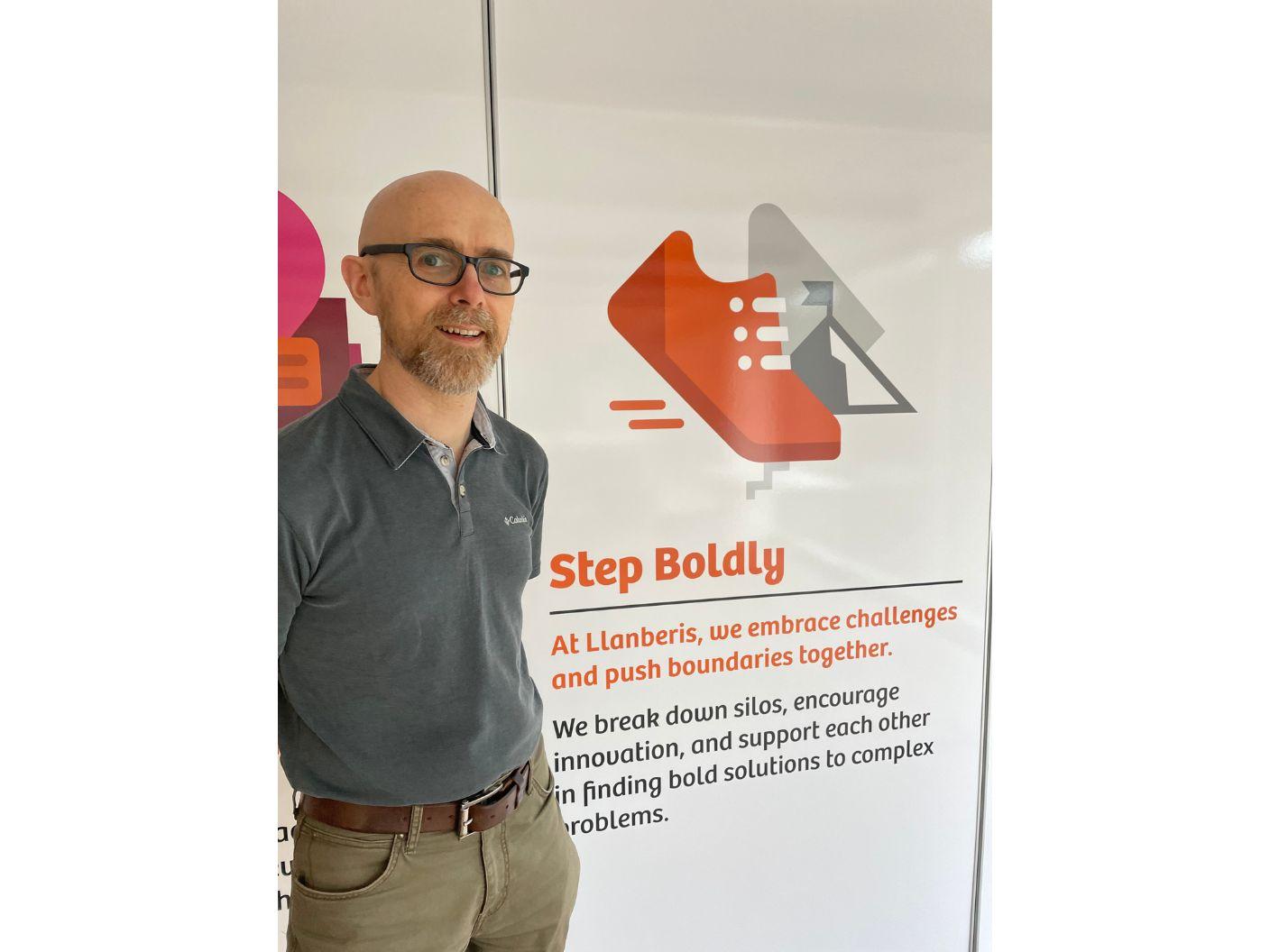
What are the main duties of your role, and what attracted you to the job?
My role is to determine where our processes need improving to reduce scrap, rework and product variability. The role is highly varied which is what attracted me to it - Technical Excellence can get involved in any part of the manufacturing processes, i.e. reagent manufacturing, product testing, raw materials etc.
What does your typical working day look like?
No two days are ever the same. Most of our work these days falls into two main categories; data analysis/discovery to identify potential improvements and implementation of improvements we’ve previously identified. In addition to this I consult with various other sites around the world usually in the area of industrial metrology but also other aspects of manufacturing science.
What is the most rewarding part of your job?
Seeing the impact of my teams work in the subsequent data. For example, since we implemented the mixing improvements and standardised V Mixer drying cycles in 2023, we’ve saved £1.5 million in the 18 months following those changes in comparison to the 18 months before.
What are the greatest challenges you face?
Right from the start we came up against a culture of “we’ve always done it that way”, but people are now used to us challenging the norm and bringing data and scientific rationale to back it. Getting our hands on data is probably our biggest challenge; we keep a lot of data, but it is not easily accessed with much of it on paper records in offsite storage.
Can you tell us about your education and early career background that prepared you for this role
My career has always been very instrumentation and metrology focused starting off in Environmental Research designing, building and maintaining environmental monitoring systems to monitor greenhouse gases and weather conditions before moving onto manufacturing. Most of my career in manufacturing has been in process industries (Pharma, Heavy Chem, Medical Devices) in either a technical support, project management or technical consultant role. However, I’ve also worked for an instrument manufacturer running R&D projects developing new instruments and applications.
When it comes to education, it is a bit of a mixed bag with degrees in Mechanical Engineering, Applied Physics and Exercise Physiology. Although I’ve never really stopped and found the key to an interesting career is lifelong education, I’ve studied certifications with all the main Continuous Improvement Methodologies including Lean, Kaizen and a Master Black Belt in Six Sigma. I’ve also attained professional registrations including Chartered Engineer, Chartered Scientist, Chartered Physicist & Fellow of The Institute of Physics. I’ve found that pursuing professional registration has forced me to become a more well-rounded professional by highlighting development gaps that weren’t immediately evident through my work life.
Why did you choose to work within a Manufacturing environment?
When it comes to technical roles, there are typically more interesting opportunities on a larger scale in manufacturing than other areas. I have specifically chosen to work for large multinational manufacturers because they tend to offer more choice in technical challenges and career progression.
What do you love about working for Siemens Healthineers, Llanberis, the IMMULITE Centre of Excellence?
Aside from the interest in technical challenges, I really like the (mostly) calm working environment, the family like vibe and the beautiful landscape surrounding the site. Ultimately, I get to work for a multi-national in the middle of a national park! There are very few places in the world where that is possible!
If you were encouraging others to take up employment at Siemens Healthineers, what would you say?
It’s a great place to work. I’ve worked for several employers over my career which is now creeping through its third decade and most of them didn’t have the nice working environment we have here – that really can’t be stated enough!
If you were to describe the culture of the business, what five words would you use?
Open minded moving forward together.
What advice would you give to young people considering STEM careers?
There is a perception that STEM careers are very hard, and you need to be great at advanced maths, etc. It’s not that hard and most of us never use crazy maths in the workplace. It’s all about following the available data to logical conclusions and using it to support or improve the business. There are lots of different levels to work at too – it’s not all about scientists, engineers and mathematicians, so take some time to look at all the options.