
Case Presentation and Investigation
Material and Methods
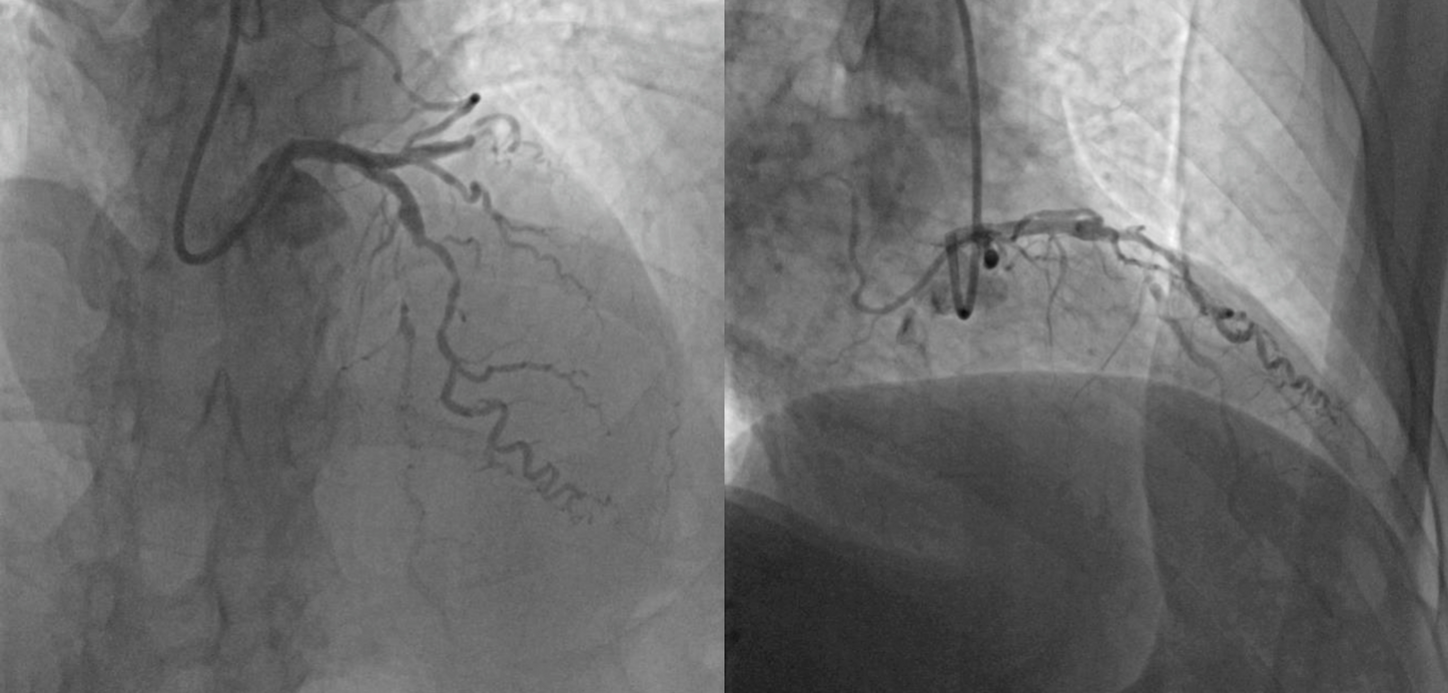
Review of coronary angiography revealed total occlusion of the left anterior descending (LAD) artery at its mid-segment, with retrograde filling from epicardial collaterals originating from the diagonal branches. The length of the occlusion was approximately 20 mm, with no significant calcification or tortuosity. The distal vessel was of good caliber, making it amenable to potential revascularization.
A 50-year-old male patient, previously treated for hypertension for several years, presented with complaints of angina pectoris (class II) and dyspnea (class II) for a duration of 6 months. His echocardiography showed severely impaired left ventricular systolic function, with an ejection fraction (EF) of 25-30%, indicating significant cardiac dysfunction. Multi-slice computed tomography (MSCT) coronary angiography was requested and revealed significant coronary artery disease involving the LAD and other vessels, specifically the left circumflex artery.
Coronary angiography confirmed chronic total occlusion (CTO) of both the LAD and left circumflex arteries. Viability assessment using cardiac MRI confirmed a transmural scar in the left circumflex artery territory, with a viable LAD artery territory. This finding indicated that revascularization of the LAD artery could potentially improve the patient’s symptoms and quality of life. Following a heart team discussion, revascularization of the LAD artery via CTO-PCI was planned, given the favorable distal vessel caliber and the high likelihood of symptomatic relief, which could have a significant impact on the patient’s functional status and overall prognosis.
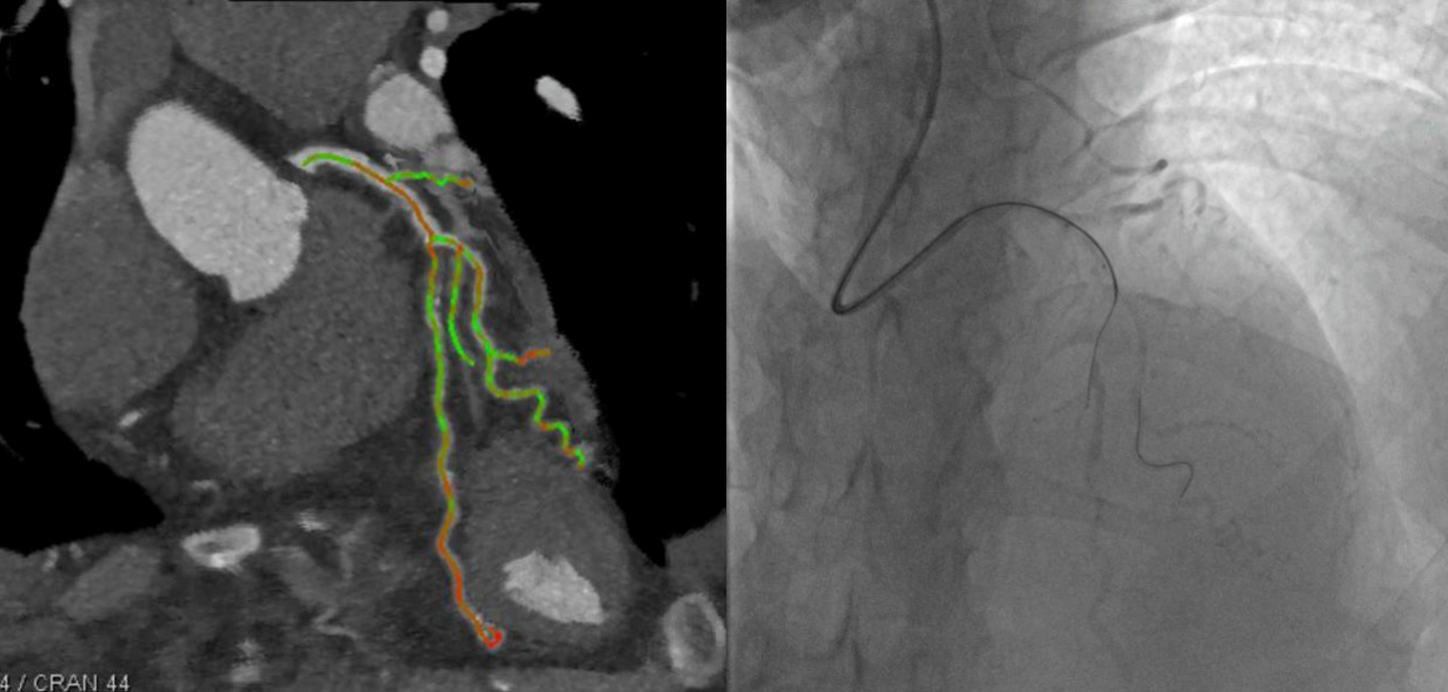
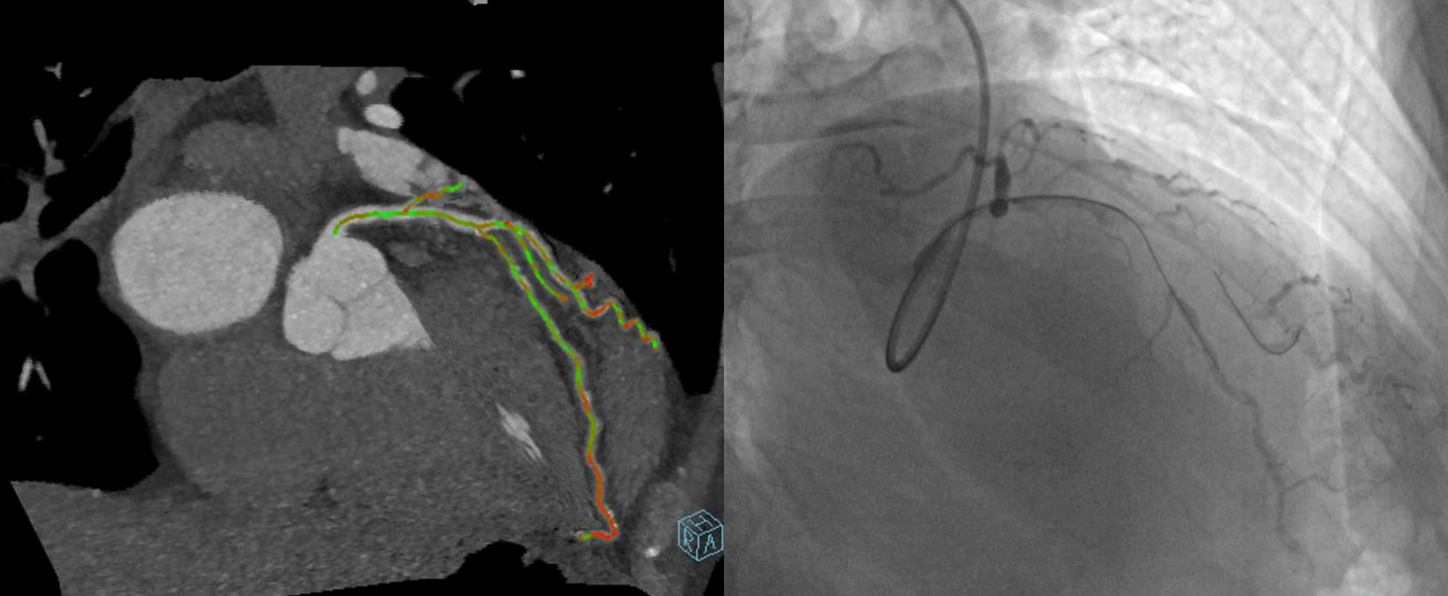
The additional use of syngo CTO Guidance allows for automated segmentation of the coronary arteries, centerline extraction, and color-coding of the centerlines to highlight vessel foreshortening. This facilitates the selection of two optimal angulations of the lesion segment for wire crossing, which is typically not visible on X-ray before the procedure begins. This technique significantly reduces the need for contrast injections, improving procedural efficiency.

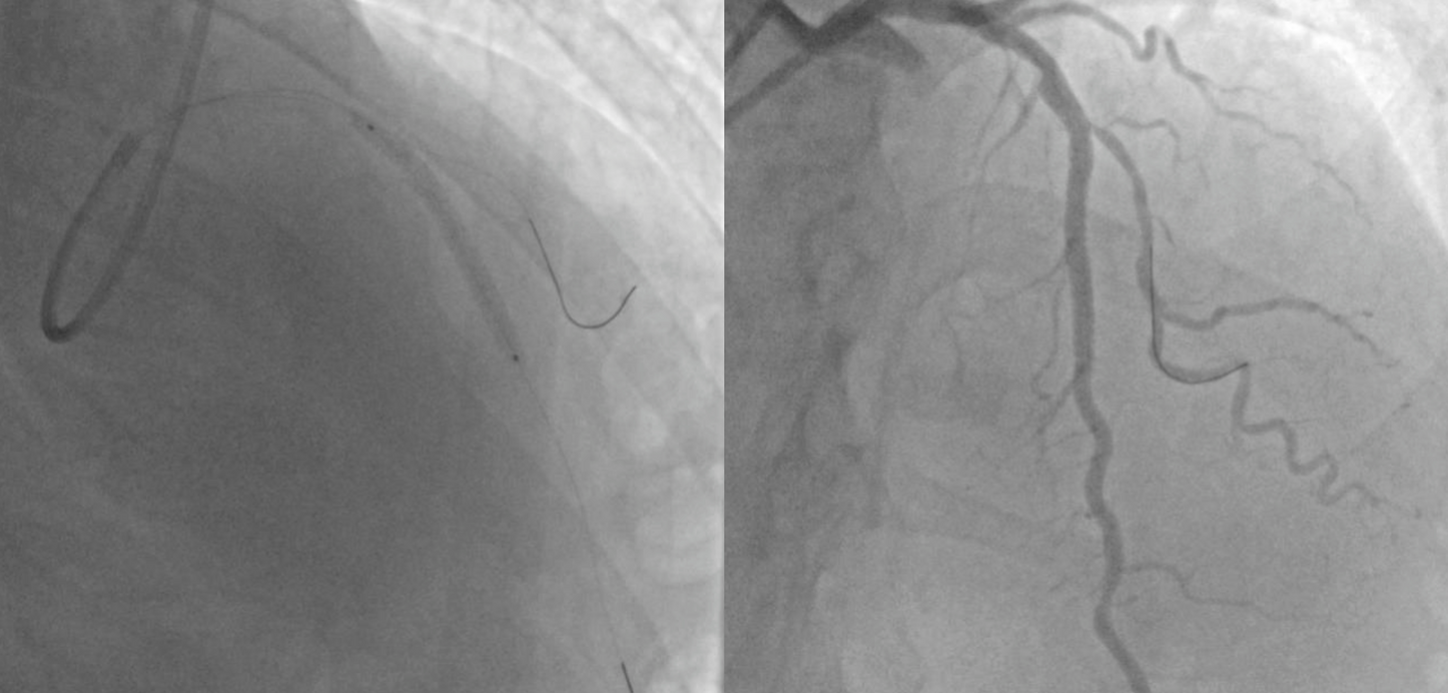
A single 7F EBU guiding catheter was utilized to cannulate the left main trunk. A Mamba Flex (Boston Scientific) microcatheter, over a workhorse wire, was advanced to the proximal CTO cap. An antegrade wiring technique was employed. Initially, a Fielder XT-A (ASAHI) wire was used, which was later exchanged for a GAIA II wire that successfully crossed the CTO segment into the distal true lumen. The microcatheter was then advanced, and the GAIA II wire was exchanged for a workhorse wire. The lesion was subsequently prepared and treated with the deployment of a 3.5 x 38 mm drug-eluting stent.

Follow-Up Discussion The successful recanalization of a chronic total occlusion (CTO) has been associated with significant clinical benefits, including improved patient quality of life, alleviation of angina symptoms, enhanced left ventricular ejection fraction, electrical stabilization, and a reduction in arrhythmic burden. Conclusion Historically, treatment options for CTO were limited due to the complexity of opening completely occluded arteries using catheter-based techniques. Coronary artery bypass grafting (CABG) was often the only viable option for managing these blockages. However, not all patients are suitable candidates for CABG, particularly those with high surgical risk. In some cases, patients who do not require CABG may benefit from stenting through advanced CTO PCI techniques. The integration of syngo CTO Guidance in interventional procedures for CTO offers significant advantages. This technology facilitates wire crossing and positioning by providing side-by-side guidance with fluoroscopy and CTA images. It also offers valuable insights into calcification, as well as the true length and course of the occluded vessel segments, aiding in wire selection, procedural orientation, and overall procedural success.


Case Presentation and Investigation
Material and Methods
Review of coronary angiography revealed total occlusion of the left anterior descending (LAD) artery at its mid-segment, with retrograde filling from epicardial collaterals originating from the diagonal branches. The length of the occlusion was approximately 20 mm, with no significant calcification or tortuosity. The distal vessel was of good caliber, making it amenable to potential revascularization.
A 50-year-old male patient, previously treated for hypertension for several years, presented with complaints of angina pectoris (class II) and dyspnea (class II) for a duration of 6 months. His echocardiography showed severely impaired left ventricular systolic function, with an ejection fraction (EF) of 25-30%, indicating significant cardiac dysfunction. Multi-slice computed tomography (MSCT) coronary angiography was requested and revealed significant coronary artery disease involving the LAD and other vessels, specifically the left circumflex artery.
Coronary angiography confirmed chronic total occlusion (CTO) of both the LAD and left circumflex arteries. Viability assessment using cardiac MRI confirmed a transmural scar in the left circumflex artery territory, with a viable LAD artery territory. This finding indicated that revascularization of the LAD artery could potentially improve the patient’s symptoms and quality of life. Following a heart team discussion, revascularization of the LAD artery via CTO-PCI was planned, given the favorable distal vessel caliber and the high likelihood of symptomatic relief, which could have a significant impact on the patient’s functional status and overall prognosis.
The additional use of syngo CTO Guidance allows for automated segmentation of the coronary arteries, centerline extraction, and color-coding of the centerlines to highlight vessel foreshortening. This facilitates the selection of two optimal angulations of the lesion segment for wire crossing, which is typically not visible on X-ray before the procedure begins. This technique significantly reduces the need for contrast injections, improving procedural efficiency.

A single 7F EBU guiding catheter was utilized to cannulate the left main trunk. A Mamba Flex (Boston Scientific) microcatheter, over a workhorse wire, was advanced to the proximal CTO cap. An antegrade wiring technique was employed. Initially, a Fielder XT-A (ASAHI) wire was used, which was later exchanged for a GAIA II wire that successfully crossed the CTO segment into the distal true lumen. The microcatheter was then advanced, and the GAIA II wire was exchanged for a workhorse wire. The lesion was subsequently prepared and treated with the deployment of a 3.5 x 38 mm drug-eluting stent.

Follow-Up Discussion The successful recanalization of a chronic total occlusion (CTO) has been associated with significant clinical benefits, including improved patient quality of life, alleviation of angina symptoms, enhanced left ventricular ejection fraction, electrical stabilization, and a reduction in arrhythmic burden. Conclusion Historically, treatment options for CTO were limited due to the complexity of opening completely occluded arteries using catheter-based techniques. Coronary artery bypass grafting (CABG) was often the only viable option for managing these blockages. However, not all patients are suitable candidates for CABG, particularly those with high surgical risk. In some cases, patients who do not require CABG may benefit from stenting through advanced CTO PCI techniques. The integration of syngo CTO Guidance in interventional procedures for CTO offers significant advantages. This technology facilitates wire crossing and positioning by providing side-by-side guidance with fluoroscopy and CTA images. It also offers valuable insights into calcification, as well as the true length and course of the occluded vessel segments, aiding in wire selection, procedural orientation, and overall procedural success.

"The integration of syngo CTO Guidance in interventional procedures for CTO offers significant advantages. This technology facilitates wire crossing and positioning by providing side-by-side guidance with fluoroscopy and CTA images. It also offers valuable insights into calcification, as well as the true length and course of the occluded vessel segments, aiding in wire selection, procedural orientation, and overall procedural success."