

Comments and Opinion
Brain aneurysm treatments have advanced significantly over the past few decades. Historically, doctors performed intensive open surgery on all patients requiring brain aneurysm treatment. Today, many brain aneurysms are treated with less invasive approaches, including flow diverters, stents, and other endovascular procedures.
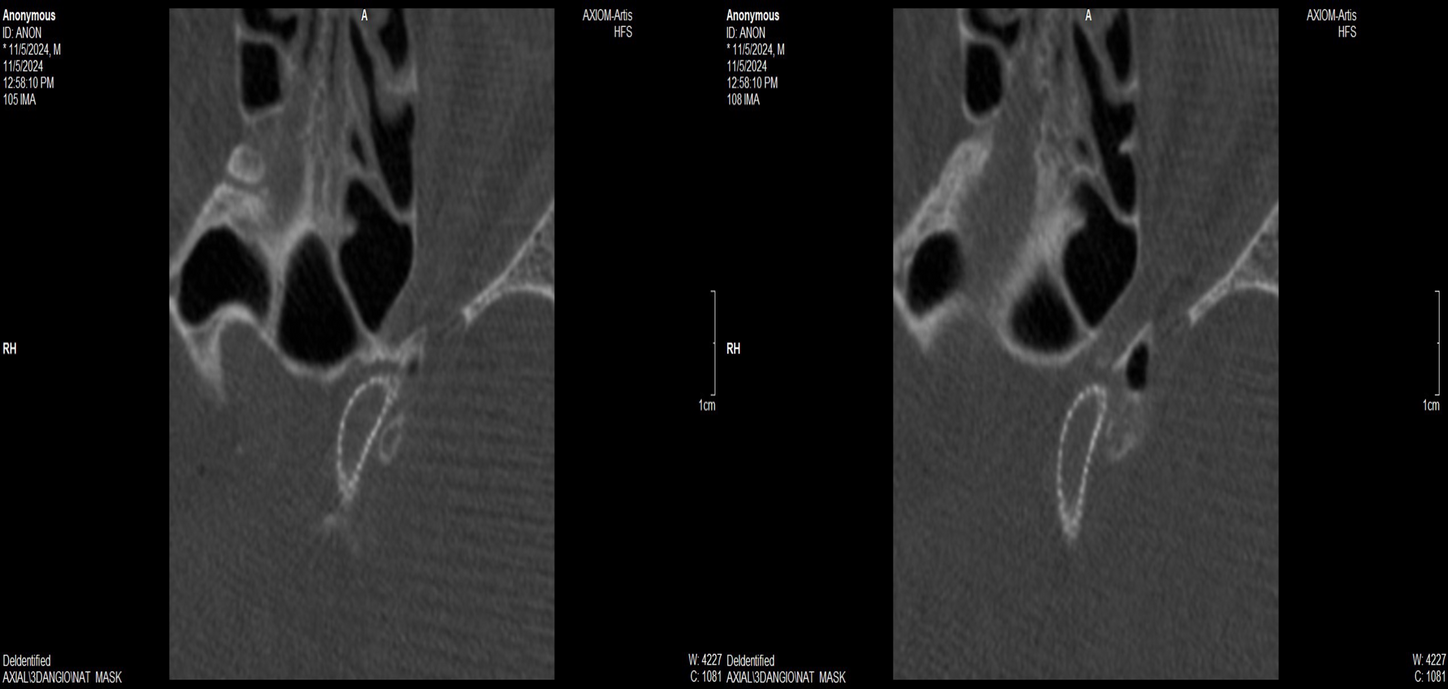
syngo DualVolume enables differentiation between two high- contrast 3D objects with virtually identical contrast density. It supports clear visualization of a clip, stent, or coil placed in a vessel, as well as soft restenosis within a stent, and can differentiate calcified plaque from a vessel.
syngo DynaCT Micro is an excellent tool that provides a great opportunity to improve spatial resolution when following up on very small, implanted devices and stents, which can be done with simple IV contrast injections.


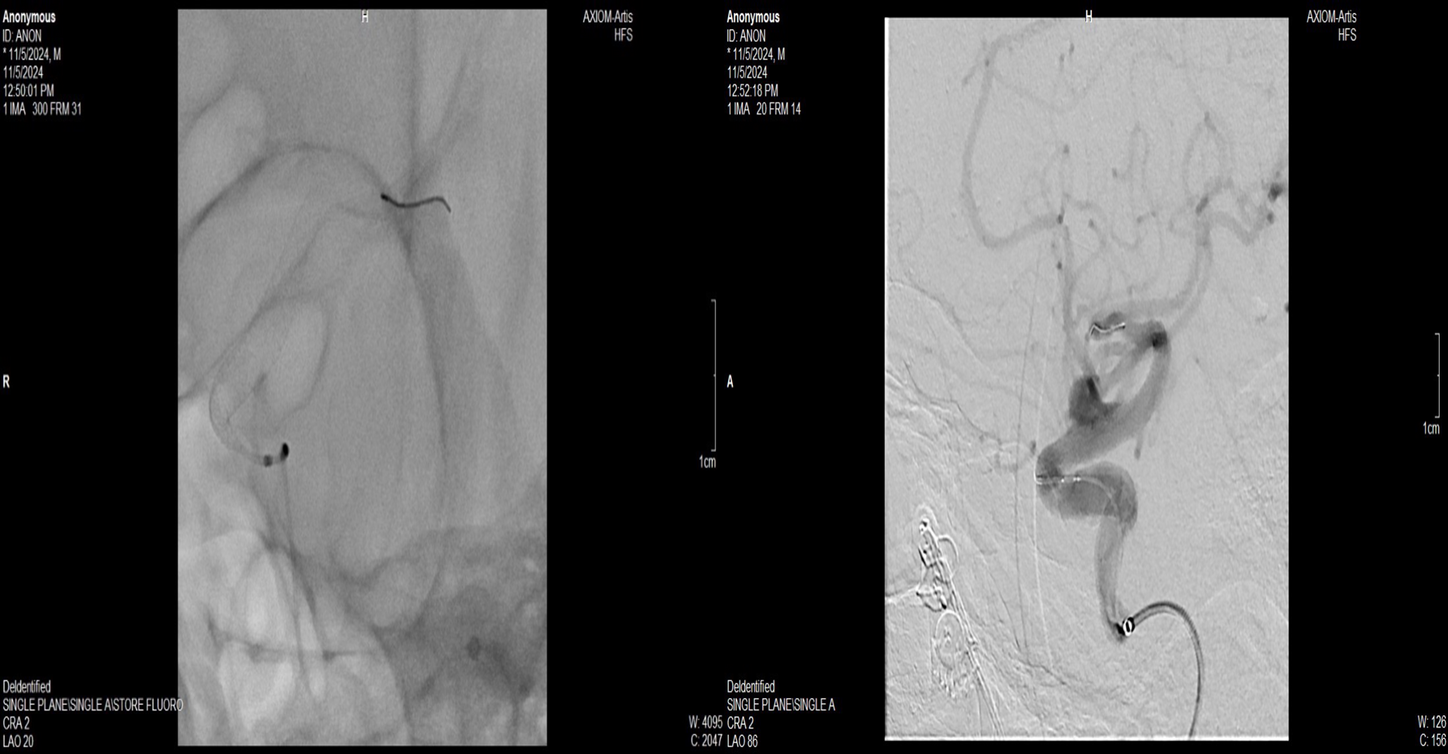
A distal access intermediate catheter (Catalyst 6F) was introduced through the guiding catheter over a guidewire, advancing near the aneurysmal sac. A loading dose of glycoprotein IIb/IIIa inhibitor (Aggrastat) was administered intravenously, followed by a maintenance dose.
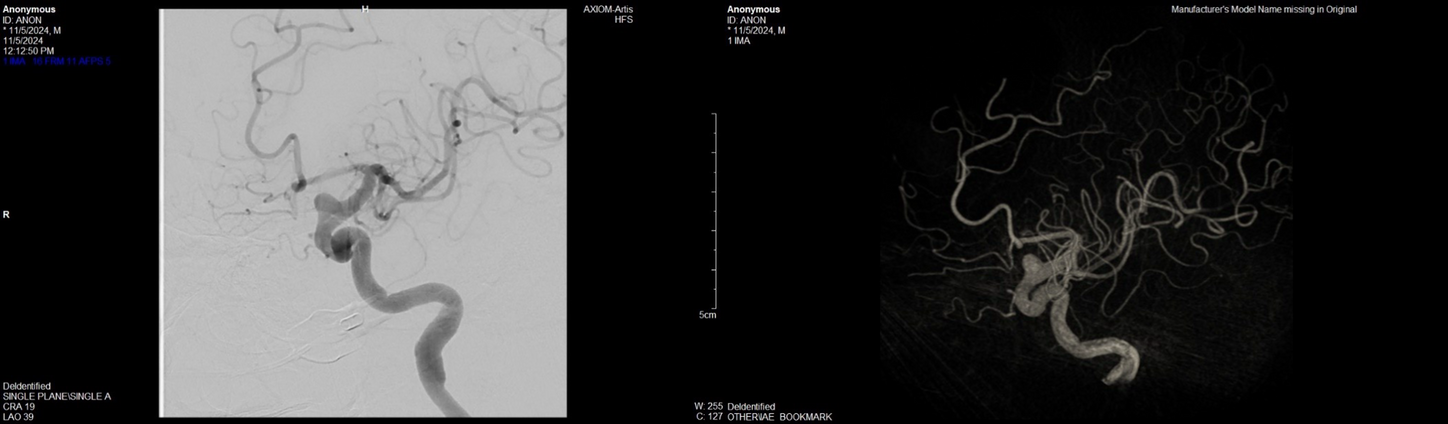
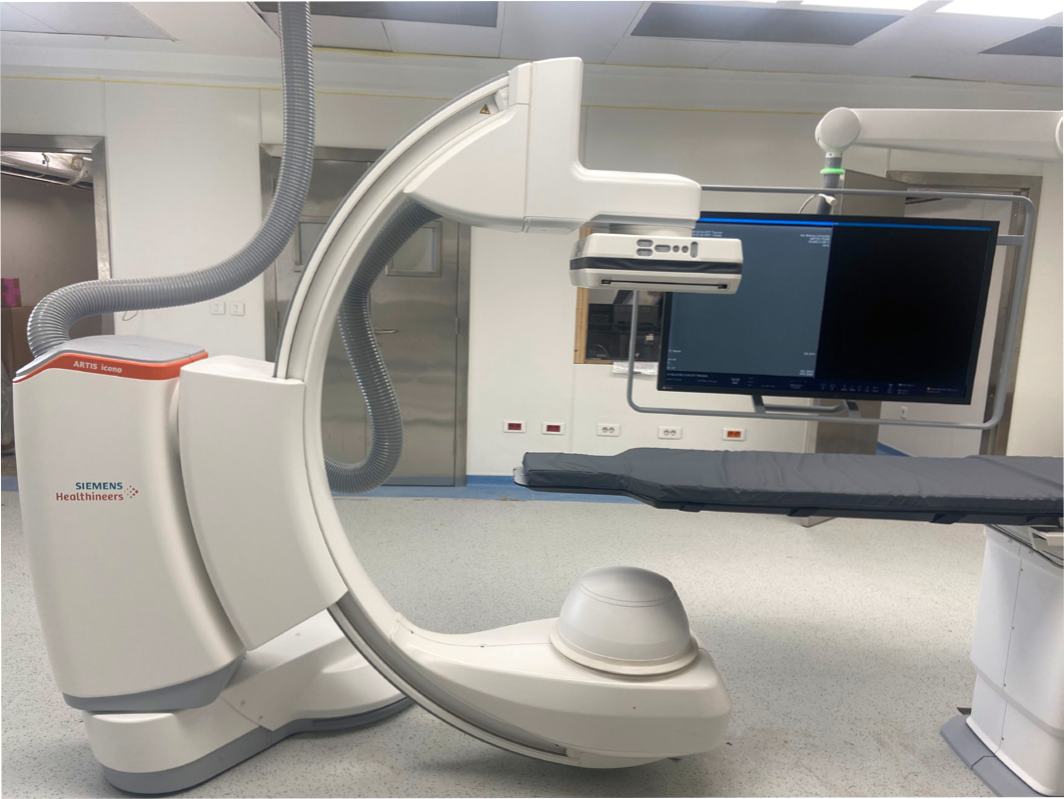
A flow diverter stent (Pipeline Flex), measuring 4 × 30 mm, was introduced through a microcatheter (Marksman) via the intermediate catheter and placed across the neck of the aneurysmal sac. Control angiography revealed successful exclusion of the aneurysm from the cerebral circulation, with adequate filling of all cerebral arteries. The new ARTIS icono system with OPTIQ provides consistent image quality and dose optimization, regardless of the procedure, patient size, or C-arm angulation. It utilizes a contrast-driven technique based on automatic parametrization and intelligent, self-adjusting algorithms.
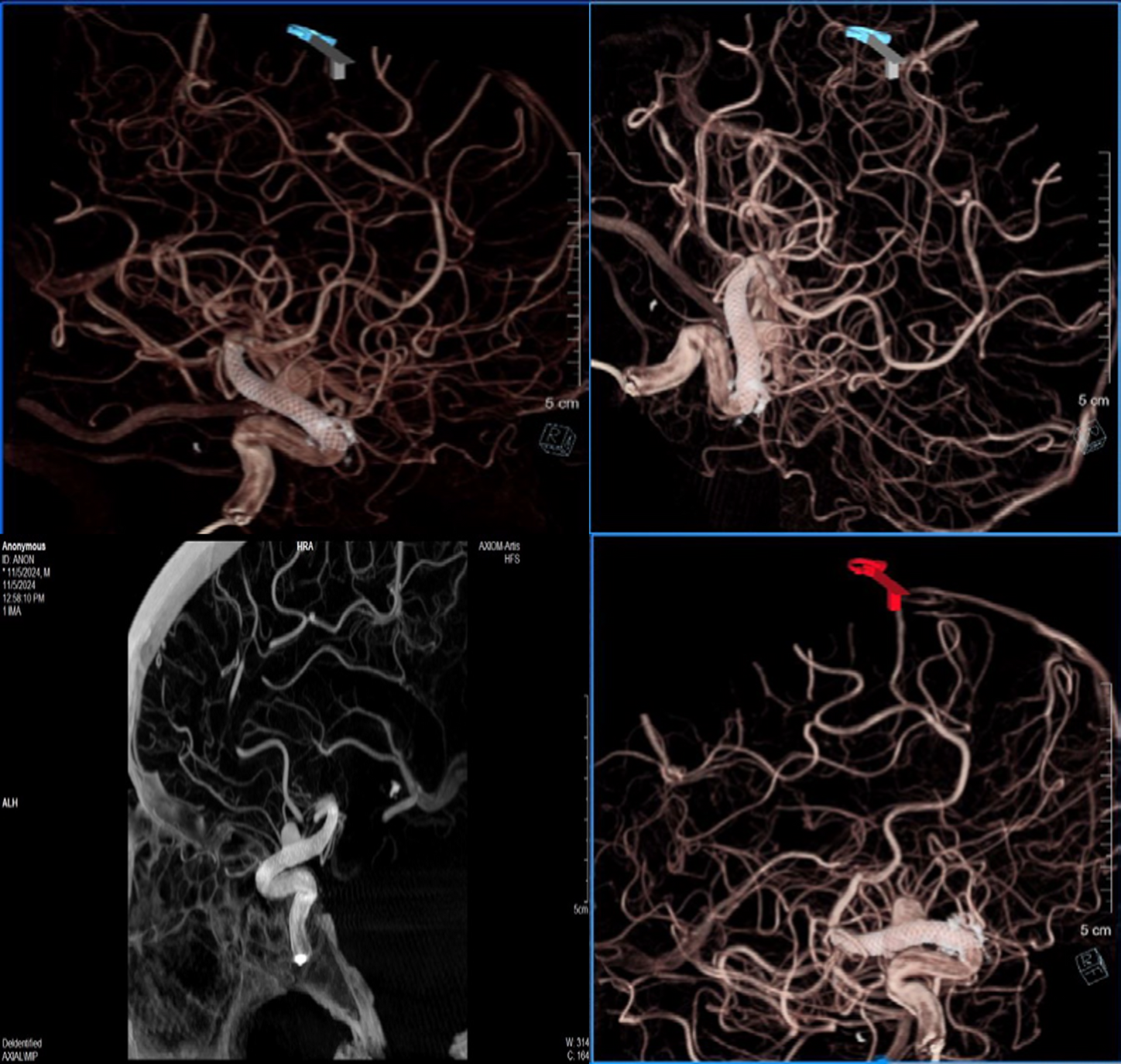
4D DSA DCT Head imaging was performed using syngo Dual Volume, which allows the display of both syngo DynaCT and 3D Angio in a single view. This technique combines soft tissue information and anatomical landmarks with contrast-filled vessels, enabling clear differentiation between contrast-filled vessels, bones, stents, and coils. It provides an enhanced ability to evaluate stent deployment, especially in complex vessel pathologies.


Comments and Opinion
Brain aneurysm treatments have advanced significantly over the past few decades. Historically, doctors performed intensive open surgery on all patients requiring brain aneurysm treatment. Today, many brain aneurysms are treated with less invasive approaches, including flow diverters, stents, and other endovascular procedures.
syngo DualVolume enables differentiation between two high- contrast 3D objects with virtually identical contrast density. It supports clear visualization of a clip, stent, or coil placed in a vessel, as well as soft restenosis within a stent, and can differentiate calcified plaque from a vessel.
syngo DynaCT Micro is an excellent tool that provides a great opportunity to improve spatial resolution when following up on very small, implanted devices and stents, which can be done with simple IV contrast injections.


A distal access intermediate catheter (Catalyst 6F) was introduced through the guiding catheter over a guidewire, advancing near the aneurysmal sac. A loading dose of glycoprotein IIb/IIIa inhibitor (Aggrastat) was administered intravenously, followed by a maintenance dose.
A flow diverter stent (Pipeline Flex), measuring 4 × 30 mm, was introduced through a microcatheter (Marksman) via the intermediate catheter and placed across the neck of the aneurysmal sac. Control angiography revealed successful exclusion of the aneurysm from the cerebral circulation, with adequate filling of all cerebral arteries. The new ARTIS icono system with OPTIQ provides consistent image quality and dose optimization, regardless of the procedure, patient size, or C-arm angulation. It utilizes a contrast-driven technique based on automatic parametrization and intelligent, self-adjusting algorithms.

4D DSA DCT Head imaging was performed using syngo Dual Volume, which allows the display of both syngo DynaCT and 3D Angio in a single view. This technique combines soft tissue information and anatomical landmarks with contrast-filled vessels, enabling clear differentiation between contrast-filled vessels, bones, stents, and coils. It provides an enhanced ability to evaluate stent deployment, especially in complex vessel pathologies.


Comments and Opinion
Brain aneurysm treatments have advanced significantly over the past few decades. Historically, doctors performed intensive open surgery on all patients requiring brain aneurysm treatment. Today, many brain aneurysms are treated with less invasive approaches, including flow diverters, stents, and other endovascular procedures.
syngo DualVolume enables differentiation between two high- contrast 3D objects with virtually identical contrast density. It supports clear visualization of a clip, stent, or coil placed in a vessel, as well as soft restenosis within a stent, and can differentiate calcified plaque from a vessel.
syngo DynaCT Micro is an excellent tool that provides a great opportunity to improve spatial resolution when following up on very small, implanted devices and stents, which can be done with simple IV contrast injections.
"Brain aneurysm treatments have advanced significantly over the past few decades. Historically, doctors performed intensive open surgery on all patients requiring brain aneurysm treatment. Today, many brain aneurysms are treated with less invasive approaches, including flow diverters, stents, and other endovascular procedures."

Brain aneurysm treatments have advanced significantly over the past few decades. Historically, doctors performed intensive open surgery on all patients requiring brain aneurysm treatment. Today, many brain aneurysms are treated with less invasive approaches, including flow diverters, stents, and other endovascular procedures.
