Imaging technique
All structural and functional magnetic resonance images of the brain were obtained via using 1.5 Tesla MR unit Multiparametric imaging was carried out via using 1.5 Tesla MR unit (Syngo MR XA31; Siemens Healthcare GmbH, Erlangen, Germany) with a dedicated head coil. The obtained ASL and DTI data were processed and analyzed with motion correction, standard volume-re-alignment followed by independent component analysis-based automatic removal of motion artifacts.
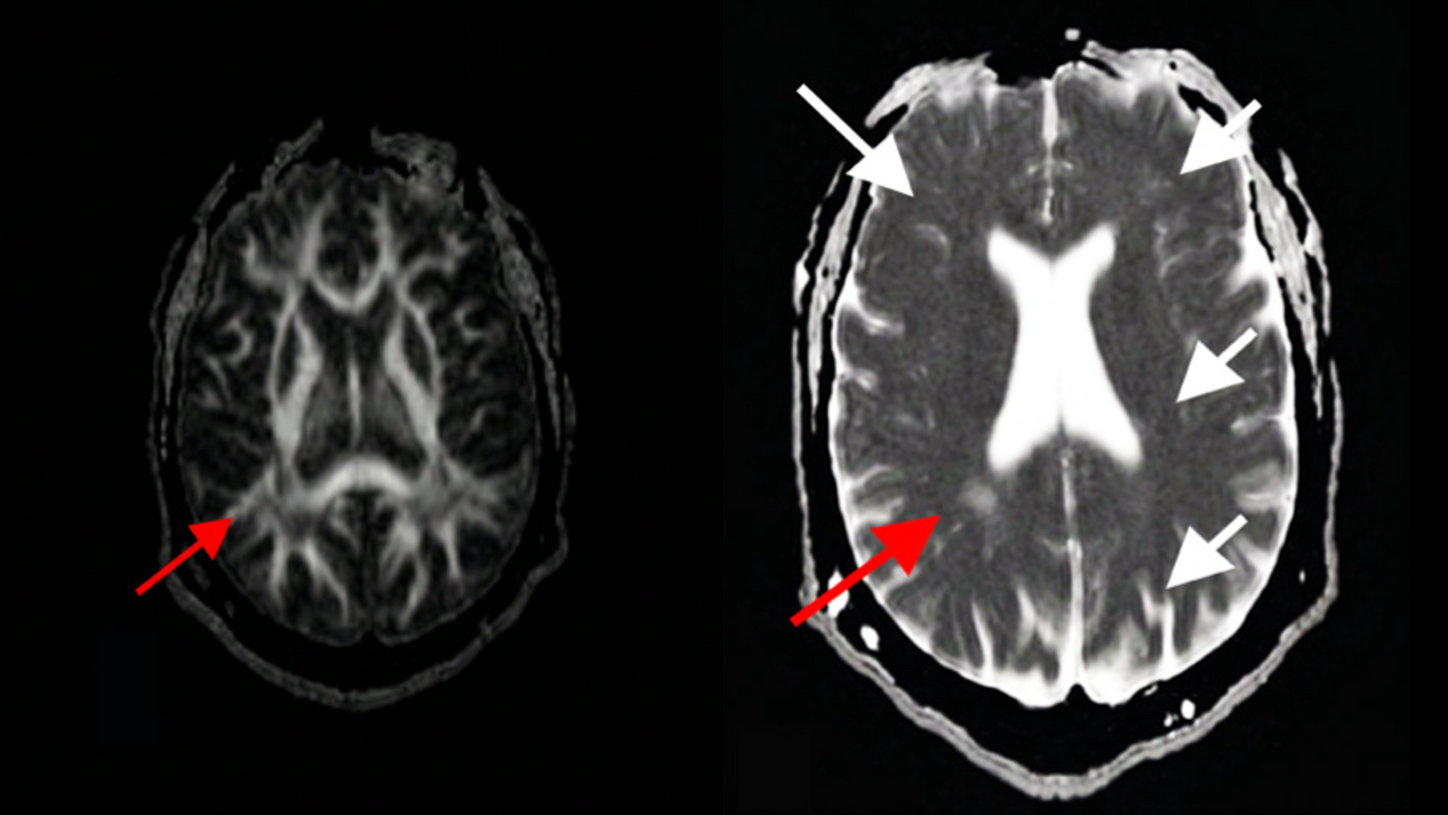
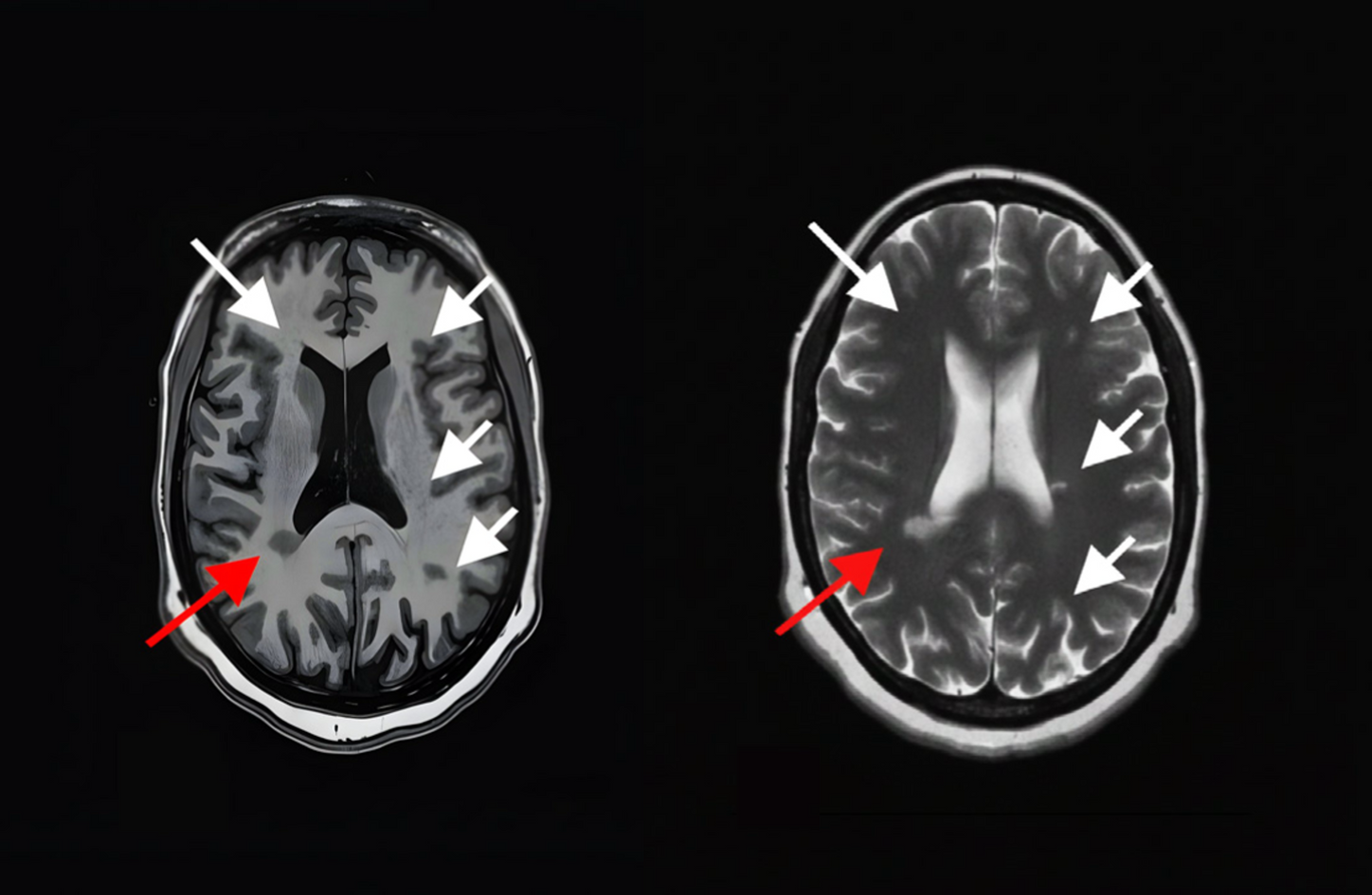
Fig F: FA Map
Functional MRI protocol
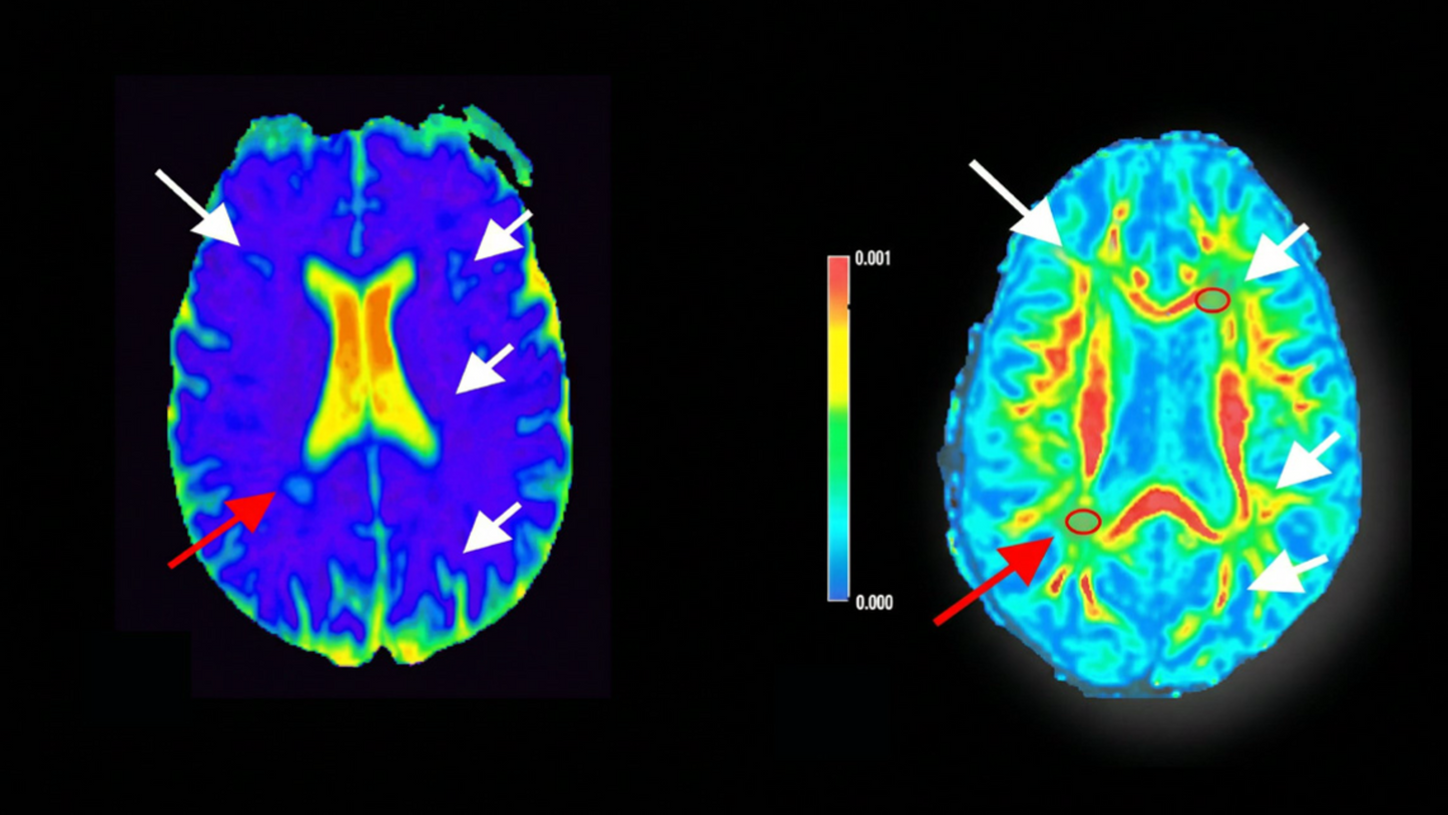
• The DTI sequences: DTI consisted of a single shot, spin-echo echo-planar sequence in 60 encoding directions and a diffusion weighting factor of 800s/mm2(TR) 10951, TE 67, matrix 128 x128, FOV 224 X 224mm, number of excitations 2, slice thickness: 2 mm and flip angle 90 (degrees). All the diffusion-weighted images were post-processed on associated specific workstation software. the coded maps of DTI and DTI indices such as fractional anisotropy (FA), and mean diffusivity (MD) were automatically generated.
Moreover, the regions of interest (ROIs) were drawn and analyzed quantitatively as well as qualitatively.
• Tractography.
• Pseudo-continuous ASL (pCASL) perfusion imaging sequence: By applying an amplitude modulated version of the labeling pulse using a sinusoidal modulation function, blood was alternately tagged and un-tagged. The used parameters included TR 4600, TE 18, matrix 128 x 128, FOV 230 x 224 & slice thickness 5 mm. The perfusion-colored maps of rCBF were automatically generated with the regions of interest (ROIs) were drawn and analyzed quantitatively as well as qualitatively.
• SWI sequence with the development of quantitative susceptibility mapping (QSM).

Fig B: T2 Axial
Conventional MRI protocol
• Axial T1 weighted imaging without contrast: TR 580, TE 10, matrix 80 x 80, FOV 230 x 177 & slice thickness 5 mm.
• Axial T2 weighted imaging: TR 3600, TE 90, matrix 208 x 127, FOV 230 x 177 & slice thickness 5 mm.
• 3D FLAIR weighted imaging: TR 7800, TE 430, matrix 240 x 130, FOV 230 x 177 & slice thickness 1.2 mm.
• The DWI and ADC values: TR: 4100, TE: 74, matrix 128 x 128, FOV 230 x 224 & slice thickness 5 mm.
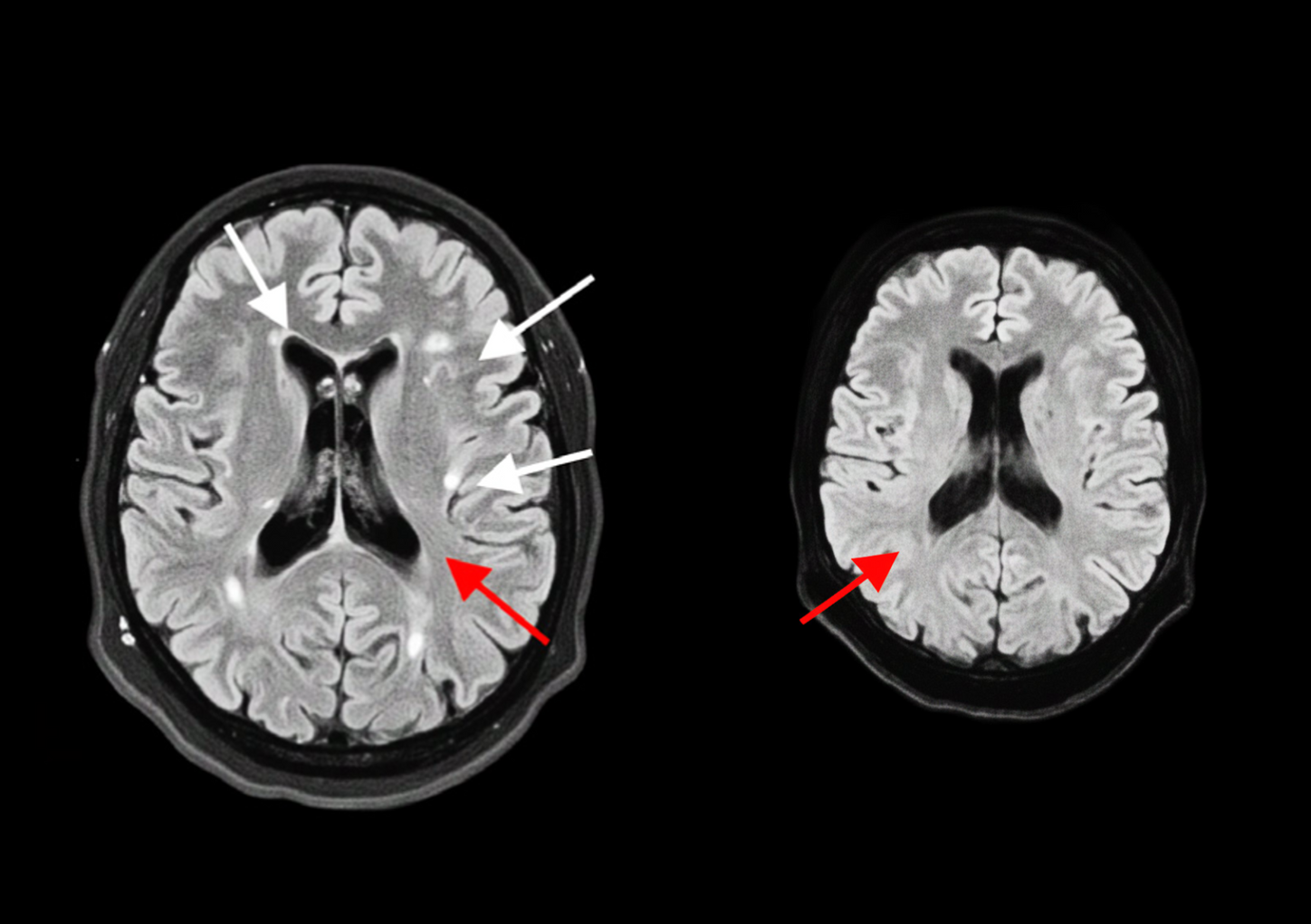
Fig D: DWI
Functional MRI protocol
• The DTI sequences: DTI consisted of a single shot, spin-echo echo-planar sequence in 60 encoding directions and a diffusion weighting factor of 800s/mm2(TR) 10951, TE 67, matrix 128 x128, FOV 224 X 224mm, number of excitations 2, slice thickness: 2 mm and flip angle 90 (degrees). All the diffusion-weighted images were post-processed on associated specific workstation software. the coded maps of DTI and DTI indices such as fractional anisotropy (FA), and mean diffusivity (MD) were automatically generated.
Moreover, the regions of interest (ROIs) were drawn and analyzed quantitatively as well as qualitatively.
• Tractography.
• Pseudo-continuous ASL (pCASL) perfusion imaging sequence: By applying an amplitude modulated version of the labeling pulse using a sinusoidal modulation function, blood was alternately tagged and un-tagged. The used parameters included TR 4600, TE 18, matrix 128 x 128, FOV 230 x 224 & slice thickness 5 mm. The perfusion-colored maps of rCBF were automatically generated with the regions of interest (ROIs) were drawn and analyzed quantitatively as well as qualitatively.
• SWI sequence with the development of quantitative susceptibility mapping (QSM).

Fig F: FA Map
Functional MRI protocol
• The DTI sequences: DTI consisted of a single shot, spin-echo echo-planar sequence in 60 encoding directions and a diffusion weighting factor of 800s/mm2(TR) 10951, TE 67, matrix 128 x128, FOV 224 X 224mm, number of excitations 2, slice thickness: 2 mm and flip angle 90 (degrees). All the diffusion-weighted images were post-processed on associated specific workstation software. the coded maps of DTI and DTI indices such as fractional anisotropy (FA), and mean diffusivity (MD) were automatically generated.
Moreover, the regions of interest (ROIs) were drawn and analyzed quantitatively as well as qualitatively.
• Tractography.
• Pseudo-continuous ASL (pCASL) perfusion imaging sequence: By applying an amplitude modulated version of the labeling pulse using a sinusoidal modulation function, blood was alternately tagged and un-tagged. The used parameters included TR 4600, TE 18, matrix 128 x 128, FOV 230 x 224 & slice thickness 5 mm. The perfusion-colored maps of rCBF were automatically generated with the regions of interest (ROIs) were drawn and analyzed quantitatively as well as qualitatively.
• SWI sequence with the development of quantitative susceptibility mapping (QSM).

Fig B: T2 Axial
Conventional MRI protocol
• Axial T1 weighted imaging without contrast: TR 580, TE 10, matrix 80 x 80, FOV 230 x 177 & slice thickness 5 mm.
• Axial T2 weighted imaging: TR 3600, TE 90, matrix 208 x 127, FOV 230 x 177 & slice thickness 5 mm.
• 3D FLAIR weighted imaging: TR 7800, TE 430, matrix 240 x 130, FOV 230 x 177 & slice thickness 1.2 mm.
• The DWI and ADC values: TR: 4100, TE: 74, matrix 128 x 128, FOV 230 x 224 & slice thickness 5 mm.

Fig D: DWI
Functional MRI protocol
• The DTI sequences: DTI consisted of a single shot, spin-echo echo-planar sequence in 60 encoding directions and a diffusion weighting factor of 800s/mm2(TR) 10951, TE 67, matrix 128 x128, FOV 224 X 224mm, number of excitations 2, slice thickness: 2 mm and flip angle 90 (degrees). All the diffusion-weighted images were post-processed on associated specific workstation software. the coded maps of DTI and DTI indices such as fractional anisotropy (FA), and mean diffusivity (MD) were automatically generated.
Moreover, the regions of interest (ROIs) were drawn and analyzed quantitatively as well as qualitatively.
• Tractography.
• Pseudo-continuous ASL (pCASL) perfusion imaging sequence: By applying an amplitude modulated version of the labeling pulse using a sinusoidal modulation function, blood was alternately tagged and un-tagged. The used parameters included TR 4600, TE 18, matrix 128 x 128, FOV 230 x 224 & slice thickness 5 mm. The perfusion-colored maps of rCBF were automatically generated with the regions of interest (ROIs) were drawn and analyzed quantitatively as well as qualitatively.
• SWI sequence with the development of quantitative susceptibility mapping (QSM).

Fig F: FA Map
Functional MRI protocol
• The DTI sequences: DTI consisted of a single shot, spin-echo echo-planar sequence in 60 encoding directions and a diffusion weighting factor of 800s/mm2(TR) 10951, TE 67, matrix 128 x128, FOV 224 X 224mm, number of excitations 2, slice thickness: 2 mm and flip angle 90 (degrees). All the diffusion-weighted images were post-processed on associated specific workstation software. the coded maps of DTI and DTI indices such as fractional anisotropy (FA), and mean diffusivity (MD) were automatically generated.
Moreover, the regions of interest (ROIs) were drawn and analyzed quantitatively as well as qualitatively.
• Tractography.
• Pseudo-continuous ASL (pCASL) perfusion imaging sequence: By applying an amplitude modulated version of the labeling pulse using a sinusoidal modulation function, blood was alternately tagged and un-tagged. The used parameters included TR 4600, TE 18, matrix 128 x 128, FOV 230 x 224 & slice thickness 5 mm. The perfusion-colored maps of rCBF were automatically generated with the regions of interest (ROIs) were drawn and analyzed quantitatively as well as qualitatively.
• SWI sequence with the development of quantitative susceptibility mapping (QSM).
Discussion
Smoldering lesions represent a pathologically distinct subset of MS lesions with a persistent rim of iron-laden activated microglia, often undetectable by conventional MRI (4). Brain and spinal cord imaging plays a crucial role in aiding clinicians with the diagnosis and monitoring of MS. Nevertheless, the significance of MRI in MS extends beyond its clinical utility (6). The multi-parametric MRI tools have emerged, offering objective measures of microstructural damage, iron deposition, and axonal integrity. Moreover, advanced imaging modalities have facilitated the in vivo detection of various components of MS pathogenesis. They offer non-invasive ways to visualize and analyze the smoldering lesions within the brain and spinal cord.
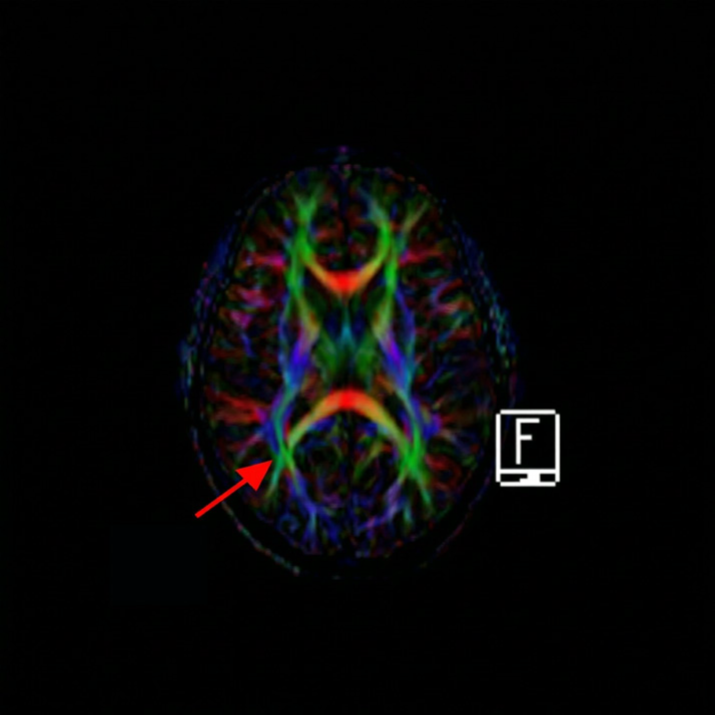
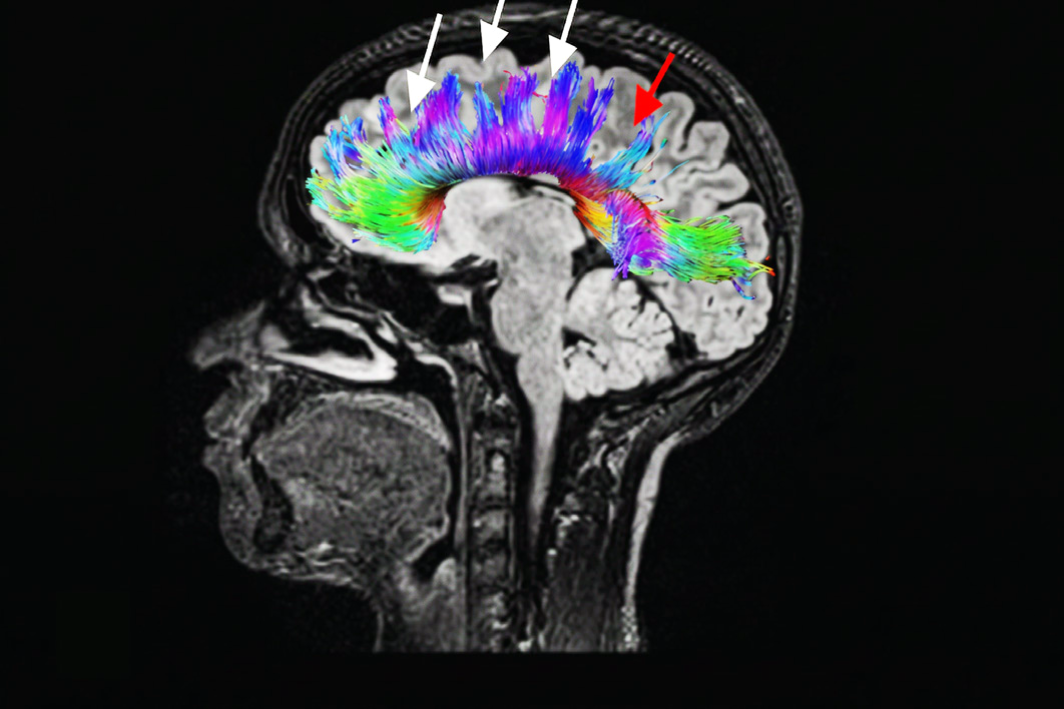
The SWI sequence of MRI is a highly sensitive to paramagnetic substances such as iron, allowing for non-invasive visualization of these chronic active rims (1). The hypoperfusion observed on ASL is consistent with metabolic dysfunction and vascular changes associated with chronic inflammation (5). The DTI provides quantitative markers of microstructural injury, and reduced fractional anisotropy (FA) with increased mean diffusivity (MD) is a hallmark of demyelination and axonal degeneration (2,6). Tractography extends this analysis by demonstrating structural disconnection of white matter pathways surrounding the lesion, which may have functional implications even in the absence of overt clinical symptoms (2,7,8).
The integration of these modalities offers a more complete characterization of lesion pathology. In the presented case, findings across all modalities supported the identification of a chronic active lesion. Importantly, this lesion did not enhance with gadolinium, illustrating the limitation of contrast-based assessments and the complementary value of advanced imaging.

Noteworthy, in recent years, MRI biomarkers have been utilized to assess the response of patients with relapsing-remitting MS to the available treatments. By bridging imaging findings with pathophysiology, clinicians can more confidently detect early smoldering disease and initiate appropriate potentially disease-modifying interventions ahead of clinical progression.
Similarly, MRI indicators of neurodegeneration demonstrate potential as primary and secondary endpoints in clinical trials targeting progressive phenotypes (7-9).
The 2024 revision of the McDonald criteria, informed by the latest recommendations from The European Committee for Treatment and Research in Multiple Sclerosis (ECTRIMS), further integrates advanced imaging and biomarkers into the diagnostic framework. Key changes include adding the optic nerve as a fifth anatomical area for dissemination in space (alongside periventricular, juxtacortical, infratentorial, and spinal locations).
For the first time, paramagnetic rim lesions (PRLs) and the central vein sign (CVS) have been added as MRI biomarkers that significantly enhance diagnostic specificity. Additionally, kappa free light chains (kFLC) are now recognized alongside oligoclonal bands as cerebrospinal fluid markers fulfilling dissemination in time criteria. Importantly, if lesions are present in four or more of the five designated sites, dissemination in time is no longer required permitting earlier diagnosis based solely on spatial dissemination (10).

The SWI sequence of MRI is a highly sensitive to paramagnetic substances such as iron, allowing for non-invasive visualization of these chronic active rims (1). The hypoperfusion observed on ASL is consistent with metabolic dysfunction and vascular changes associated with chronic inflammation (5). The DTI provides quantitative markers of microstructural injury, and reduced fractional anisotropy (FA) with increased mean diffusivity (MD) is a hallmark of demyelination and axonal degeneration (2,6). Tractography extends this analysis by demonstrating structural disconnection of white matter pathways surrounding the lesion, which may have functional implications even in the absence of overt clinical symptoms (2,7,8).
The integration of these modalities offers a more complete characterization of lesion pathology. In the presented case, findings across all modalities supported the identification of a chronic active lesion. Importantly, this lesion did not enhance with gadolinium, illustrating the limitation of contrast-based assessments and the complementary value of advanced imaging.

Noteworthy, in recent years, MRI biomarkers have been utilized to assess the response of patients with relapsing-remitting MS to the available treatments. By bridging imaging findings with pathophysiology, clinicians can more confidently detect early smoldering disease and initiate appropriate potentially disease-modifying interventions ahead of clinical progression.
Similarly, MRI indicators of neurodegeneration demonstrate potential as primary and secondary endpoints in clinical trials targeting progressive phenotypes (7-9).

The 2024 revision of the McDonald criteria, informed by the latest recommendations from The European Committee for Treatment and Research in Multiple Sclerosis (ECTRIMS), further integrates advanced imaging and biomarkers into the diagnostic framework. Key changes include adding the optic nerve as a fifth anatomical area for dissemination in space (alongside periventricular, juxtacortical, infratentorial, and spinal locations).
For the first time, paramagnetic rim lesions (PRLs) and the central vein sign (CVS) have been added as MRI biomarkers that significantly enhance diagnostic specificity. Additionally, kappa free light chains (kFLC) are now recognized alongside oligoclonal bands as cerebrospinal fluid markers fulfilling dissemination in time criteria. Importantly, if lesions are present in four or more of the five designated sites, dissemination in time is no longer required permitting earlier diagnosis based solely on spatial dissemination (10).

The SWI sequence of MRI is a highly sensitive to paramagnetic substances such as iron, allowing for non-invasive visualization of these chronic active rims (1). The hypoperfusion observed on ASL is consistent with metabolic dysfunction and vascular changes associated with chronic inflammation (5). The DTI provides quantitative markers of microstructural injury, and reduced fractional anisotropy (FA) with increased mean diffusivity (MD) is a hallmark of demyelination and axonal degeneration (2,6). Tractography extends this analysis by demonstrating structural disconnection of white matter pathways surrounding the lesion, which may have functional implications even in the absence of overt clinical symptoms (2,7,8).
The integration of these modalities offers a more complete characterization of lesion pathology. In the presented case, findings across all modalities supported the identification of a chronic active lesion. Importantly, this lesion did not enhance with gadolinium, illustrating the limitation of contrast-based assessments and the complementary value of advanced imaging.
Conclusion
Multiparametric MRI, provides a robust framework for the detection and characterization of chronic active MS lesions (smoldering lesions). These imaging techniques offer complementary insights into lesion biology, allowing for improved disease monitoring, risk stratification, and treatment planning. As demonstrated in this case, such a multimodal approach may reveal clinically silent yet biologically active lesions, highlighting the importance of expanding MRI protocols in MS management. Additionally, the integrating SWI with quantitative susceptibility map, pseudo-continuous ASL, as well as DTI and tractography into clinical practice, particularly in patients with stable MS who present with subtle cognitive decline or other non-relapsing symptoms, could improve the follow up of the disease progression and support earlier therapeutic intervention to mitigate disability.